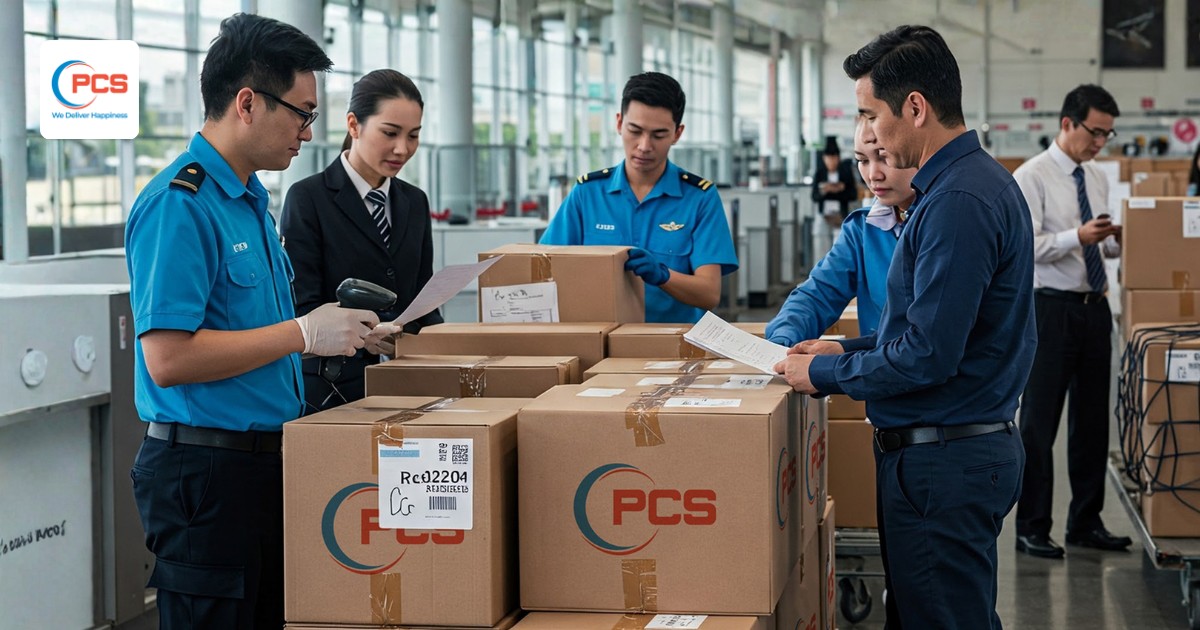

Less than Container Load (LCL) shipping services from Vietnam provided by PCS Logistics offer a perfect solution for businesses that do not have enough cargo to fill a large container. Small shipments, samples, or urgent supplementary orders often cause headaches for shippers due to cost concerns. Understanding these challenges, PCS Logistics brings you an LCL service that helps your goods reach global markets with the most reasonable costs while ensuring complete safety.
1. What Are LCL Shipping Services?
LCL (Less than Container Load) shipping is a method where the transport unit consolidates small shipments from various shippers at a Container Freight Station (CFS). These goods are then neatly arranged into a single container for transport to the destination port. Upon arrival, the cargo is deconsolidated and delivered to each recipient.
You can visualize this simply as "carpooling" for cargo. Instead of renting an entire large vehicle (FCL) by yourself and wasting empty space, your goods share container space with shipments from other owners.
This is the optimal solution for Small and Medium-sized Enterprises (SMEs) or large corporations during the phases of sending samples or market testing.
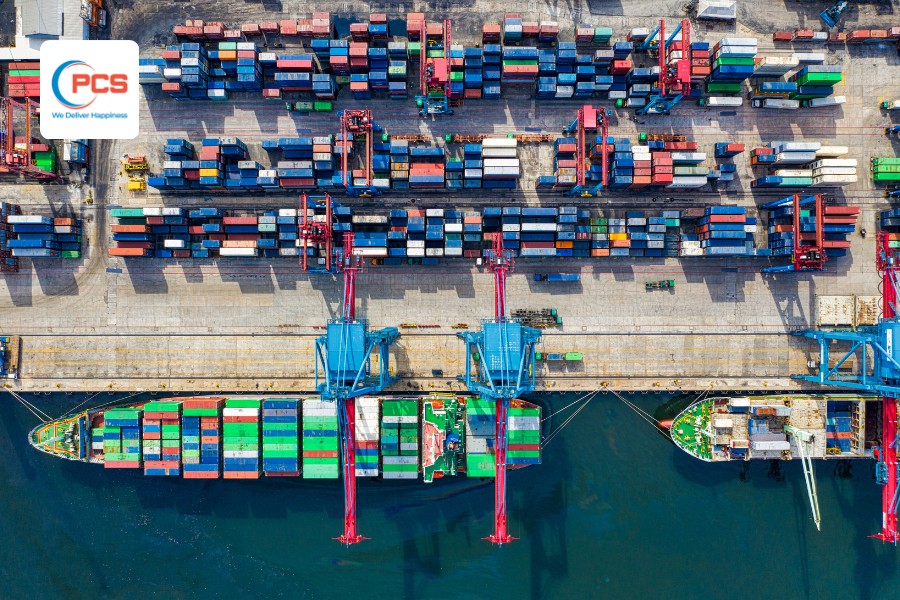
2. Current Business Demand for LCL Shipping
The modern logistics market is witnessing a strong shift. The demand for LCL shipping is constantly rising due to new business realities.
Several factors drive this increasing need:
-
The e-commerce boom creates frequent small shipments. Online orders often have small volumes, high frequency, and demand fast speed. Waiting to accumulate enough goods for a full container would mean missing business opportunities.
-
Capital flow optimization is a priority. Businesses today tend to import goods in smaller, divided batches to reduce inventory risks and increase capital turnover speed.
-
Market expansion requires flexibility. Sending product samples internationally to solicit orders demands flexible LCL shipping forms.
However, businesses also face significant difficulties:
-
Cost concerns arise. Sending via air freight is too expensive, but sending small quantities via sea freight risks high minimum charges.
-
Risks of damage or loss worry shippers. There is anxiety about goods getting lost or damaged when shared with others' cargo.
-
Time constraints are a challenge. There is a fear that the lengthy consolidation process will delay progress.
PCS Logistics listens to these difficulties and strives to turn them into motivation to perfect our services every day.
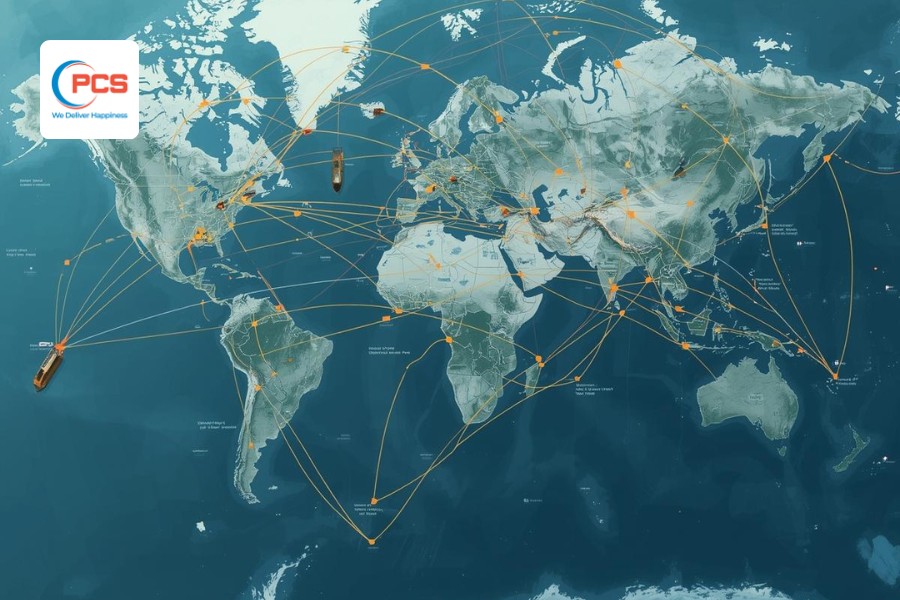
3. LCL Shipping Solutions from PCS Logistics
At PCS, LCL shipping services are not just about filling a container; they are about providing a comprehensive logistics solution for your peace of mind. We address business "pain points" with practical values.
3.1. Optimizing Supply Chain and Saving Costs
Instead of paying for a full container while your goods occupy only a small corner, with PCS sea freight LCL, you only pay for the actual container space your goods occupy (calculated by cubic meters - CBM).
This helps businesses significantly save on transportation budgets, turning fixed costs into variable costs that flex with revenue. You do not need to wait to gather enough goods; you can ship immediately upon receiving an order, keeping the supply chain running smoothly.
3.2. Continuous Classification, Updates, and Monitoring
The biggest worry in LCL shipping is safety when sharing space with other goods. At PCS, this process is strictly controlled.
We ensure safety through the following measures:
-
Goods are carefully classified. We sort items based on their nature (dry goods, fragile items, heavy cargo, etc.) to have suitable handling plans, avoiding mutual impact.
-
Monitoring systems provide constant updates. You can track the status of your shipment continuously, from entering the CFS warehouse to arriving at the destination port.
3.3. Reputable LCL Carrier - Direct Connection
PCS acts as a professional consolidator. PCS has a stable consolidation schedule and connects directly with major shipping lines. This minimizes waiting time at the warehouse, ensuring the fastest possible LCL transit time for customers.

4. LCL Sea Freight Transit Time at PCS Logistics
The transit time for LCL sea freight at PCS Logistics usually ranges from 25 to 45 days, depending on the shipping route and the specifics of each shipment.
In reality, this time frame consists of several consecutive stages:
-
CFS consolidation time: Takes approximately 3–7 days.
-
Sea transit time: Takes 15–40 days depending on the route.
-
Deconsolidation and customs at destination: Takes 2–5 days.
Additionally, factors such as international vessel schedules, port conditions, customs documentation, and peak seasons can directly affect the total transit time. With experience handling LCL on routes from Vietnam to Asia (Japan, Korea, Taiwan, China, etc.), Europe, and the US, PCS Logistics proactively reviews every stage, advises on clear timeframes, and monitors shipments throughout, helping businesses anticipate progress, limit delay risks, and optimize import-export plans.
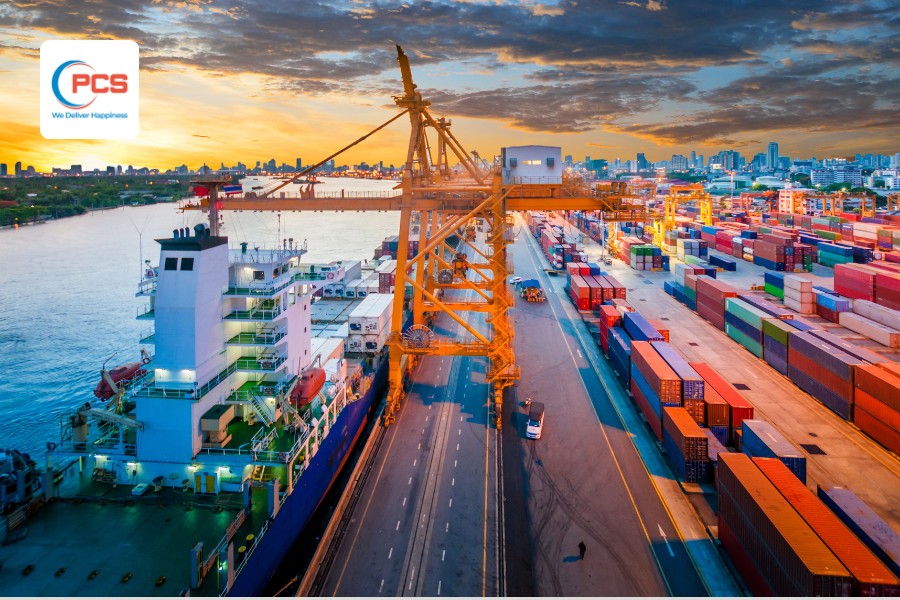
5. Process of LCL Shipping at PCS Logistics
To make it easy for customers to visualize and coordinate, PCS standardizes the LCL shipping process into simple, transparent steps.
The workflow is executed as follows:
-
Step 1 involves receiving information and consulting. PCS Logistics receives detailed shipment information such as type, size, weight, port of loading/discharge, and required time. Based on cargo characteristics, PCS advises on suitable LCL plans, evaluating consolidation feasibility and estimated actual transit time.
-
Step 2 is providing a transparent quote. After agreeing on the plan, PCS Logistics sends a detailed quote, clarifying every cost item. When the customer confirms the booking, PCS arranges a consolidation schedule suitable for the international vessel voyage.
-
Step 3 covers receiving and consolidating goods at the CFS warehouse. Goods are received at the PCS warehouse or via pick-up service. PCS Logistics checks packing, labeling, and performs consolidation at the CFS warehouse, ensuring safety and compliance with LCL sea freight standards.
-
Step 4 involves sea transport and shipment tracking. After container packing, goods are transported by sea according to the confirmed schedule. PCS Logistics monitors the entire journey, updating the shipment status timely for the customer throughout the transportation process.
-
Step 5 concludes with deconsolidation, finalizing procedures, and delivery. At the destination port, PCS Logistics performs deconsolidation, supports customs procedures upon request, and hands over goods to the warehouse or receiving address as agreed, ensuring progress and safety.
6. How to Calculate LCL Freight Charges
PCS always prioritizes financial transparency. Our method for calculating LCL freight charges is publicly clear so customers can proactively budget.
LCL charges are typically calculated based on two units:
-
Actual Weight: Calculated in Tons or Kilograms.
-
Actual Volume: Calculated in Cubic Meters (CBM).
Freight Calculation Rule: In international sea transport, we apply a rule comparing Volume and Weight to find the "Chargeable Volume."
-
If 1 Ton < 1 CBM: Calculate by CBM (Light cargo).
-
If 1 Ton > 1 CBM: Calculate by Weight (Heavy cargo).
Simple Example: If you send cotton (light but bulky), charges will be based on volume. If you send steel (small but heavy), charges will be based on weight. To get the most accurate figure, you only need to send the Length x Width x Height dimensions and the number of packages; PCS will calculate it for you immediately.
Please contact PCS directly for answers and a detailed, accurate quote consultation.




7. Why Customers Trust PCS Logistics?
Amidst many LCL consolidators in the market, PCS cherishes the trust that thousands of customers have given us. PCS believes that the difference does not lie in fancy advertisements, but in dedication in every action.
We deliver value through these commitments:
-
Understanding and Companionship. PCS is not just a carrier; we are a 1:1 companion. Each customer has a dedicated support specialist ready to answer all questions and handle issues (if any) thoroughly.
-
Extensive Consolidation Network. Thanks to good relationships with global partners, PCS's LCL containers can connect to almost all major sea ports worldwide with stable schedules.
-
Safety First. PCS cherishes every LCL package like a full shipment. Professional packing and dunnage processes help minimize damage risks to the maximum.
-
Reasonable Costs. PCS strives to optimize the consolidation process to bring the most competitive rates, helping small businesses access professional logistics services.

8. Goods Not Accepted for LCL Transport at PCS
To ensure safety during consolidation and comply with international transport regulations, PCS Logistics does not accept LCL sea transport for the following types of goods.
Please note the excluded categories:
-
Dangerous Goods (IMO). Flammable substances, toxic chemicals, compressed gases, or corrosive substances not declared according to international standards.
-
Prohibited Goods. Items banned from import/export according to regulations of Vietnam or the importing country.
-
Unsafe Batteries. Lithium batteries, accumulators, or devices containing batteries without MSDS or full safety declarations.
-
Hazardous Liquids. Dangerous liquids or goods prone to leakage that do not meet packing standards for LCL transport.
-
Strong-Smelling Goods. Items like fermented food or strong-smelling chemicals that affect other shipments sharing the container.
-
High-Value Goods. Gems, precious metals, or easily stolen goods without insurance and separate protection plans.
-
Oversized/Overweight Goods. Items not suitable for LCL container loading and unloading standards.
PCS Logistics always recommends customers provide full cargo information before booking to evaluate suitability and propose alternative transport plans such as FCL, bulk cargo, or specialized services when necessary.
9. Notes for Shippers When Using LCL Services
To ensure the LCL shipping process runs smoothly and safely, PCS sends you some small but important notes.
You should pay attention to the following:
-
Pack carefully. Since goods share a container with many other types, sturdy packing (wooden crates, shrink wrap, foam padding) is a prerequisite to protect your product.
-
Label clearly. Each package needs to be clearly labeled with information such as product name, recipient, package count, and special symbols (fragile, this side up) to avoid loss or confusion during deconsolidation at the destination port.
-
Synchronize documents. Ensure information on the Bill of Lading, Invoice, and Packing List matches completely to avoid trouble during customs procedures.
-
Purchase insurance. We encourage customers to buy insurance for the shipment. This is a small investment that brings great peace of mind against force majeure risks at sea.
LCL shipping services at PCS Logistics are built from the desire to support every business, whether large or small, to have the opportunity to reach the big ocean. We strive every day to make sending a small package as easy and reassuring as sending a large container.
Let PCS listen to and serve you. Contact us today to receive advice and the best quote for your shipment.