B2B Distribution Services in Vietnam for Factories and Industrial Parks
Distributing goods between suppliers, factories, warehouses, and business partners involves more than moving a shipment from one location to another. Deliveries must follow production schedules, reach the correct receiving points, meet handover requirements, and remain traceable from purchase order (PO) to proof of delivery (POD). PCS Logistics provides B2B distribution services in Vietnam with transportation plans tailored to shipment volumes, delivery frequency, and route requirements. This helps businesses maintain consistent goods flows, reduce coordination workloads, and plan their supply operations more effectively.
1. Overview of Factory and Industrial Park Distribution in Vietnam
In practice, deliveries between businesses involve more requirements than a standard transport trip, particularly when shipments must follow production schedules or enter factories and industrial parks with specific receiving procedures.
-
Fluctuating volumes and limited vehicle availability: Orders may increase rapidly with production plans, urgent requests, or seasonal demand. If transport capacity cannot keep up, goods may remain at dispatch warehouses or reach factories and partners late.
-
Delivery schedules closely tied to production: Factories often have specific receiving, unloading, and production schedules. Late arrivals, missed appointments, or lengthy waiting times can affect inbound operations and subsequent production stages.
-
Different access requirements at factories and industrial parks: Vehicle weight limits, dimensions, entry gates, unloading areas, and registration procedures vary by location. An unsuitable vehicle or missing access information can disrupt deliveries.
-
Strict order and documentation accuracy: Incorrect order references, package counts, quantities, or missing documents may delay inspection, lead to partial acceptance, or require redelivery. Accuracy becomes even more important when serving multiple B2B destinations.
-
Difficulty tracking progress and exceptions: Gate waiting times, rescheduled appointments, unsuccessful deliveries, and temporary storage all require clear records. Without timely updates and supporting documents, businesses struggle to control costs or resolve shipment issues promptly.
PCS Logistics connects order plans with actual pickup and delivery conditions, from vehicle selection and destination confirmation to progress tracking and handover records. This B2B distribution approach helps businesses reduce internal coordination while maintaining consistent product flows between factories, warehouses, and business partners.

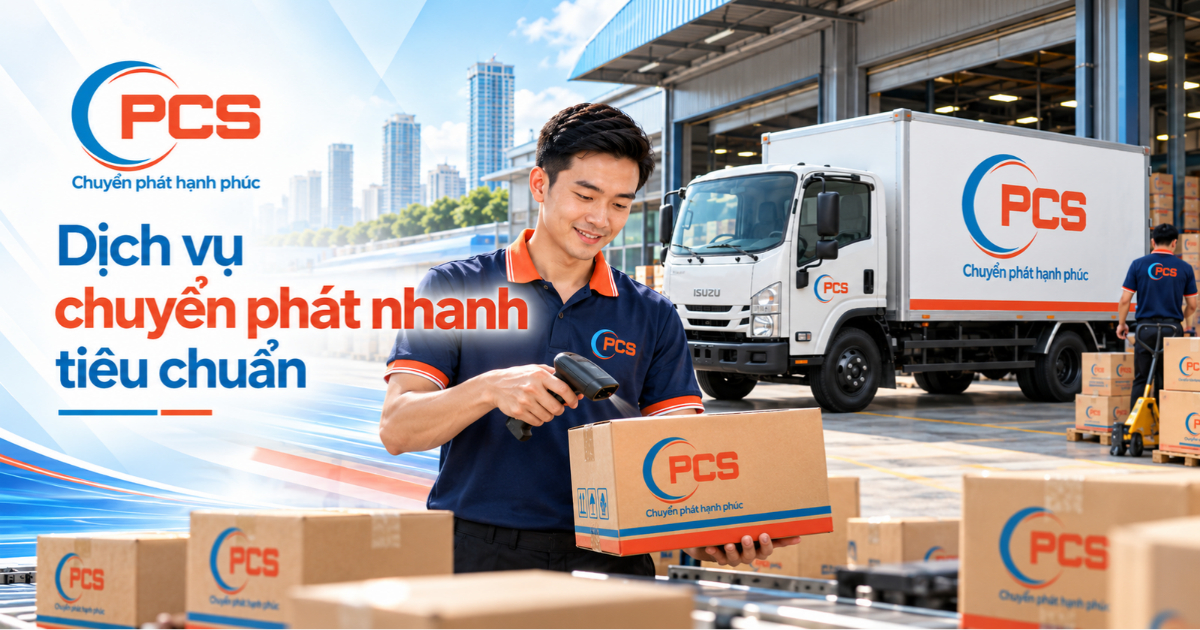
PCS Logistics supports B2B goods distribution between factories, warehouses, and industrial parks across Vietnam.
2. Distribution Models for Factories and Industrial Parks at PCS Logistics
PCS Logistics provides B2B distribution services between suppliers, factories, warehouses, branches, and business customers in line with production and supply plans. Depending on shipment volumes, frequency, cargo characteristics, and receiving conditions, PCS combines consolidated freight, dedicated vehicles, and scheduled routes to maintain reliable goods flows. The PCS Logistics B2B Distribution offering is designed around these different transport requirements.
Distribution of Raw Materials and Components from Suppliers to Factories and Industrial Parks
This solution suits businesses that need to move raw materials, components, packaging, and production supplies from suppliers or consolidation warehouses to factories according to replenishment schedules.
For inbound shipments, timely transportation matters, but alignment with warehouse receiving and production schedules is equally important. PCS coordinates the following:
-
When goods are ready for pickup.
-
Factory receiving appointments and entry time slots.
-
Vehicle type, payload, and gate registration requirements.
-
Quantities, batch information, and unloading requirements at the destination.
This helps businesses maintain the supply of production inputs and reduce late material arrivals, gate waiting times, and shipments that do not meet factory receiving conditions. These requirements are central to B2B industrial distribution in Vietnam and are addressed through PCS Logistics Industrial Distribution.
Transfer of Finished Goods from Factories to Warehouses and Branches
After production, finished goods often need to move from factories to central warehouses, regional warehouses, or branches for storage and further distribution. PCS arranges the transportation flow around:
Depending on each shipment's size, businesses can use consolidated freight, pallet transportation, or full-truckload service instead of maintaining one fixed vehicle type.
The main advantage is the ability to match transport capacity to actual volumes, reducing the buildup of finished goods in dispatch areas without hiring vehicles larger than necessary.
Direct Delivery from Factories to B2B Customers and Partners
For direct business-to-business orders, completing the drive does not necessarily mean completing the order. Businesses must also verify the PO, quantities actually received, delivery deadline, documentation, and handover confirmation.
PCS Logistics connects these requirements throughout the delivery process:
-
Check order details and receiving requirements.
-
Assign vehicles based on shipment volumes and deadlines.
-
Monitor progress along the route.
-
Record accepted quantities and any issues at handover.
-
Consolidate POD and documents for reconciliation.
This solution particularly suits manufacturers delivering finished goods directly to customer factories, trading companies, distributors, or project partners. It also supports B2B delivery services that require clear acceptance records.
Key benefit: PCS helps businesses manage their delivery commitments to each B2B customer, not just move goods to the correct address.
Transfers Between Multiple Factories and Warehouses
For businesses operating several facilities, goods may move in both directions or across multiple sites:
Transferred goods may include raw materials, semi-finished products, equipment, supplies, or finished goods that need to be reallocated between facilities.
Instead of having each factory or warehouse source vehicles independently, PCS receives a centralized plan and matches pickup locations, delivery destinations, volumes, and deadlines to suitable routes and vehicles.
Managing these movements through one coordination point helps businesses:
-
Reduce overlapping transport schedules.
-
Limit fragmented trips between facilities.
-
Consolidate shipment progress and transport costs more easily.
-
Respond more effectively to interregional stock transfers.
This solution suits businesses with multiple factories, regional warehouses, or production sites across different Vietnamese provinces.
Combined Delivery and Returns Collection
In industrial supply chains, return journeys may involve reusable assets or goods that need to be collected, such as:
-
Returnable pallets, racks, trays, and packaging.
-
Defective components, warranty items, or nonconforming goods.
-
Surplus equipment and materials.
-
Documents or assets that must be returned.
When the route, vehicle capacity, and cargo characteristics allow, PCS can arrange:
Combining outbound delivery and return collection makes better use of vehicle journeys, reduces separate collection trips, and prevents pallets, materials, or defective goods from accumulating at receiving sites. Businesses can also track outbound and return flows under one distribution plan, supporting the management of reusable assets and reverse logistics.

PCS Logistics supports flexible B2B goods flows from suppliers and factories to warehouses and business customers.
3. Transportation Options for B2B Goods Distribution at PCS Logistics
PCS Logistics selects transport methods according to volumes, delivery frequency, cargo characteristics, and deadlines rather than applying one fixed model. For B2B distribution services in Vietnam, businesses can use consolidated freight, full-truckload vehicles, or recurring routes, including combinations when demand changes between periods.
Consolidated Freight by Shipment
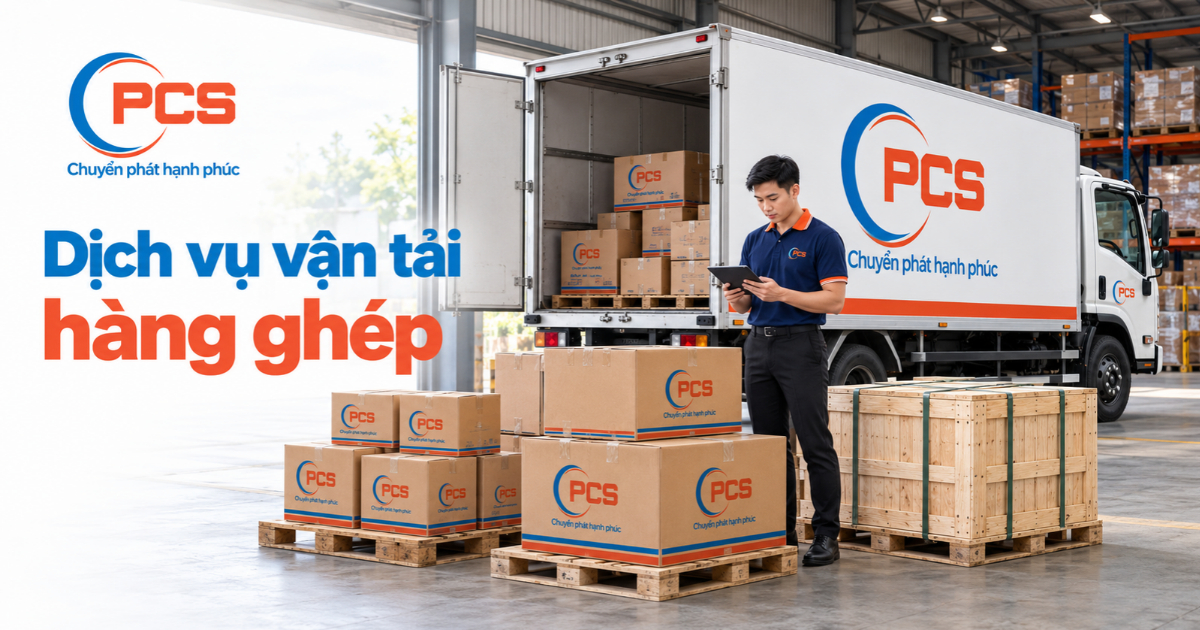
This is suitable for small and medium-sized shipments, individual pallets, components, supplies, boxed goods, or regular replenishment orders that do not require an entire vehicle. PCS Logistics combines compatible shipments moving along the same route while considering:
-
Shipment weight, volume, and dimensions.
-
Cargo characteristics and handling requirements.
-
Pickup and delivery locations.
-
Required delivery deadlines.
Businesses do not need to wait until they have enough cargo to fill a dedicated truck and can maintain shipment schedules according to actual requirements.
Key benefit: More economical transportation for smaller consignments, flexibility with changing volumes, and support for frequent but uneven B2B replenishment.
Full-Truckload Transportation
When shipment volumes are sufficiently large or goods need to travel separately, PCS assigns a dedicated vehicle from pickup to delivery.
Common full-truckload requirements include:
-
Large quantities of palletized goods or finished products.
-
Machinery, equipment, and oversized cargo.
-
Shipments that need fewer transfers or less cargo handling.
-
Goods that must follow specific factory dispatch and receiving schedules.
-
Peak-volume shipments or orders requiring a rapid response.
The value goes beyond simply having a dedicated truck. PCS selects vehicle type and payload based on cargo weight, volume, packaging, loading and unloading arrangements, and road access at the receiving site, avoiding oversized vehicles or trucks that cannot enter the factory.
This gives businesses more control over dispatch and delivery times and the available vehicle space, while limiting unnecessary transfers.
Transportation on Fixed Routes and Schedules
For recurring shipment flows, the priority is to maintain a consistent transport rhythm for production and supply activities rather than source a new vehicle for every trip.
Examples include:
-
Supplier → Factory → Warehouse.
-
Factory → Regional warehouse or branch.
-
Factory → B2B customer.
-
Factory A ↔ Factory B.
PCS works with customers to establish daily, weekly, or other recurring pickup and delivery schedules. Routes can remain stable without requiring fixed vehicle capacity: actual volumes are updated before each trip so PCS can assign an appropriate vehicle.
If volumes, waiting times, or receiving conditions change, routes are reviewed instead of continuing with arrangements that no longer work efficiently. Businesses therefore spend less time repeatedly sourcing vehicles and planning trips and can better schedule incoming materials, internal transfers, and finished-goods dispatches.

PCS Logistics combines consolidated freight and full-truckload transportation to meet different industrial supply requirements.
4. How PCS Logistics Controls B2B Shipments End to End
A B2B shipment is complete when the right order arrives on schedule, is confirmed by the receiver, and has the necessary handover records. PCS Logistics monitors each stage of B2B distribution services to make progress easier to track, exceptions easier to resolve, and post-delivery reconciliation more straightforward.
-
PO, product code, and quantity checks: Before dispatch, PCS verifies POs, product codes or SKUs, batch or serial numbers where required, package and pallet counts, weight, and accompanying documents. Goods are matched to the correct order and receiving point to reduce wrong deliveries, shortages, or rejection caused by incorrect information.
-
Receiving appointments and factory arrival times: PCS records pickup schedules, receiving windows, gate registration requirements, and estimated arrival times. Progress is monitored so businesses can be updated when appointments may be missed, receiving times change, or vehicles are delayed at factory or industrial park gates.
-
Packaging and visible cargo condition: Cargo condition is recorded at pickup, with loading arranged according to each shipment's weight, dimensions, and characteristics. Heavy, fragile, appearance-sensitive, or non-stackable goods are separated appropriately to reduce shifting, crushing, torn packaging, and damage during transport.
-
Joint inspection and POD: At delivery, PCS records accepted quantities, discrepancies, handover time, receiver details, and cargo condition. Signatures, stamps, photographs, handover reports, or POD are consolidated as required to support order confirmation and reconciliation.
-
Handling shipments not accepted: When appointments are missed, documents are missing, details differ, or a receiving site cannot accept goods, PCS records the reason and informs the designated contact. Depending on the agreed action, goods may await acceptance, be supported with additional documents, be rescheduled, be stored, or be returned.
With checks at both order level and delivery milestones, PCS Logistics helps businesses reduce errors, maintain transparent shipment progress, and address issues promptly. Clear handover data and documents also support monitoring, reconciliation, and consistent B2B supply operations. This is a key element of the PCS Logistics B2B Delivery Services approach.

PCS Logistics checks orders, delivery schedules, timing, and cargo condition throughout B2B transportation.
5. PCS Logistics' B2B Transportation and Distribution Process
PCS Logistics follows a five-step process for B2B distribution services in Vietnam, from receiving a transport request to completing handover and documentation. Each step is adapted to the cargo, route, and specific requirements of the receiving factory or industrial park.
-
Step 1 – Receive the request: Record product types, volumes, pickup and delivery points, deadlines, POs, and handover requirements. Review the information to establish the shipment scope and the checks needed before dispatch.
-
Step 2 – Confirm pickup and delivery conditions: Check appointments, receiver details, entry gates, unloading areas, required documents, and vehicle access. This helps avoid a truck arriving at the correct address without meeting the site's receiving conditions.
-
Step 3 – Develop the transport plan: Select the transport method, vehicle type, pickup schedule, and expected delivery time based on volumes and destination requirements. For recurring routes or multi-point deliveries, sequence the stops to match the agreed plan.
-
Step 4 – Receive and transport goods: Verify quantities, record visible cargo condition, and arrange loading before dispatch. During transportation, PCS monitors progress and communicates issues that could affect delivery schedules.
-
Step 5 – Handover, POD, and reconciliation: Coordinate joint inspection at the receiving point and record accepted quantities and any discrepancies. Consolidate POD, handover reports, and relevant documents so businesses can confirm completed orders and reconcile records.
The process gives businesses a clear view of each shipment from acceptance to final handover. It also helps identify discrepancies early, reducing their effect on production and supply schedules.
6. PCS Logistics' B2B and Industrial Distribution Capabilities
PCS Logistics develops B2B distribution services around the operating requirements of manufacturers: changing shipment volumes, strict receiving schedules, multiple factory and warehouse locations, and the need for clear shipment-by-shipment control. PCS Logistics B2B Distribution Services combines network coverage, transport capacity, and delivery coordination within Vietnam.
-
North–Central–South network connectivity: Operating sites and warehouses in Hanoi, Da Nang, Ho Chi Minh City, and Binh Duong support the receipt, consolidation, transfer, and interprovincial distribution of goods. Businesses can connect factories, regional warehouses, branches, and B2B partners through one network instead of managing each region independently.
-
Flexible transport capacity based on shipment volumes: PCS combines consolidated freight, pallet transportation, full-truckload vehicles, and recurring routes according to shipment size. When volumes rise or fall, or production schedules change, vehicle allocation and operating arrangements are adjusted instead of maintaining a fixed fleet size year-round.
-
Solutions tailored to factories and industrial parks: Transport plans consider payload, cargo dimensions, receiving appointments, entry-gate conditions, unloading areas, and handover requirements. These factors are particularly important for deliveries that must align closely with production schedules or warehouse receiving times.
-
One coordination point from dispatch to handover: PCS tracks order acceptance, vehicle assignment, progress, POD, and post-delivery documents. Businesses can identify which orders are in transit, completed, or require follow-up without working through multiple separate contacts.
-
Experience with manufacturing businesses: PCS Logistics has supported transportation and distribution requirements for businesses including VinFast, MG Motor, An Phát Xanh, and Hòa Phát. Plans reflect each customer's cargo types, volumes, receiving network, and actual operating requirements.
These capabilities support industrial distribution services and industrial logistics services for businesses with production sites and partners across Vietnam. PCS Logistics B2B Logistics brings transport coordination, network flexibility, and shipment-level controls together, while its B2B logistics services are planned around practical operational needs.
PCS's strength lies not only in assigning vehicles, but in connecting its network, adjusting capacity to changing volumes, and monitoring each B2B shipment from pickup to handover. This helps businesses expand distribution activity without increasing the burden of internal fleet management and transport coordination at the same rate.
Depending on shipment volumes, delivery frequency, and receiving conditions at each factory or industrial park, PCS selects suitable options ranging from consolidated freight and dedicated vehicles to scheduled routes, while monitoring delivery progress, handovers, and documents throughout.
If your business needs to distribute goods between suppliers, warehouses, factories, or industrial parks in Vietnam, PCS Logistics can review your cargo types, volumes, routes, and delivery schedules to recommend a suitable B2B logistics distribution plan. For details and a quotation for B2B distribution services in Vietnam, contact the PCS Logistics hotline at 1900 545 428.