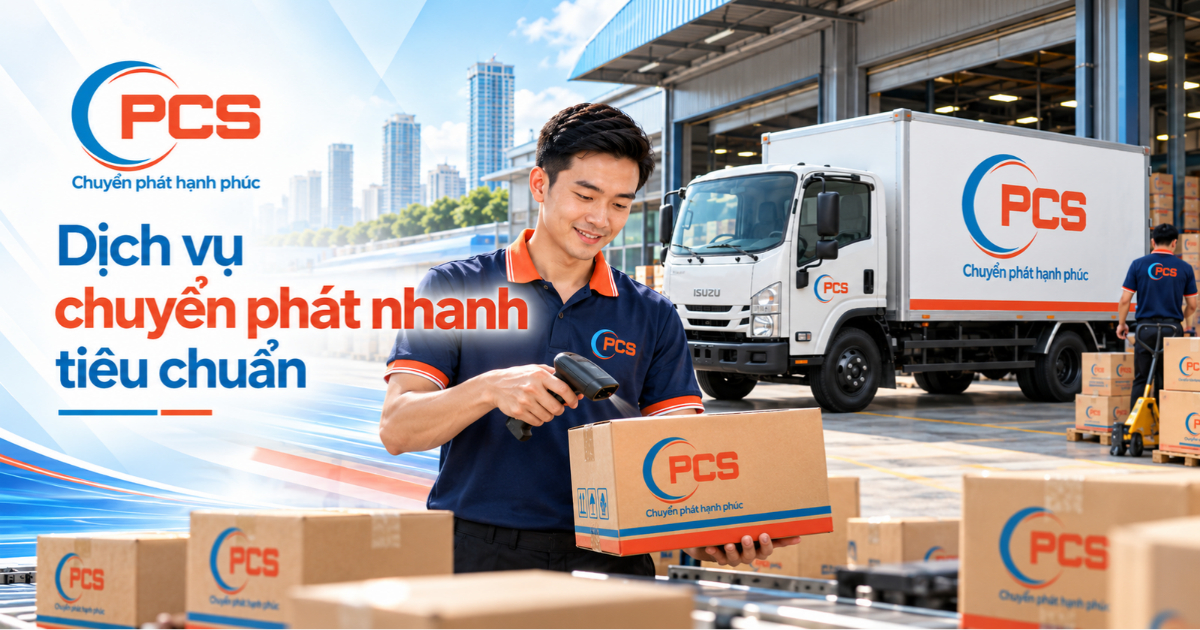

PCS Logistics provides less than truckload shipping services for businesses shipping loads that do not require an entire truck. This includes planned inventory replenishment to factories, warehouses and distributors. PCS combines compatible shipments moving along the same route to make better use of vehicle capacity. Based on the cargo, pickup and delivery locations, and required arrival date, PCS recommends a suitable arrangement and confirms the cost, dispatch schedule and handover requirements before transportation begins.
1. When are less than truckload shipping services the right choice?
This form of shared-load transportation suits businesses with small or medium-sized consignments, periodic stock replenishment or transfers between facilities when the volume does not justify a dedicated vehicle. The key consideration is whether the planned route and dispatch schedule meet the required delivery date.
| Business requirement | Shared-load (LTL) transport | Full truckload (FTL) transport |
|---|---|---|
| Shipment does not fill a truck | Suitable when the goods can safely share vehicle space | Compare against the cost of reserving a vehicle |
| Control costs for a small consignment | Often economical when the route and delivery location fit the network | Compare the full, actual cost |
| Urgent delivery or a strict appointment | Check dispatch availability and delivery feasibility | Offers greater control over scheduling |
| Goods cannot be transported alongside other cargo | Requires a separate arrangement or special handling | Easier to keep the shipment separate |
| Large shipment occupying most of the vehicle | Reassess the cost advantage | Often worth considering |
For example, a business replenishing a regional warehouse with several pallets of packaging materials and a flexible receiving window may find shared-load shipping suitable. If those same pallets must reach a factory during a narrow production receiving window, a dedicated truck deserves closer consideration.
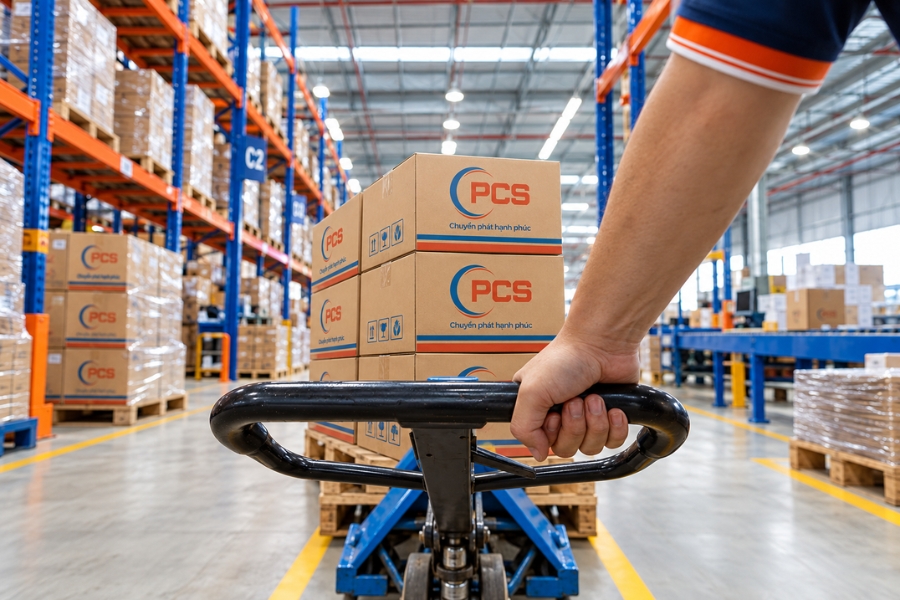
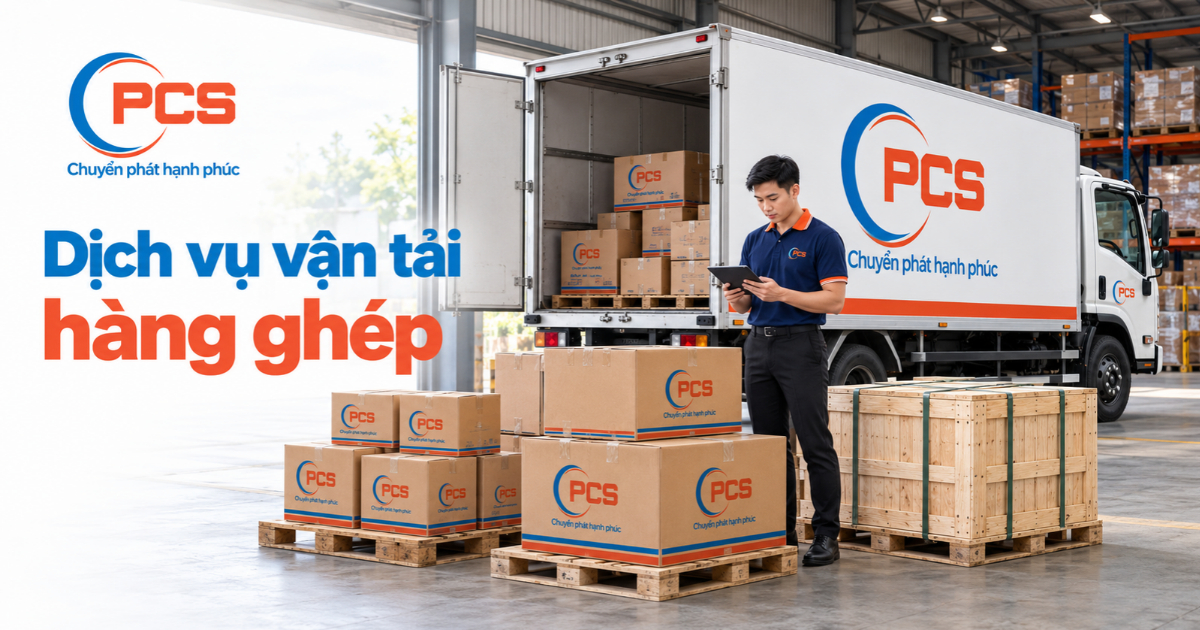
Shared-load transportation helps businesses make better use of truck capacity for smaller consignments.
PCS compares the total cost to the final delivery point, including mainline transportation, pickup, delivery and loading or unloading. For businesses evaluating less than truckload trucking, this comparison helps determine when shared capacity remains appropriate and when a full truck is a better operational fit.
2. How PCS Logistics handles shared-load shipments
PCS evaluates each shipment based on its characteristics, packaging condition, actual weight and dimensions. These details help determine whether the goods can be combined with other consignments, where they should be placed on the truck and how loading and unloading will be managed at both ends.
2.1. Eligible cargo and acceptance requirements
PCS Logistics LTL supports a range of business cargo, subject to verification of the shipping conditions. Businesses planning LTL shipping should provide the following information before acceptance:
| Cargo category | Information to confirm before acceptance |
|---|---|
| Cartons and packaged goods | Parcel count, packaging strength, weight per package and stacking capability |
| Palletized cargo | Overall pallet dimensions, total height and weight, and forklift availability |
| Parts and production materials | Packaging method and protection against impact, moisture or surface damage |
| Consumer products | Product characteristics, secure packaging and potential effects on other goods |
| Equipment and machinery | Dimensions, center of gravity, lifting points and securing method |
| Bulky goods | Overhang, floor space required and whether the goods can fit through the truck opening |
| Fragile or specially handled goods | Protective materials, stacking limits and required package orientation |
PCS confirms acceptance after checking shipment specifications against route conditions and cargo compatibility. Where special handling is required, the packaging, loading and transportation plan should be agreed before collection.
2.2. Shipments that require additional checks
Businesses should declare the following characteristics in advance:
- Risk of leakage or odors: Liquids, packaging or products that might affect neighboring shipments.
- Unusual dimensions: Long or oversized packages, loads extending beyond the pallet, or goods that are difficult to secure.
- Stacking restrictions: Fragile or deformable items, or packages that must remain upright.
- Special storage requirements: Goods requiring temperature or humidity control, or separation from other products.
- Complex handling: Goods that require a forklift, crane or other handling equipment at pickup or delivery.
Send photographs of the packed cargo, dimensions and lifting requirements so PCS can assess the shipment. For goods outside normal parcel specifications, PCS can review a suitable interprovincial bulky-cargo transportation arrangement before confirming acceptance.
2.3. Pickup and delivery arrangements
PCS recommends collection and delivery options based on warehouse locations and each business's access to suitable vehicles. Depending on the route and service coverage, available arrangements may include:
- Warehouse to warehouse: The sender and recipient arrange transportation to and from the agreed warehouses.
- Door to warehouse: PCS arranges collection at the sender's premises, while the recipient collects from the agreed warehouse.
- Warehouse to door: The sender brings the goods to a warehouse, and PCS arranges final delivery to the confirmed address.
- Door to door: Pickup and final delivery are arranged under the conditions at both locations.
PCS Logistics Less-than-Truckload arrangements are confirmed based on the agreed origin, destination and handling conditions. Where pickup or delivery takes place at a PCS warehouse, the location, receiving hours and shipment specifications are checked before the business dispatches a vehicle, helping avoid unnecessary waiting or delivery to the wrong site.

PCS Logistics checks each shipment's acceptance conditions and compatibility with other cargo before consolidation.
3. Routes, dispatch schedules and transit times
PCS plans less than truckload shipping services around cargo readiness, dispatch schedules and receiving windows at the destination. Coordinating these milestones helps businesses plan outbound shipments, warehouse staffing and inventory intake.
3.1. Coverage and main transportation routes
PCS connects shipments across Northern, Central and Southern Vietnam, including interprovincial routes and industrial parks, for cargo moving between factories, warehouses and distribution networks:
- Northern ↔ Central Vietnam: Materials, commercial products and replenishment stock for regional warehouses.
- Northern ↔ Southern Vietnam: Small consignments between factories, central warehouses and distribution networks.
- Central ↔ Southern Vietnam: Shipments moving between suppliers, warehouses, dealers and business customers.
- Interprovincial and industrial park routes: Dispatch plans coordinated with receiving and release conditions at each site.
For each booking, PCS checks the main transportation route, pickup and final delivery legs, and whether transfers are needed. Direct or hub-based routing and dispatch dates are confirmed according to the addresses, goods specifications and delivery deadline.
PCS Logistics LTL Shipping supports businesses comparing shared-load transportation with other options for North–South cargo movement. The choice depends on shipment volume and the required arrival date. For recurring lanes, LTL shipping services should be assessed against the actual pickup, consolidation and delivery schedule.
3.2. Estimated delivery times
PCS confirms an estimated delivery date based on the route, collection time and actual receiving conditions. For deliveries to factories or industrial parks, warehouse appointments and entry procedures are also considered.
| Transport coverage | How the estimated delivery time is confirmed | Key details to clarify |
|---|---|---|
| Routes within the same region | Based on the specific pickup and delivery route | Next available departure, collection cutoff and final delivery leg |
| North ↔ Central / Central ↔ South | Based on the interregional dispatch schedule | Consolidation location, departure schedule and transfer requirements |
| North ↔ South | Match available truck schedules with the required delivery date | Mainline transit and final delivery time |
| Off-mainline destinations, factories or industrial parks | Confirmed separately for each consignment | Appointments, gate registration, receiving hours and unloading conditions |
Before accepting a shipment, PCS and the customer should agree on three milestones: the cutoff for the selected departure, the expected dispatch time and the estimated delivery date. The plan should also state when transit time starts and account for the receiving facility's working days, weekends and public holidays.
3.3. Factors that affect delivery schedules
- Collection time: Goods received after the departure cutoff must be assigned to another available schedule.
- Dispatch and consolidation: The availability of compatible loads affects which departure can be used.
- Pickup and delivery points: Locations away from the main route may require extra collection or last-mile transportation.
- Transfers between facilities: Vehicle changes, load separation or handling at a hub require additional time.
- Vehicle access restrictions: Local restrictions on truck access may affect pickup and delivery windows.
- Warehouse, factory and industrial park bookings: Appointments, gate procedures and unloading slots determine when a shipment can be handed over.
- Conditions en route: Traffic, weather and changes at the receiving site may affect the plan.
For example, a shipment arriving in the destination area on Friday afternoon cannot be handed over until Monday morning if the receiving warehouse is closed for the weekend. For production-related deliveries, businesses should share both the date when the goods are needed and the warehouse's actual receiving window.

Shared-load transit times are confirmed based on the route, vehicle schedule and pickup and delivery locations.
4. How are less than truckload shipping services priced?
PCS prepares quotations based on shipment weight, the space occupied on the vehicle and the scope of pickup and delivery. Two consignments with the same weight may have different rates if their dimensions, stacking restrictions or loading requirements differ.
4.1. Main factors affecting freight charges
- Actual weight: Particularly relevant for compact, heavy cargo.
- Dimensions and volume: Indicate the space needed for lightweight or bulky goods.
- Number of packages or pallets: Affects loading, unloading and piece-count verification.
- Transportation route: Includes the main route and connections to pickup or delivery locations.
- Cargo characteristics: Fragile, non-stackable or specially secured goods may require different handling.
- Conditions at both ends: Site access, loading locations, delivery floors and handling equipment affect costs.
- Additional requests: Timed deliveries, multiple drop-off points and document returns need to be included in the quotation.
Compact, heavy goods are generally assessed with particular attention to weight. Lightweight loads that occupy more space need to be evaluated by volume or vehicle floor area. Non-stackable goods should be declared even when their weight is low.
Businesses should provide packed dimensions, including pallets and any overhang. PCS reviews these details to determine an appropriate rating basis for the shipment. When evaluating less than truckload freight, confirm which dimensions and restrictions are included in the cost calculation.




4.2. What to check in an LTL quotation
Before confirming a booking, PCS and the business should agree on the quotation scope, particularly:
- Whether charges include door-to-door collection and delivery or only warehouse-to-warehouse transportation.
- Who is responsible for loading, unloading, lifting, packaging or additional securing.
- When waiting, redelivery, storage or address-change charges apply.
- Applicable taxes, documentation, quotation validity and payment terms.
Agreeing on these terms helps businesses compare LTL freight options on the same basis and set a more accurate transportation budget.

Shared-load transportation rates depend on shipment weight, volume and collection and delivery conditions.
5. Transportation process and cargo risk controls
PCS manages less than truckload shipping services by keeping each consignment linked to its cargo details, destination and delivery requirements. Package counts, stacking instructions, tracking and documentation needs are agreed during acceptance so the parties can coordinate throughout the journey.
5.1. The shared-load transportation process
- Receive the request and shipment details: PCS records the goods category, packing specifications, collection and delivery addresses, and required delivery date. The business also provides receiving-site requirements, supporting documents and handling conditions.
- Confirm consolidation, dispatch and pricing: PCS checks cargo compatibility and route availability, then agrees on service scope, the expected schedule and charges with the customer.
- Collect, inspect and sort the goods: At collection, PCS checks the number of packages, packaging condition and identification details. Any discrepancies are discussed with the business before transportation.
- Load, transport and monitor the shipment: Goods are positioned according to their characteristics and handling requirements. PCS monitors progress and coordinates any necessary changes affecting delivery.
- Deliver, confirm and complete paperwork: PCS hands over the shipment according to the agreed details, records the outcome and cargo condition, and prepares documents needed for reconciliation.
5.2. How PCS controls multiple shipments on one truck
PCS Logistics LTL Freight operations focus on keeping consignments identifiable and managing compatibility throughout collection, transportation and delivery. The key controls include:
- Collection checks: Verify package count, packaging and visible condition before loading.
- Consignment identification: Link each package or pallet to its shipment reference, destination and recipient.
- Cargo classification: Separate heavy, fragile, non-stackable or upright-only shipments as appropriate.
- Compatibility assessment: Avoid combining goods that could leak, produce strong odors or otherwise damage neighboring shipments.
- Load distribution and securing: Select placement, stacking height and securing methods according to shipment specifications.
- Transfer checks: Reconcile package counts at transshipment points where applicable.
- Delivery confirmation: Record quantities received, condition and any discrepancies.
For sealed shipments, the business and PCS should agree whether checks apply to packages only or also to the products inside. Requests to count or jointly inspect individual SKUs need to be provided in advance so the appropriate arrangement can be made.
5.3. Shipment tracking and proof of delivery
PCS supports waybill lookup and progress updates through the agreed customer contact. The objective of LTL freight services is to give businesses a clear basis for tracking individual consignments even when several customers' goods travel together.
At handover, PCS records the shipment reference, number of packages or pallets, time, recipient and cargo condition. Proof of delivery (POD) may consist of a signature, photographs or electronic records according to the agreed requirements.
If delivery is unsuccessful, PCS coordinates the necessary follow-up, such as additional documents, redelivery or returns. Discrepancies are reviewed against the shipment reference, condition photographs and relevant handover records.
Requirements for original documents, electronic copies and document return deadlines should be agreed when the transportation arrangement is established.
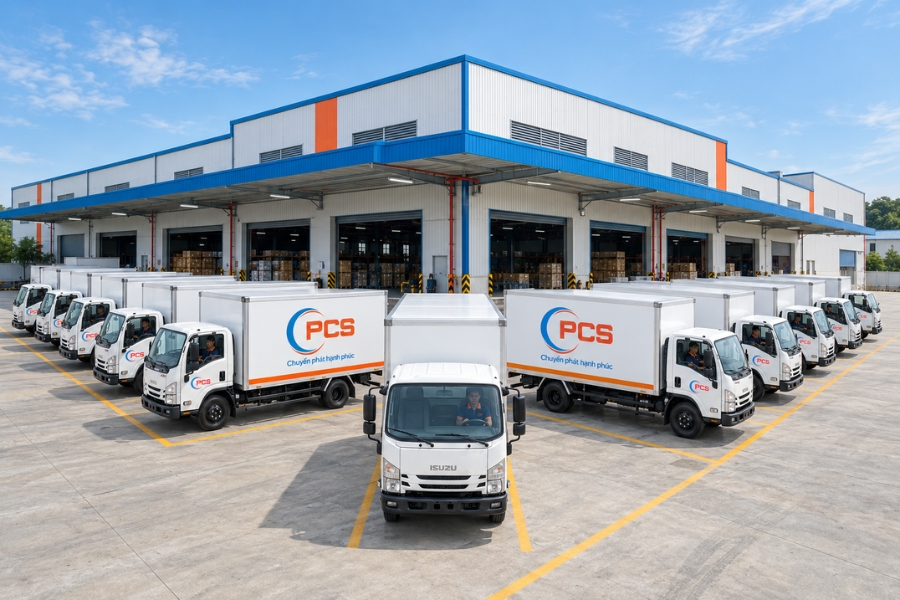
PCS Logistics tracks each consolidated shipment from collection and transportation through delivery confirmation.
6. PCS Logistics' shared-load transportation capabilities
PCS provides less than truckload shipping services through its warehouse network, transportation resources and B2B shipment coordination. The network connects cargo collection, route consolidation and delivery according to shipment specifications, volume and receiving schedules.
- Warehouses connecting Northern, Central and Southern Vietnam: Facilities and operating locations in Hanoi, Da Nang, Ho Chi Minh City and Binh Duong support consolidation, transfers and regional distribution.
- Varied vehicle resources: A network of more than 50 trucks helps PCS arrange vehicles according to shipment weight, volume and site-access conditions.
- Route-based collection and consolidation: PCS collects goods from warehouses, factories or multiple suppliers and combines compatible consignments traveling in the same direction to use vehicle space efficiently.
- Handling cartons and palletized goods: Warehouse operations can include handling, sorting, packaging and load reinforcement, with placement and securing based on dimensions and load-bearing capacity.
- Factory and industrial park delivery coordination: PCS considers dispatch and receiving schedules, gate-registration requirements and loading or unloading arrangements.
- Shipment and handover records: PCS uses OMS/TMS for order and transport management, together with delivery records, discrepancies and POD linked to shipment references to support reconciliation.
PCS Logistics LTL Freight Services can be coordinated with B2B distribution to factories and industrial parks for recurring domestic consignments. This helps businesses align shipping dates with production and warehouse receiving plans. PCS Logistics LTL Shipping Services are also relevant when businesses need to compare shared truck capacity with dedicated vehicle arrangements as volumes change.
For businesses evaluating LTL freight shipping, the important questions are whether the goods can be safely consolidated, whether the route meets the receiving deadline and what the complete door-to-door cost includes.
PCS Logistics provides less than truckload shipping services for businesses moving cartons, pallets and other partial loads across Northern, Central and Southern Vietnam. By combining suitable consignments and agreeing on clear pickup, delivery and handover requirements, PCS helps businesses plan transport costs and schedules.
Contact PCS Logistics at 1900.545.428 to discuss your shipment and request a quotation.