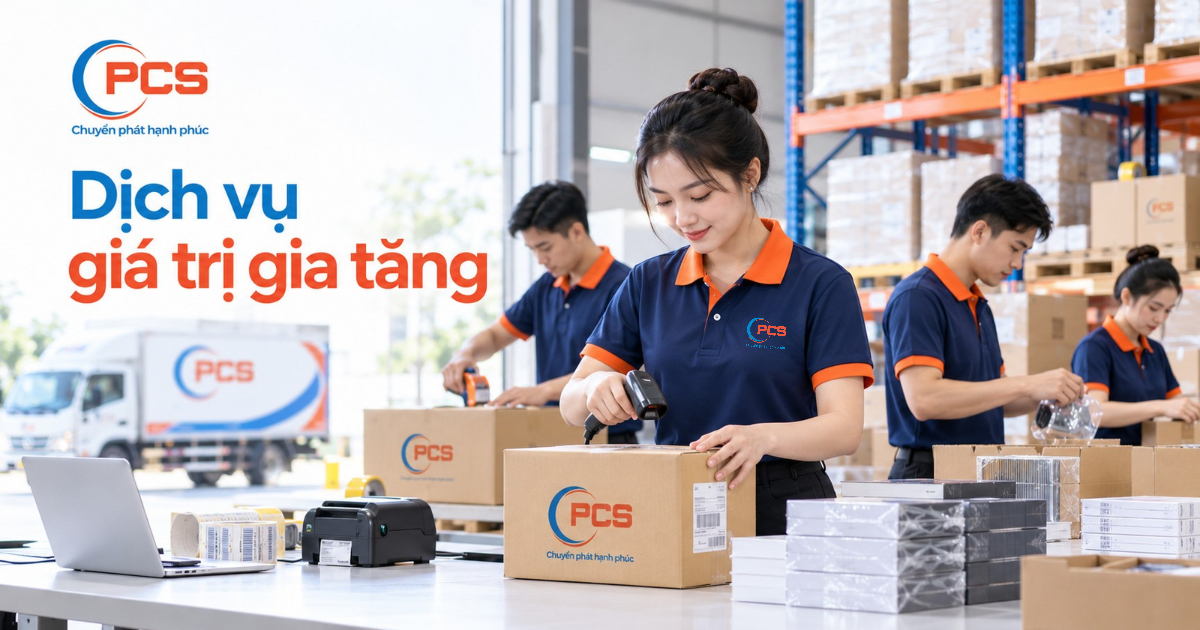

When companies supply multiple dealers, retail chains and business partners, their warehouse teams must manage purchase orders, inventory, stock allocation and deliveries with different requirements for each customer. As the number of SKUs and delivery locations increases, maintaining accuracy, meeting receiving schedules and managing operating costs becomes more demanding.
PCS Logistics provides B2B fulfillment services covering storage, inventory management, purchase order (PO) processing, picking, packing and coordination with nationwide distribution. Its warehouse network and centralized order-processing capabilities support arrangements tailored to each company's products, partner network and supply schedule.
1. What are B2B fulfillment services, and who are they for?
Recipients commonly include distributors, dealers, retail chains, distribution warehouses, factories and other organizations. Orders may be prepared by item, carton, package, pallet or PO, depending on the receiving party's requirements.
The defining feature of business to business fulfillment is meeting each partner's specifications for SKU, quantity, packing format, delivery deadline and receiving conditions.
1.1. How does B2B fulfillment differ from warehousing and B2C fulfillment?
| Criteria | Warehousing | B2B fulfillment | B2C fulfillment |
|---|---|---|---|
| Main purpose | Store and manage goods | Complete orders for business customers | Complete orders for end consumers |
| Order structure | Inbound and outbound movements as requested | POs, cartons and pallets | Individual orders and SKUs |
| Recipients | Designated locations | Dealers, retail chains and factories | Consumers |
| Main requirements | Inventory records and product condition | Specifications, quantities, schedules and documents | Picking accuracy, packing and delivery |
Businesses operating both wholesale and retail channels may combine the two fulfillment models while allocating inventory and setting up separate workflows for each order type.
1.2. Which businesses benefit from B2B fulfillment?
PCS Logistics works with manufacturers, trading companies and distributors that need warehouse operations aligned with their B2B customer networks:
- Manufacturers and brand owners: Store finished goods, process POs and supply distributors, dealers or commercial partners.
- Consumer goods and home appliance distributors: Manage large SKU catalogs, allocate stock to individual orders and replenish regional sales channels.
- Supermarket and retail chains: Prepare shipments by branch, carton or pallet configuration, labeling specification and receiving appointment.
- Industrial materials and components suppliers: Process orders linked to factory supply plans, production warehouses and industrial parks.
- Companies entering new markets: Add warehousing, order-processing and distribution capacity without immediately investing in all the required facilities.
This model is particularly relevant when businesses manage many SKUs, frequently changing purchase orders or different receiving specifications for each customer. Wholesale fulfillment helps organize those requirements while internal teams focus on production, sales and customer relationships.
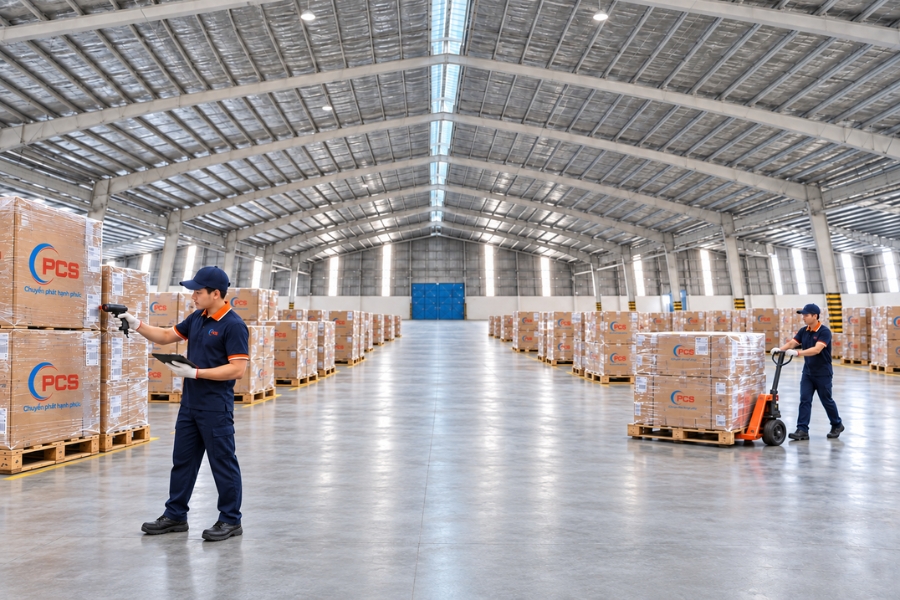
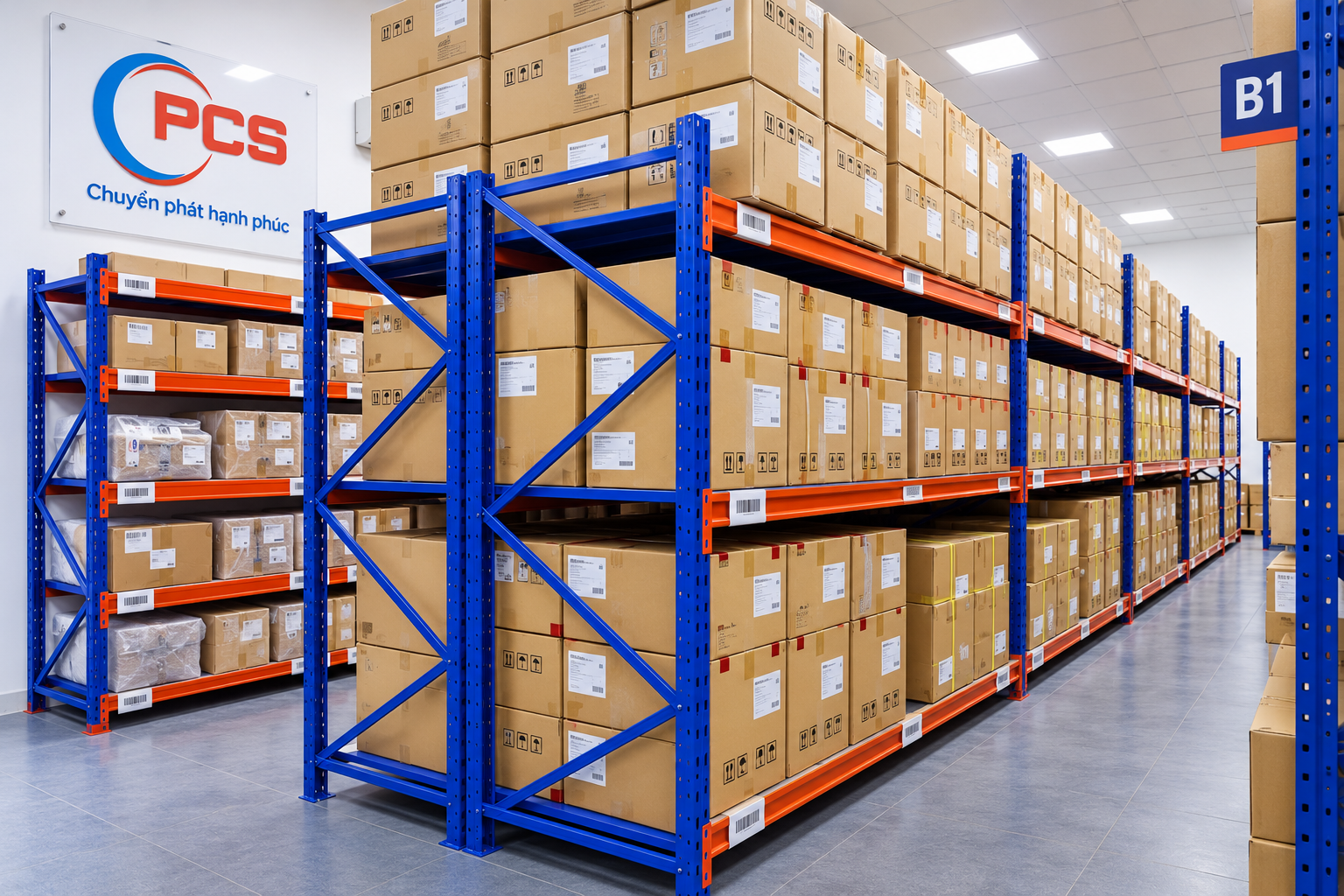
A 3D model of a central warehouse preparing goods for distribution to dealers, stores and factories.
2. What do PCS Logistics' B2B fulfillment services include?
PCS Logistics organizes fulfillment around the movement of goods, from warehouse receipt through order completion and handover to business partners. Inventory data, PO information and delivery instructions connect the stages to reduce discrepancies between the warehouse, sales teams and transportation providers.
2.1. Goods receiving, warehousing and inventory management
PCS Logistics receives goods from factories, suppliers or a company's central warehouse according to the agreed plan. Items are counted, recorded and placed in appropriate storage locations before being registered in the inventory management system.
Key activities include:
- Receiving and counting: Check quantities, SKUs, packing formats and visible packaging condition within the agreed inspection scope.
- Sorting and storage: Organize products by SKU, characteristics, location or storage unit for inbound, outbound and stocktaking activities.
- Inventory movement management: Track received, dispatched and on-hand quantities, as well as stock allocated to orders.
- Discrepancy control: Record shortages, overages, visible damage or goods awaiting approval for separate handling.
For goods requiring batch, expiration-date or serial-number tracking, or special storage conditions, PCS assesses the proposed warehouse's capabilities before implementation.
Distinguishing physical stock, available stock and allocated stock helps businesses confirm purchase orders and plan dispatch without committing inventory that is unavailable.
2.2. Receiving and processing B2B purchase orders
Business orders often have specific requirements for product lists, quantities, delivery deadlines, supporting documents and receiving arrangements. PCS processes orders based on confirmed POs or approved order lists.
The B2B order fulfillment workflow includes:
- Capturing order details: Record PO number, SKU, quantity, recipient, address, deadline and handling instructions.
- Checking available stock: Compare ordered quantities against stock available for dispatch, identifying shortages or items awaiting resolution.
- Allocating inventory: Reserve the correct quantities for each PO, dealer or receiving location.
- Managing changes: Update quantities, schedules or cancellations under the agreed approval process.
When stock is insufficient or an order changes after confirmation, PCS coordinates the next steps with the business before picking and dispatching goods.
For example, a distributor may order 200 units across several SKUs when only 150 units of one SKU are available. PCS records the shortage so the business can decide whether to make a partial shipment, replenish stock or revise the PO.
This approach supports consistent order information across departments and reduces discrepancies after goods have been prepared or handed over for transportation. This approach also supports businesses handling multiple customer-specific POs.
2.3. Picking, packing and preparation to B2B specifications
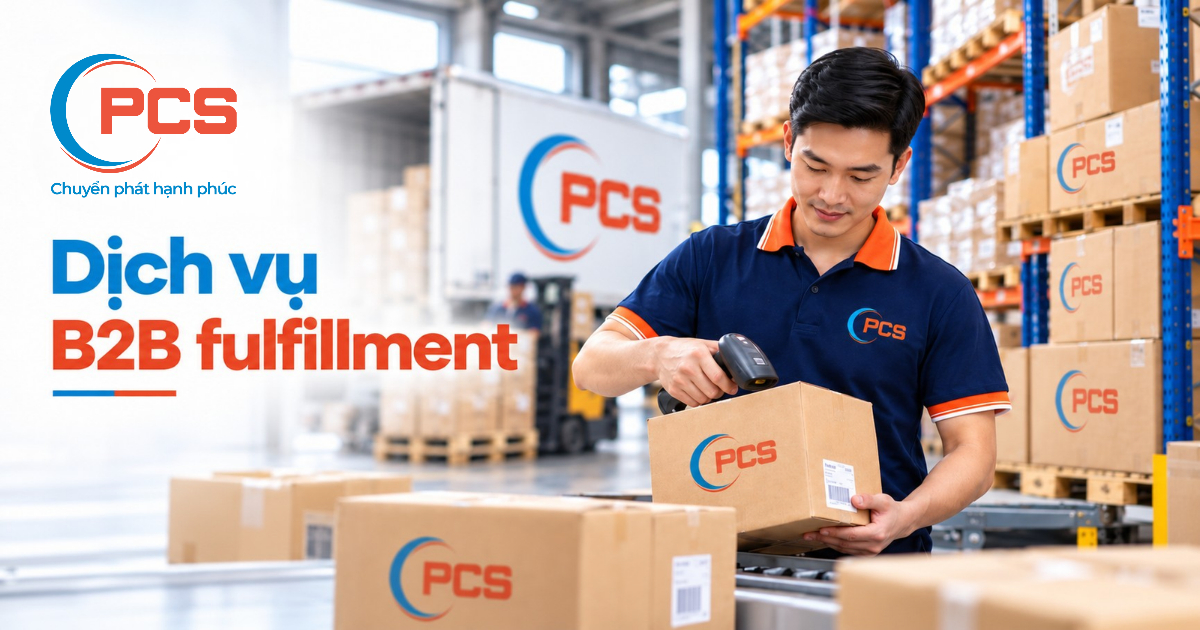
After order approval, PCS picks, checks and packs goods against the dispatch list and each business partner's instructions. Shipments can be prepared as individual products, full cartons, packages or pallets, depending on PO structure and receiving conditions.
Activities may include:
- Picking by SKU and PO: Select the required products and quantities, separating goods for each order or destination.
- Pre-dispatch checks: Compare picked items with approved lists, including quantities and visible condition.
- Packing and reinforcement: Use cartons, cushioning, stretch wrap, straps or pallets suitable for the goods.
- Labeling and sorting: Apply order identifiers, destination details, handling marks or customer-specific labels.
- Document preparation: Check packing lists, dispatch notes, PO references and accompanying documents within the agreed scope.
PCS also offers value-added logistics activities, including supplementary labeling, splitting shipments, assembling product sets, changing packaging and repacking.
For example, a home appliance supplier serving multiple retail chains may need to split one stock allocation into separate POs. Each chain can require a different carton quantity, label format or pallet arrangement. PCS prepares the shipments against the approved requirements to support receiving at each destination.
For wholesalers with recurring packaging specifications, wholesale order fulfillment links stock allocation, preparation and destination-specific documentation in one workflow.
2.4. Connecting order preparation with B2B transportation and distribution
Once warehouse processing is complete, PCS can connect orders to its transportation and distribution network for delivery to dealers, stores, partner warehouses or factories.
Depending on shipment volume and frequency, the arrangement may include:
- Delivery by PO: Dispatch individual orders to confirmed receiving locations.
- Multi-location distribution: Group orders by area, address and receiving window to plan deliveries to multiple dealers or stores.
- Scheduled replenishment: Supply regional warehouses, branches or business partners on daily, weekly or other agreed cycles.
- Carton and pallet transport: Select less-than-truckload (LTL), full truckload (FTL) or other suitable arrangements based on shipment size and weight.
Supermarkets, distribution centers, factories and industrial parks may have separate booking, vehicle access, unloading and documentation requirements. These details should be confirmed before dispatch.
PCS can combine B2B wholesale fulfillment with its distribution and multi-stop delivery activities. This reduces the number of contacts businesses must coordinate between warehousing and transportation and helps maintain shipment visibility through delivery confirmation.
2.5. Delivery reconciliation, exception handling and returns
Fulfillment work continues after goods leave the warehouse. PCS helps record delivery outcomes, reconcile quantities and address exceptions within the agreed service scope.
Important records include:
- Delivery outcome: Delivered, partially delivered, awaiting receipt or unsuccessful delivery.
- Actual received quantity: Compare dispatched goods with quantities acknowledged by the receiving partner.
- Proof of Delivery (POD): Collect and reconcile signatures, photos or receiving records as agreed.
- Delivery exceptions: Record refusals, schedule changes, shortages or discrepancies for follow-up.
- Returned goods: Receive, inspect and classify returns for approved recovery, reprocessing or restocking.
For refused or recalled goods, PCS may coordinate reverse logistics from dealers, shops or factories to a warehouse or another designated handling location.
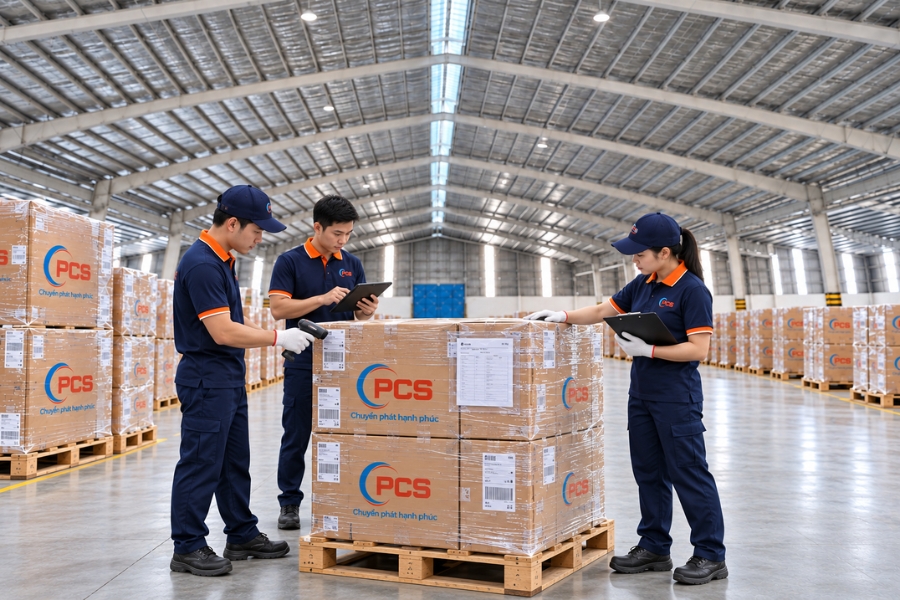
PCS Logistics monitors goods, orders and delivery documents throughout the B2B fulfillment process.
Returned items are checked and classified before being added back to available inventory. Products showing damage or not yet eligible for resale are recorded separately for the business to determine the next action.
3. How PCS Logistics implements B2B fulfillment services
PCS designs each implementation around cargo characteristics, purchase order structure and the customer's distribution model. Before launch, the parties agree on responsibilities, input data, processing criteria and required handover records.
Step 1. Review operational needs and source data
PCS discusses product categories, SKU lists, inbound and outbound volume, expected inventory, PO counts, receiving locations and the activities the business intends to outsource.
Processing deadlines, packing specifications, documentation, management systems and potential exceptions are also reviewed to establish an appropriate scope.
Step 2. Design the solution and confirm service conditions
Using the operational data, PCS evaluates warehouse location, required storage space, staffing, PO processing and connections to transportation.
The parties agree on the service scope, counting method, order cutoff times, handling deadlines, reporting, acceptance criteria and issue escalation. Performance targets are established through the applicable service-level agreement (SLA) or other agreed service terms.
Step 3. Configure data and receive opening inventory
PCS works with the business to set up the SKU catalog, opening inventory records, storage locations and order-processing requirements. Goods are received, counted and checked against the handover list before being entered into the system.
Any initial discrepancies are acknowledged by both parties to establish accurate inventory records for ongoing operations.
Step 4. Process POs, pick and pack orders, and hand over shipments
PCS receives approved orders through the agreed channel, checks available inventory, allocates products, performs picking and packing, and prepares dispatches.
Orders are checked for SKU, quantity, packing format and required documents before transportation handover. Changes that require authorization are referred to the designated contact for approval.
Step 5. Review results, reconcile records and adjust operations
PCS compiles agreed operational reports covering inventory, processed orders, dispatch status, delivery results and outstanding exceptions.
Businesses use the information to reconcile quantities, review progress and revise replenishment, stock allocation or distribution plans. When volumes, SKUs or partner networks change, PCS and the customer review the operating arrangement.
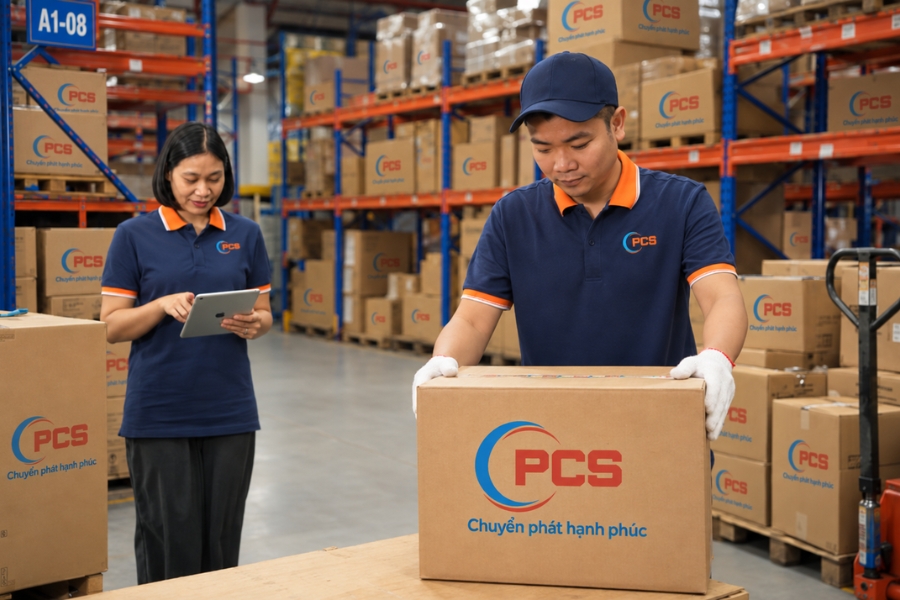
PCS Logistics tracks goods from warehouse receipt and order processing through delivery and POD confirmation.
4. How much do B2B fulfillment services cost?
PCS Logistics calculates prices based on cargo characteristics, workload and the service scope required by each business. Quotations may cover storage, PO processing, packing, transportation and agreed additional tasks.
4.1. Main cost categories
| Cost category | Basis for calculation |
|---|---|
| Inbound and outbound handling | Volume, counting units and loading or unloading requirements |
| Warehousing | Area, pallet positions, volume or storage period |
| B2B order processing | Number of POs, order lines, SKUs and units to pick |
| Packing and value-added services (VAS) | Packing specifications, materials, labeling and extra handling |
| Transportation | Number of delivery points, weight, routes and transport method |
| Exception handling | Order changes, redelivery, returns, inspection or repacking |
The specific charges and billing units are confirmed in the quotation. Businesses can select individual processes or combine several activities, subject to their operating needs and PCS acceptance conditions.
4.2. Factors affecting total operating cost
The number of stored units is only one pricing factor. PO complexity and handling requirements also matter:
- SKU count and PO structure: Orders with many lines or allocations across partners require additional picking and checking.
- Cargo characteristics: Heavy, bulky, fragile or specially stored goods can affect space and handling requirements.
- Inbound and outbound frequency: Shipment cycles and changes in volume affect resource allocation.
- Packing specifications: Labeling, kitting, reinforcement, palletizing or repacking add materials and activities.
- Delivery conditions: Number of stops, bookings, unloading, waiting time and redelivery may affect total costs.
PCS assesses the full workflow to prepare a quotation aligned with actual volumes and service requirements. A representative operating period helps estimate normal workload; businesses with seasonal peaks should also share peak-volume forecasts.




5. PCS Logistics' capabilities for business fulfillment
PCS integrates warehousing, management technology, operational teams and nationwide distribution capacity. Businesses can choose an arrangement that combines warehouse handling and commercial order fulfillment within a connected logistics network.
5.1. Eight warehouses covering approximately 20,400 m²
PCS Logistics operates a network of eight warehouses with a total area of approximately 20,400 m² in key regions, supporting storage, goods handling and North–South transportation connections.
The network provides a basis for:
- Storing finished goods and commercial inventory for dealer networks.
- Preparing orders by SKU, carton, package or pallet.
- Replenishing regional warehouses, branches and retail networks.
- Combining storage with labeling, packing and other VAS activities.
Storage locations and arrangements are selected according to cargo requirements, shipment volumes, service area and actual capacity at each warehouse.
5.2. Staffing and order-processing capacity
PCS Logistics reports a workforce of more than 300 employees across its operations, supporting warehousing, order handling and deliveries.
For fulfillment operations overall, PCS reports peak processing capacity of more than 7,000 orders per day. This is a company-wide fulfillment capacity figure, not a guaranteed daily throughput for each B2B project. Project capacity is assessed separately using PO counts, order lines, carton or pallet volumes, handling requirements and dispatch schedules.
PCS can plan staffing and processing stages based on recurring demand or seasonal peaks once service conditions have been agreed with the customer.
5.3. Warehouse, order and transportation management systems
PCS Logistics uses WMS, OMS/TMS and the Customer Portal for warehouse operations, order management and transportation coordination.
- WMS (Warehouse Management System): Supports storage locations, inventory movements, SKUs, picking and packing.
- OMS (Order Management System): Supports order processing and status management.
- TMS (Transportation Management System): Supports dispatch coordination and delivery data management.
- Customer Portal: Provides shipment lookup, status information and reporting through its available functions.
Inventory records, inbound and outbound history, order status, delivery outcomes and documents are maintained according to the agreed system scope and method of data exchange.
These systems give business teams information to check available stock, review PO processing and reconcile exceptions without manually consolidating data across multiple departments.
5.4. Connections to nationwide distribution
PCS Logistics reports a nationwide transportation network with more than 50 trucks and arrangements covering LTL, FTL, palletized cargo and multi-stop distribution.
The integration of warehousing and transportation helps customers:
- Dispatch goods by PO and receiving schedule.
- Replenish dealers, stores and branches regularly.
- Move stock to factories, industrial parks and business customers.
- Coordinate deliveries, reconciliation and returns when needed.
A connected service model helps businesses reduce handoffs between warehouse and transport providers and manage both delivery progress and supporting records.
5.5. Experience supporting B2B brands and distribution networks
PCS Logistics has provided fulfillment-related services for businesses and brands including VGreen, Sato, BFactory, 2S Group, Gong Cha and AirProce.
Its B2B distribution experience with Hoa Phat, Thien Long and other manufacturing and trading companies also includes handling PO-based deliveries, carton specifications, receiving schedules and documentation for retail networks.
This experience informs PCS's approach to designing processes around different product categories, distribution models and partner requirements. The term 3PL B2B fulfillment describes the outsourced logistics model under which these functions can be coordinated through a third-party provider.
5.6. Flexible service combinations for different business models
PCS offers a choice of separate warehouse services or combined logistics workflows. Businesses may:
- Outsource storage and inventory control together with PO processing.
- Outsource order preparation and packing before warehouse dispatch.
- Combine storage, order processing and delivery to dealer networks.
- Add labeling, product kitting or returns handling in selected phases.
PCS Logistics B2B Fulfillment refers to the company's business-order operations; PCS Logistics B2B Fulfillment Services can combine them with storage and related handling activities under an agreed scope.
For procurement and wholesale workflows, PCS Logistics B2B Order Fulfillment focuses on preparing orders against customer requirements, while PCS Logistics B2B Order Fulfillment Services also encompasses the agreed supporting handling stages. PCS Logistics Wholesale Fulfillment connects those activities with planned supply to wholesale partners.
Businesses considering wholesale fulfillment services can select a suitable level of support as their PO volume, partner network and order complexity change. This flexibility helps align available resources with inventory needs and growth plans.
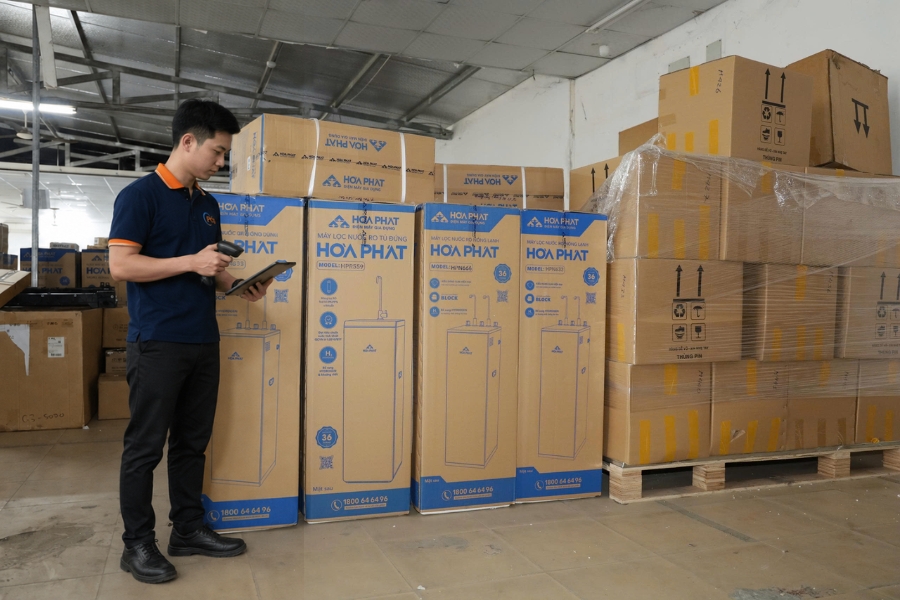
PCS Logistics provides fulfillment operations for Hoa Phat's dealer and distributor network.
6. Contact PCS Logistics for B2B fulfillment support
PCS Logistics combines warehouse facilities, operational teams and nationwide distribution connections to support manufacturers, trading companies and distributors with storage, PO processing and supply operations.
An arrangement is developed around product specifications, PO volume, handling requirements and actual receiving locations. With B2B fulfillment services, businesses can coordinate the activities they need while maintaining clearer inventory records and dispatch plans.
To discuss a quotation, share your SKU catalog, estimated inventory, order volumes and distribution plan.
Hotline: 1900.545.428
Email: support@pcs-logistics.com
Website: https://pcs-logistics.com/