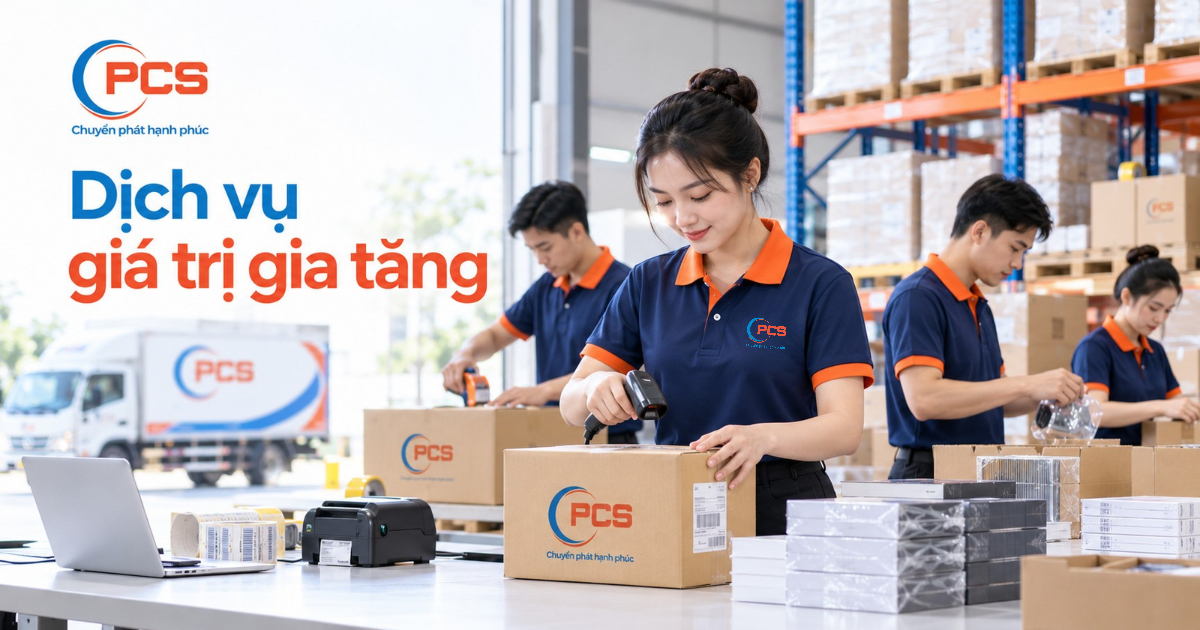

Growing order volumes are a positive sign, but they also put pressure on inventory management, order processing, packing, delivery, and returns. As product SKUs, sales channels, and order volumes increase, businesses may face backlogs, incorrect shipments, inventory discrepancies, and the recurring need to expand warehouse staffing.
PCS Logistics provides B2C fulfillment services that connect warehousing, inventory control, order intake, picking, packing, delivery, and returns through a coordinated operation. The model is designed for brands selling through websites, e-commerce marketplaces, and other direct-to-consumer channels that need capacity to adjust as demand changes.
1. What is B2C fulfillment?
A typical workflow follows these stages:
Goods receiving → Warehousing → Inventory management → Order intake → Picking → Inspection → Packing → Delivery → Returns/exchanges
A defining feature of B2C fulfillment is the need to manage many relatively small orders, multiple SKUs or product variants, and a large number of delivery addresses while maintaining order-level speed and accuracy.
| Criteria | B2C fulfillment | B2B fulfillment |
|---|---|---|
| Recipients | End consumers | Businesses, dealers, and stores |
| Order profiles | Many smaller orders | Fewer orders, often with larger quantities |
| Processing units | Individual orders, SKUs, and variants | Cases, cartons, pallets, or purchase orders (POs) |
| Packing | Tailored to each order and the buyer experience | Based on B2B receiving requirements |
| Returns | Handled at the consumer-order level | Managed under agreed return or recall arrangements |
Businesses should therefore choose a fulfillment model based on their actual order structure rather than applying one workflow to both B2B and B2C orders. This distinction is also important when comparing ecommerce fulfillment with wholesale order handling.
2. What do PCS Logistics' B2C fulfillment operations include?
Through PCS Logistics B2C Fulfillment Services, the order lifecycle is managed from inbound receipt to completed delivery or return to the warehouse. Connected steps help businesses track inventory, orders, and delivery status through an agreed operating process.
2.1. Goods receiving, warehousing, and inventory management
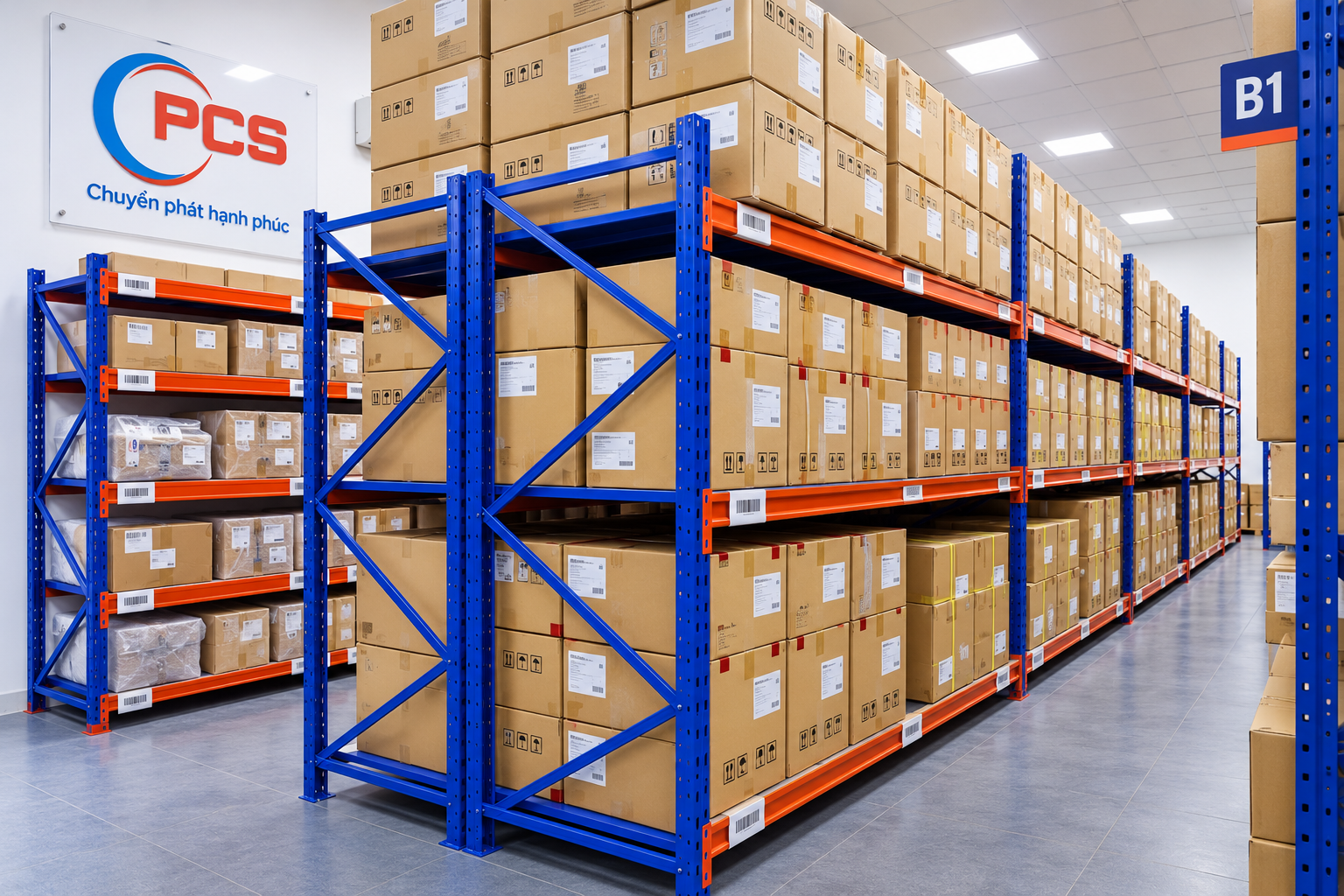
Goods are received, counted, and organized by SKU, product variant, and storage location before being added to available inventory.
PCS Logistics tracks stock movements, storage locations, stock counts, and discrepancies through its management systems. Defective products, returns, and items not yet approved for sale are kept separate from sellable stock to reduce picking errors.
Clear inventory records are particularly important for brands with many SKUs or variants. Even a small discrepancy may result in accepting an order for an out-of-stock product or picking the wrong item. PCS Logistics Ecommerce Fulfillment links these warehouse activities with downstream order processing, subject to the agreed service scope.
2.2. Multichannel order intake and synchronization
Orders from websites, marketplaces, and other connected sales channels can be consolidated in the order management system and processed through a common workflow.
Under the agreed integration scope, connected order and inventory data can reduce manual checks across separate sales channels and duplicate data entry into the warehouse system.
Rules for canceled orders, order changes, and inventory update timing should be agreed in advance to reduce discrepancies between sales platforms and actual warehouse stock. Businesses comparing ecommerce fulfillment services should check which channels and data exchanges are supported before implementation.
2.3. Picking, packing, and order completion
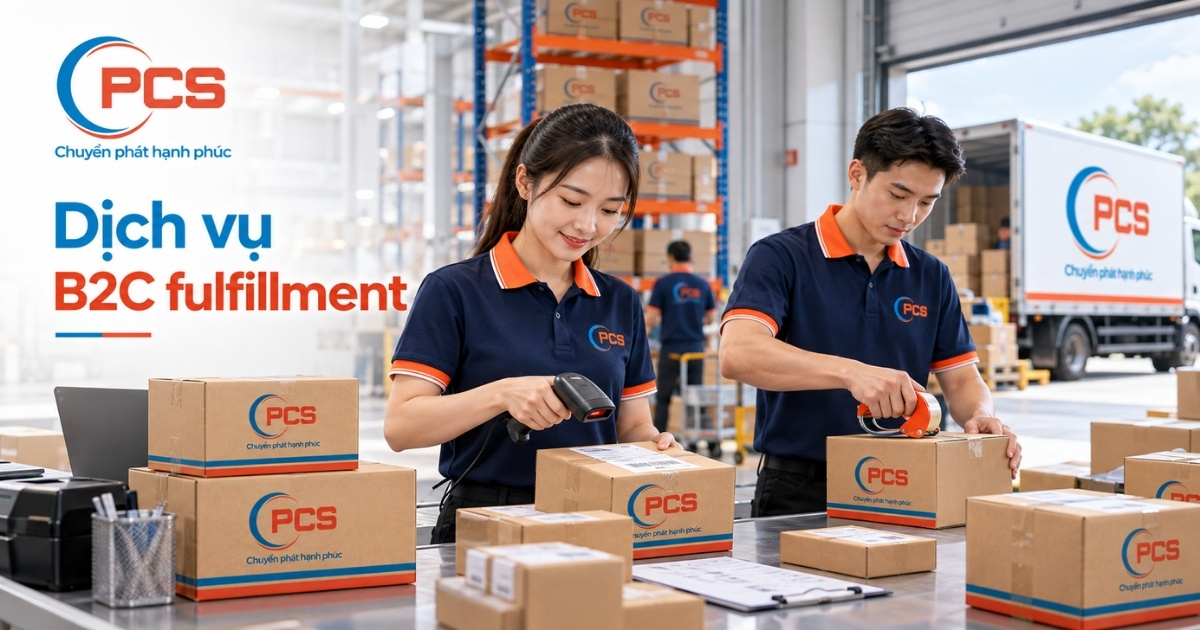
Before dispatch, the team checks the SKU, variant, quantity, packaging requirements, labels, and recipient information within the agreed handling scope.
Beyond standard packing, businesses may request value-added services such as product bundles, gift inserts, printed materials, labeling, and campaign-specific packaging. These steps are particularly relevant to ecommerce order fulfillment when individual orders require different contents or presentation.
The objective is to dispatch each parcel with the correct products, quantities, and agreed packing specifications. PCS Logistics Ecommerce Order Fulfillment describes this coordination of order preparation within the broader fulfillment workflow.
2.4. Connecting fulfillment with last-mile delivery
After processing, orders are sorted and handed over to the appropriate delivery arrangement. Shipping information is linked to each order so businesses can follow its status from warehouse dispatch through final delivery.
If delivery is unsuccessful, PCS Logistics coordinates the agreed next step, such as redelivery, return transportation, status updates, or reconciliation. Businesses therefore retain visibility into the outcome of each shipment rather than only its departure from the warehouse.
For brands reviewing online order fulfillment services, post-dispatch visibility and procedures for failed delivery are important parts of the service scope.
2.5. Receiving and processing returns and exchanges
Returned products should not be placed back into sellable inventory immediately upon arrival.
PCS Logistics receives the items, reconciles them against order information, and inspects them within the agreed scope before assigning the next action:
- Eligible for resale: Return the item to available inventory.
- Further handling required: Move it to a separate processing area.
- Not eligible for resale: Segregate it and update its status.
This workflow helps prevent inaccurate inventory records and the resale of products that have not been checked. It also allows businesses to identify the current status of returned goods.
PCS Logistics B2C Fulfillment connects goods receiving, inventory, order processing, picking and packing, delivery, and returns into one coordinated workflow, reducing the number of separate service contacts a growing business must manage.
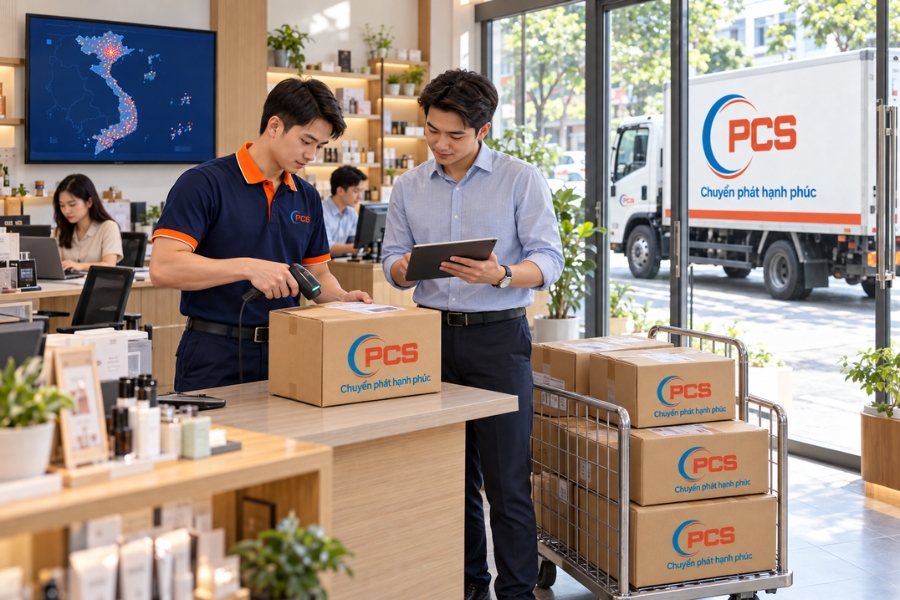
PCS Logistics inspects returned goods before restocking eligible items or moving them to a separate handling area.
3. How PCS Logistics implements B2C fulfillment
The implementation process is designed around each business's operating data. Rather than applying the same model to every client, PCS identifies shipment volumes, SKU structure, order activity, and service requirements before operations begin. A well-defined scope is essential when setting up B2C fulfillment services for a growing sales operation.
| Step | What PCS Logistics does | Objective |
|---|---|---|
| 1. Assess requirements | Reviews product categories, SKUs, inventory, regular and peak order volumes, sales channels, delivery areas, packaging, and returns | Understand the scale and complexity of the B2C operation |
| 2. Design the solution | Defines warehouse location, storage arrangements, order workflow, value-added services (VAS), shipping, service-level agreements (SLAs), reporting, and reconciliation | Agree on responsibilities and service scope before launch |
| 3. Receive goods and set up data | Counts incoming goods and sets up SKUs, variants, storage locations, opening inventory, and agreed data connections | Establish accurate inventory and order-management records |
| 4. Process orders | Picks, inspects, packs, labels, and verifies orders | Reduce incorrect SKUs, variants, or missing items |
| 5. Dispatch and track deliveries | Sorts orders, hands them over for delivery, and updates shipment status | Maintain visibility after goods leave the warehouse |
| 6. Reconcile and handle returns | Reconciles delivery outcomes, receives and classifies returns, and updates sellable inventory when eligible | Close the order lifecycle and control post-sale stock |
4. When should a business outsource B2C fulfillment?
Not every online retailer needs to outsource fulfillment from the beginning. B2C fulfillment services become worth evaluating when operational complexity starts growing faster than the internal team's processing capacity.
4.1. Order growth exceeds processing capacity
At normal volumes, an in-house team may be able to pick, pack, and dispatch orders. During sales campaigns, product launches, or seasonal peaks, backlogs can build, packing slows, and warehouse staff may need to work repeated overtime.
When this pattern recurs, businesses should evaluate an operating model that adjusts handling capacity to demand rather than repeatedly recruiting additional staff or expanding warehouse space for short peak periods.
4.2. Multichannel selling makes orders and inventory difficult to control
Selling through a website, marketplaces, and other channels often involves maintaining separate order records and repeated manual checks.
Missed or duplicated orders, mismatches between channel inventory and actual stock, and orders accepted for sold-out SKUs can all follow. The priority then becomes bringing orders and inventory data into a more consistent workflow. This is a common reason to evaluate ecommerce order fulfillment services with an agreed integration setup.
4.3. Incorrect orders, redelivery, and returns drive up costs
One incorrectly fulfilled order can trigger customer service work, redelivery, return handling, product inspection, and inventory updates.
As order volumes rise, small errors in picking, packing, or SKU verification can create significant additional work and cost. Businesses may need a more consistent process rather than relying heavily on manual handling.
4.4. Warehouse and staffing costs rise faster than sales volume
Running an in-house operation requires warehouse space, staff, equipment, and systems even when order volumes fluctuate.
If each growth phase calls for more space, recruitment, or infrastructure investment, businesses should compare their total in-house operating costs with D2C fulfillment services or other outsourcing arrangements—not just compare per-order processing fees.
4.5. Expanding into new markets without building more infrastructure
Entering new sales regions brings additional requirements for storage, order processing, and delivery.
Outsourcing can allow a business to expand sales first and adjust logistics capacity to actual demand instead of building all the supporting infrastructure in advance. Businesses considering D2C fulfillment should evaluate warehouse locations, expected order volumes, and delivery regions as part of the plan.
Overall, outsourcing is worth considering when logistics begins to constrain growth: order volumes outpace processing capacity, stock becomes harder to manage, picking errors and returns consume substantial resources, or expansion repeatedly requires new warehouse investment.
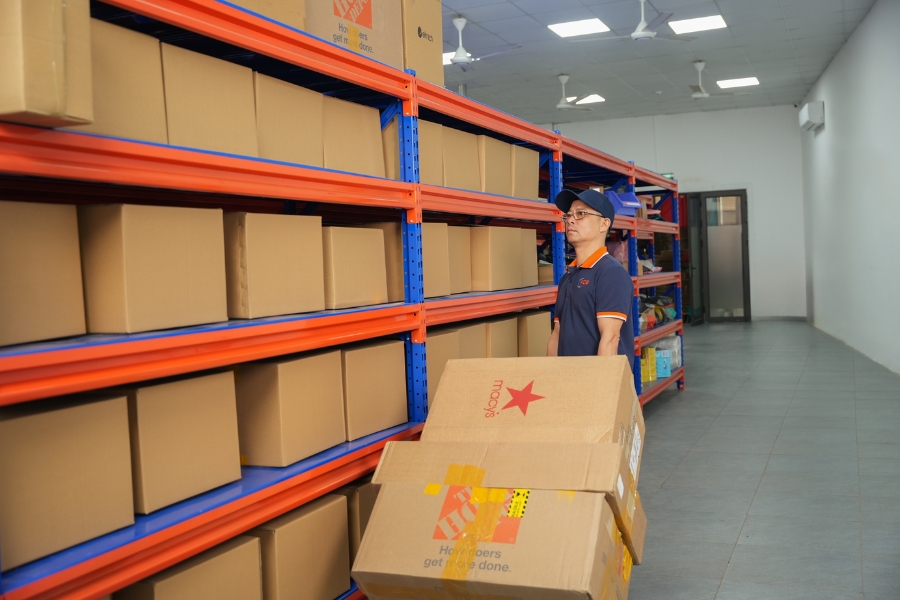
PCS Logistics' B2C fulfillment operation supports businesses that need flexible processing capacity as order volumes change.
5. How are B2C fulfillment costs calculated?
There is no single fulfillment rate that fits every business. Pricing depends on the inventory profile, order composition, handling complexity, and actual service scope. Quotations for B2C fulfillment services should therefore reflect the complete operating model.
| Cost category | Main pricing factors |
|---|---|
| Inbound receiving | Number of SKUs, volume, packaging format, counting requirements, and sorting upon receipt |
| Warehousing | Average inventory, storage duration, space or volume used, and product characteristics |
| Order processing | SKUs and items per order, picking, inspection, packing, labeling, and handling complexity |
| Packing materials | Cartons, bags, tape, labels, protective materials, or branded packaging |
| Shipping | Weight and packaged dimensions, delivery area, and shipping service selected |
| Returns and VAS | Inspection, sorting, repacking, restocking, kitting, gift inserts, and other additional tasks |
To receive a quotation that reflects actual requirements, businesses should provide product category, SKU count, average inventory, regular and peak order volumes, average items per order, parcel dimensions and weight, sales channels, delivery regions, packing and VAS requirements, and return rates.
The useful cost comparison covers the full lifecycle of an order—from warehouse receipt to successful delivery or return—rather than storage or packing charges in isolation. Businesses evaluating 3PL ecommerce fulfillment should confirm which activities are included and which are billed separately.




6. PCS Logistics' capabilities for B2C fulfillment
A fulfillment partner should be assessed on more than warehouse space. Inventory visibility, the ability to handle volume fluctuations, and coordination beyond the warehouse are equally important. PCS Logistics describes its B2C fulfillment services through the following operating capabilities.
6.1. Warehouse infrastructure for consumer orders
PCS Logistics reports warehouse facilities in Hanoi, Binh Duong, and Ho Chi Minh City, with a combined area of approximately 20,400 m². This provides a base for goods storage and order processing in the northern and southern economic regions of Vietnam.
The model suits product categories with identifiable SKUs, including fashion, accessories, household products, packaged consumer goods, and small components. Fragile or high-value items and goods with special storage requirements need an acceptance review before implementation.
6.2. Inventory and order control through WMS and OMS
PCS Logistics uses Warehouse Management System (WMS) and Order Management System (OMS) functions to track SKUs, inventory, inbound and outbound movements, and order statuses. Integration scope is agreed based on each customer's systems and sales channels.
The practical benefit is visibility into where inventory is stored, how much stock is available, which stage each order has reached, and which discrepancies require attention—without manually combining multiple tracking files.
PCS Logistics Ecommerce Fulfillment Services can be structured around the specific order and inventory information the client needs to exchange with its sales channels.
6.3. Order-processing capacity and peak-season readiness
According to the operating figures PCS Logistics currently publishes, peak processing capacity exceeds 7,000 orders per day. The company also reports the following service indicators:
| Metric | PCS Logistics' published figure |
|---|---|
| Peak processing capacity | 7,000+ orders/day |
| Orders processed within the agreed commitment | 99% per month |
| Product accuracy | 100% |
| Accuracy of customer-supplied packing materials | 99%, where material control is required |
| Standard orders | According to the specified order acceptance cutoffs |
| Urgent orders | Handling arrangements under the applicable SLA |
Actual performance commitments should be confirmed by SLA, order acceptance time, product category, and agreed service scope. These published figures should not be treated as fixed guarantees for every customer or operating model.
For brands running promotional campaigns, PCS Logistics D2C Fulfillment requires advance planning around expected daily order volumes, SKU mix, campaign launch dates, and special packing requests so resources can be aligned with demand.
6.4. Connecting fulfillment with a broader logistics network
PCS Logistics connects fulfillment with other logistics needs. After storage and order processing, shipments can move through transportation, distribution, or return flows within its service network. The company also positions B2C operations alongside B2B fulfillment, distribution logistics, and road transportation.
This is relevant to businesses that sell directly to consumers while also supplying dealers, retail stores, and corporate customers by carton or pallet.
The value lies in coordinating warehouse stock, order data, processing, transportation, and returns as the business grows. E-commerce order handling may form part of this broader arrangement, depending on the selected scope.
PCS Logistics develops operating plans using actual data to balance warehousing, inventory management, order processing, packing, delivery, and returns at different stages of business growth.
If warehouse operations, multichannel orders, or seasonal sales are putting pressure on your team, share your SKU count, inventory levels, normal and peak order volumes, sales channels, and handling requirements with PCS Logistics. Its B2C fulfillment services can then be scoped to your business's needs. For consultation, call 1900.545.428.