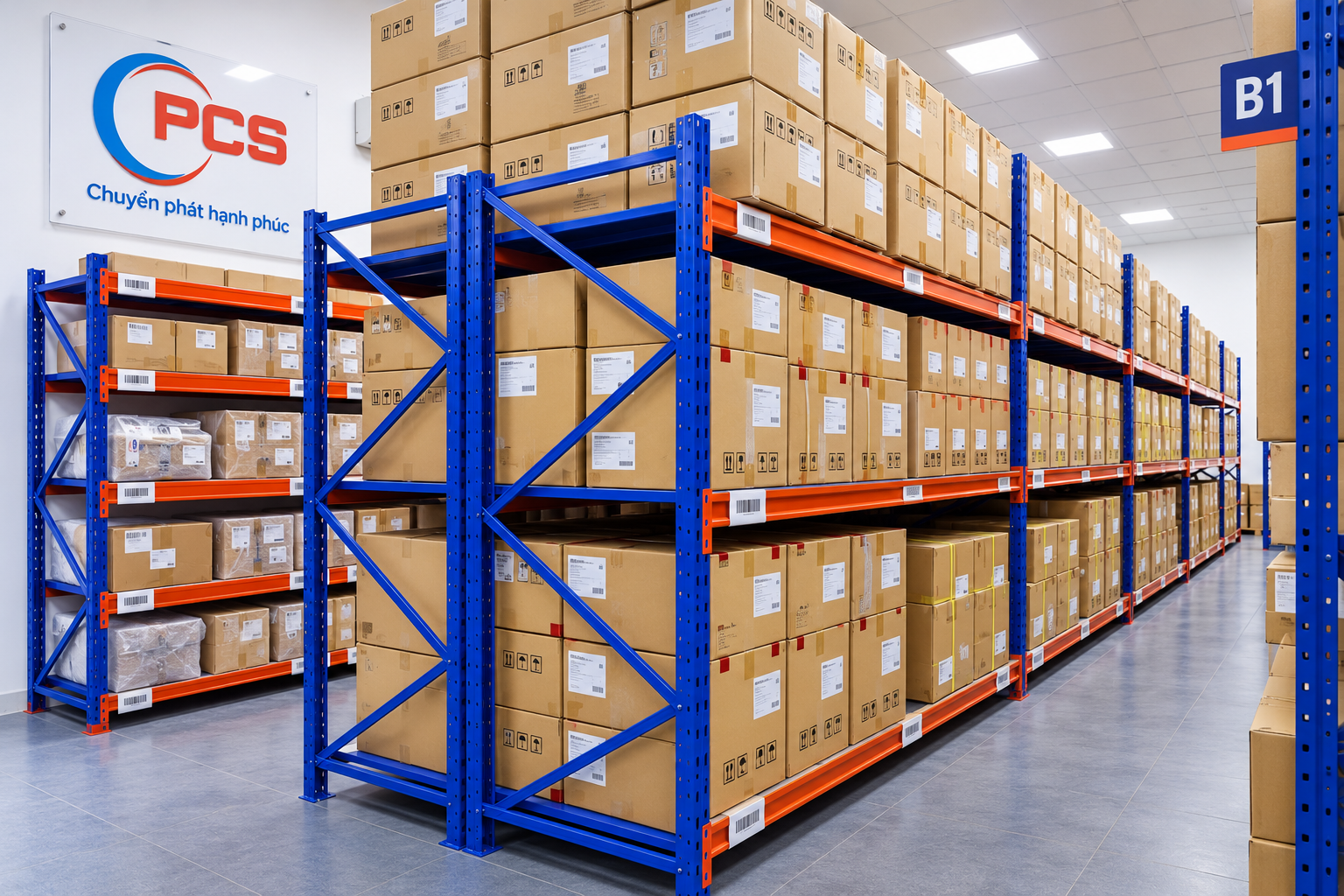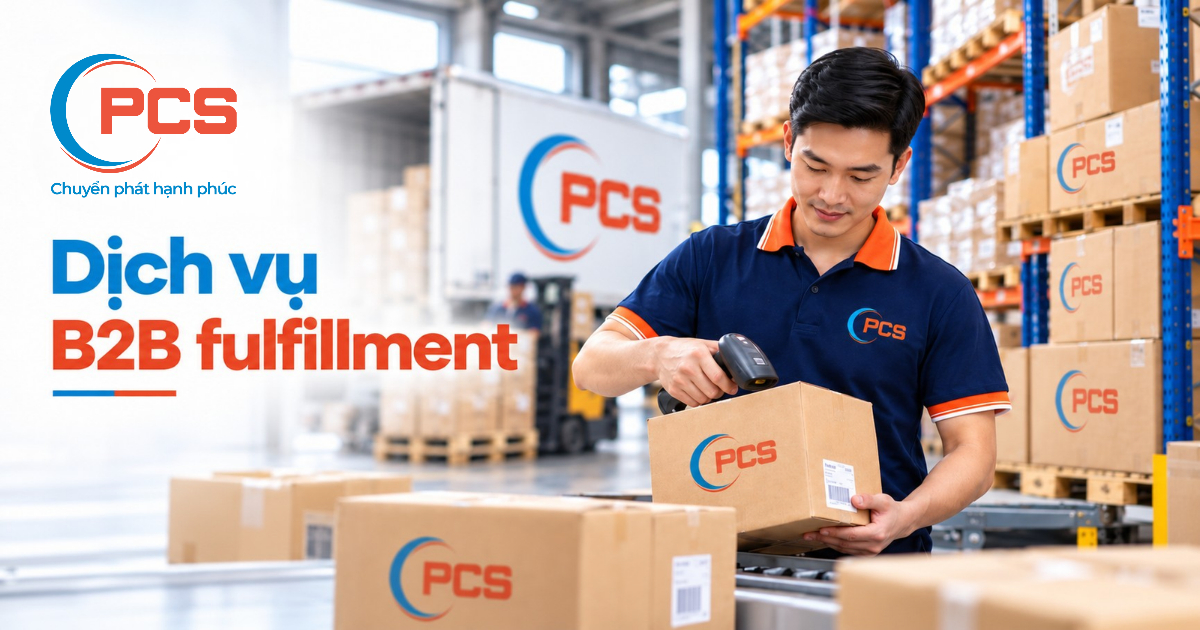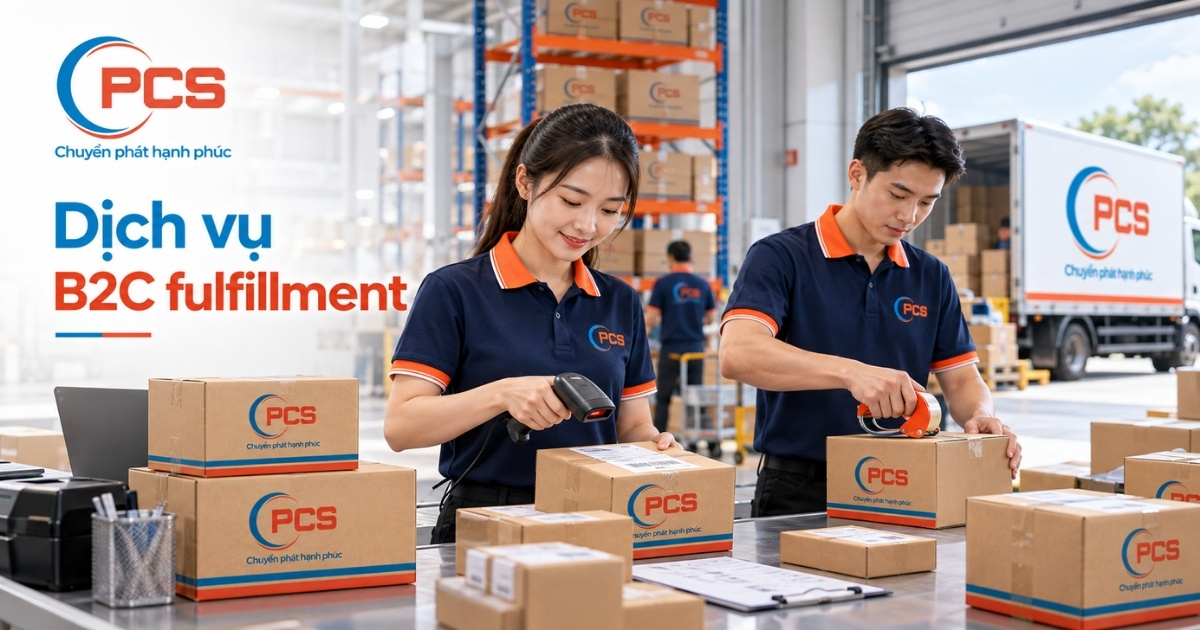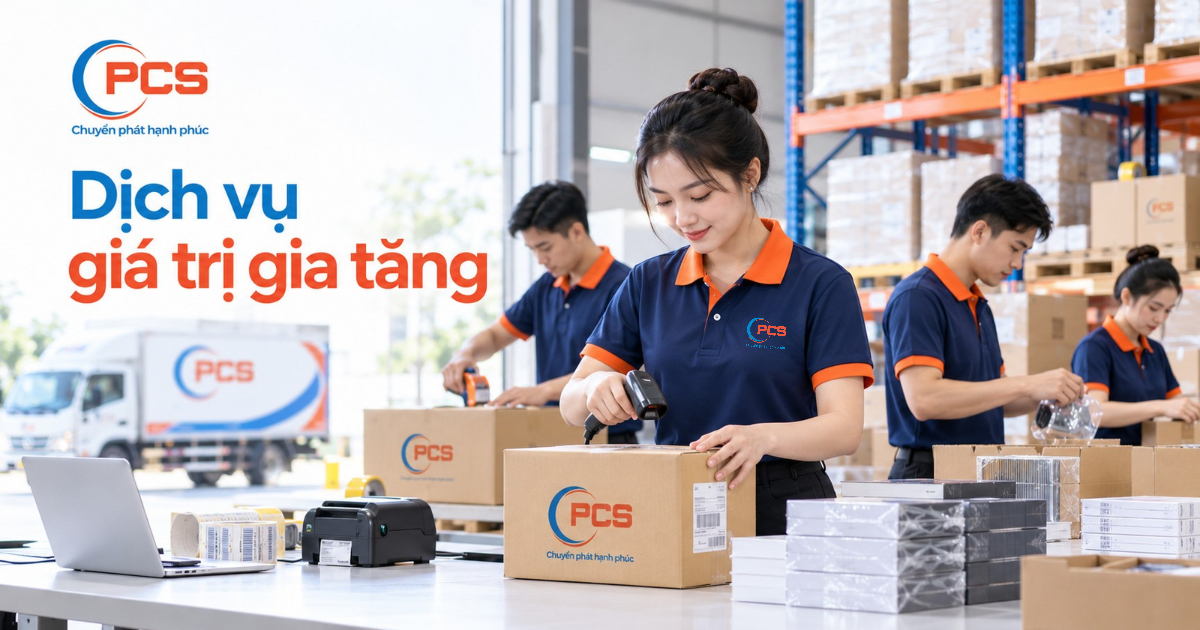

Businesses do not need to maintain a separate team and work area for tasks that arise only for specific orders or seasonal campaigns. The PCS Logistics Value-added Services offering provides value added logistics services as an additional option for customers already using its fulfillment operations. Products can be prepared while they are in storage or undergoing order processing, reducing the need to move them between facilities and helping businesses respond to the requirements of individual customers, projects, and sales channels.
1. What are value-added services in logistics?
For example, goods already in storage may need to be divided by store, relabeled, or assembled into gift sets before dispatch. VAS prepares those products for handover in the required configuration.
Warehousing primarily focuses on storing and protecting goods. Fulfillment covers the broader order cycle, including receiving inventory, managing stock, picking, packing, and handing orders over for transportation. Value added logistics services address additional handling needs within that process.
The scope and cost of these activities depend on the service agreement. Basic packing may already be included in a fulfillment package, while extra materials, customized specifications, or additional handling steps may incur separate charges. Businesses should therefore confirm the tasks and fees before work begins.
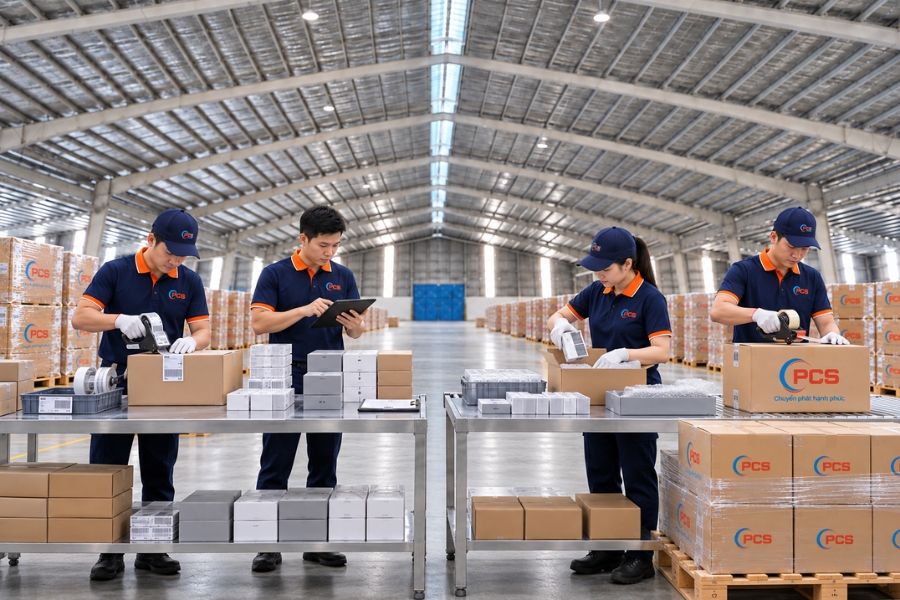
PCS Logistics supports product handling, sorting, packing, and preparation before handover.
2. When should businesses use value-added logistics services?
Businesses often need extra warehouse handling when inventory has already arrived but is not yet ready to be shipped in its current condition. This may result from changing packaging specifications, distribution-channel requirements, seasonal campaigns, or processing volumes that exceed the capacity of an internal team.
| Business challenge | Handling required | Operational benefit |
|---|---|---|
| Goods are in storage but are not ready for distribution or handover. | Repack, add protective packaging, apply labels, or complete products to an agreed sample. | Products are prepared within the logistics workflow without an additional external processing step. |
| The same inventory must be prepared in different configurations. | Sort, split, label, or pack products by customer, dealer, sales channel, or region. | Multiple distribution requirements can be supported without manually reworking each shipment internally. |
| A promotion, bundle, gift set, or seasonal campaign is launched. | Assemble product sets, insert documents or gifts, and pack items to campaign specifications. | Short-term campaigns can be supported without keeping a dedicated team and workspace year-round. |
| A bulk shipment must be divided into smaller consignments. | Sort by SKU, allocate quantities, and prepare goods for each recipient. | More accurate allocations and clearer handover records for dealers, stores, and B2B customers. |
| A sudden increase in workload exceeds internal staffing capacity. | Add handling resources for packing, labeling, sorting, kitting, or counting. | Peak periods and special projects can be managed without hiring additional permanent staff. |
Outsourcing these activities makes sense when internal labor is limited, demand fluctuates seasonally, or a business needs its team to focus on production and sales. When work is performed at the warehouse where goods are already stored, another transfer between facilities may be avoided.
Before requesting value added logistics services, businesses should clarify the current condition of the goods, the required handover specifications, and the completion deadline. These details help determine the scope of work, handling method, and quotation.
3. Value-added handling options at PCS Logistics
PCS Logistics Value-added Warehouse Services covers additional handling according to each shipment's requirements, from labeling and counting to sorting, kitting, and repacking. Before work starts, both parties agree on specifications, volumes, materials, acceptance criteria, and completion times so the goods can proceed to storage, fulfillment, or distribution as planned.
3.1. Labeling and document insertion
Labeling services are suitable for goods already in storage that need additional product information or identification before distribution.
Using samples and instructions approved by the business, PCS can:
- Apply supplementary labels or identification stickers.
- Add labels by SKU or production lot.
- Insert instructions, leaflets, or other accompanying documents.
- Check that the correct label design, placement, and quantity have been used.
The goal is to prepare products to the agreed requirements before handover and reduce the need for relabeling at a store or receiving location.
3.2. Counting and visual inspection
This option helps businesses verify quantities or the visible condition of goods before further handling or dispatch.
Depending on the agreed scope, PCS can:
- Compare SKUs and physical quantities with the supplied list.
- Inspect cartons, packaging, and seals.
- Record shortages, overages, or incorrect item codes.
- Document visible dents, tears, or other external irregularities.
Discrepancies are identified and recorded so the business can decide how to proceed before the next step.
This is quantity checking and external visual inspection, not a substitute for product quality certification, laboratory testing, or functional testing.
3.3. Sorting and splitting shipments
This option is suitable for large inbound shipments that must be divided by SKU, order, customer, or destination before release from the warehouse.
PCS works from an agreed allocation list:
This approach is particularly useful when one supply of goods must be distributed to several dealers, stores, branches, or B2B customers.
3.4. Product assembly and kitting
Kitting services help businesses combine products into promotional bundles, gift sets, product kits, or configured material sets according to approved specifications.
Depending on the campaign or project, the work may include:
- Combining several SKUs into one set.
- Adding accessories or documentation.
- Inserting promotional gifts.
- Checking the components and quantities in every kit.
- Packing finished sets according to the approved sample.
This is useful for sales campaigns, seasonal collections, gifts, or projects requiring specific configurations. It reduces the need to maintain a permanent kitting area and team for work that occurs only periodically.
3.5. Packing and repacking
PCS provides repacking services when goods need stronger protection, updated packaging, or additional preparation before handover.
Depending on the products and requirements, the handling plan may include:
- Replacing or adding packaging.
- Adding protective cushioning.
- Wrapping fragile items against impact.
- Applying stretch film.
- Reinforcing cartons or packages.
- Repacking goods to agreed specifications.
The materials, packing method, quantity per package, and sealing requirements are confirmed before implementation to maintain consistent results.
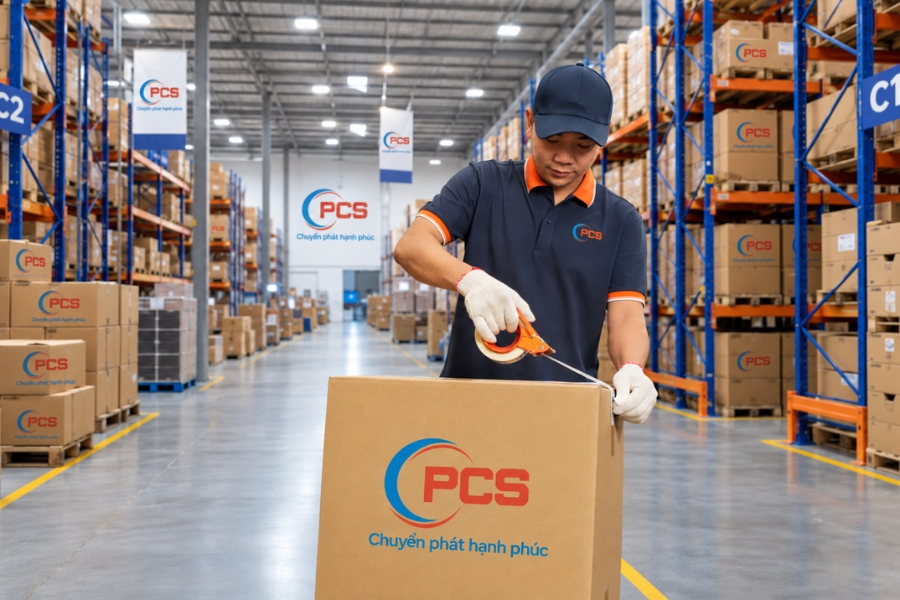
Goods are repacked to meet the packaging specifications and requirements of each receiving location.
Every product group or assembled set should have the correct SKU, complete quantity and components, and appropriate identification labels for handover. Acceptance depends on the specific handling requirements, packaging and sealing rules, and the treatment of any unused components.
4. Implementation process and handling controls at PCS Logistics
Under PCS Logistics 3PL Value-added Services, the team receives the request, confirms specifications, and checks the results at each stage. Its value added logistics services follow a defined process so businesses can track work and reconcile quantities.
- Step 1 – Receive the request. Gather product details, SKUs, quantities, the required tasks, and the completion deadline. Product photographs, packaging samples, and receiving-site requirements help define an appropriate handling plan.
- Step 2 – Confirm specifications. Approve packing samples, label content, kit components, or sorting rules. Both parties agree on the inspection scope, acceptance criteria, and person authorized to approve the work.
- Step 3 – Receive and reconcile goods. Compare the physical goods against the handover list and record starting quantities and conditions. Shortages, incorrect SKUs, or visible damage should be confirmed before processing continues.
- Step 4 – Perform the work and check results. Carry out each task to the approved specification and inspect the completed work against the agreed criteria. Any irregular items are identified, recorded, and held for an approved decision.
- Step 5 – Accept and hand over the finished goods. Reconcile processed quantities, accepted items, and outstanding exceptions. Once approved, the goods move to storage, order fulfillment, or distribution according to the agreement.
Maintaining these controls from receipt to handover helps businesses understand shipment status and plan the next dispatch.

PCS Logistics connects goods handling, warehousing, fulfillment, transportation, and distribution within its service network.
5. How are value added logistics services priced?
Pricing depends on the activities to be performed and the requirements of each shipment. To develop an appropriate quotation, businesses should clarify the following:
- Handling activities: Packing, labeling, kitting, and sorting differ in the number of steps and amount of work required.
- Volume and number of SKUs: The number of products and variety of item codes affect staffing, sorting, and checking requirements.
- Cargo characteristics: Dimensions, weight, fragility, and storage needs determine how items are handled and protected.
- Materials: Packaging, labels, protective fillers, and which party provides them must be agreed in advance.
- Inspection scope: Counting cartons versus individual units, and full checks versus sampling, affect processing time.
- Deadline and location: The required completion date, handling site, and handover arrangements shape the work plan.
When reviewing a quote, businesses should identify which tasks and materials are included in the processing rate. If supplies, storage, or transportation are charged separately, these amounts should be shown clearly for accurate budgeting.
For a quotation for value added logistics services under PCS Logistics Value-added Logistics Services, contact PCS Logistics at 1900.545.428 and provide the product details, required work, volumes, and timeline.




6. PCS Logistics' capabilities in value-added handling
Businesses need more than additional warehouse labor. Effective VAS operations require a clear handling plan, sufficient capacity for the actual workload, and documented results for each shipment. PCS develops its approach around each project's specifications rather than imposing one process on every product.
- Processing goods where they are stored: Tasks such as counting, sorting, labeling, kitting, and repacking may be performed at the warehouse when operating conditions allow. Goods do not need to be transferred to another site solely for a separate preparation step.
- Handling to shipment-specific specifications: PCS receives approved samples, work instructions, SKU lists, quantities, and acceptance criteria. Products from the same source can be prepared differently for various customers, distribution channels, or campaigns.
- Adjusting resources to volumes and deadlines: Seasonal and project-based VAS demand fluctuates. PCS can arrange handling space and staffing around agreed processing volumes and completion windows.
- Combining several tasks in one workflow: Counting, sorting, labeling, kitting, and repacking can be organized in sequence, reducing handoffs between separate service providers.
- Checking inbound goods and completed work: SKUs, shipment quantities, tasks performed, materials used, and detected discrepancies are recorded according to the agreed process to support reconciliation.
- Connecting to the next logistics stage: Once prepared, products can continue into warehousing, fulfillment, transportation, multi-destination distribution, or reverse logistics through PCS's wider network.
PCS Logistics operates a warehouse network with a reported total area of approximately 20,400 m² across Northern and Southern Vietnam. This infrastructure supports the organization of storage and handling activities close to businesses' operational needs. The company also cites VAS and fulfillment experience with brands including Unios, HiteJinro, and SIXDO.
For fulfillment customers, warehouse value added services can be combined with co packing services when preparing products for different distribution channels. The same operating scope may also involve value added services in logistics, where extra processing is performed before transportation, or broader value added services arranged for a short-term campaign or order-specific requirement.
The main benefit is a connected workflow: businesses can adjust quantities, specifications, and handling steps while coordinating with one logistics provider.
With value added logistics services, businesses can address additional counting, sorting, labeling, kitting, or repacking needs without routing products through multiple service providers or facilities. PCS Logistics can combine VAS with warehousing, fulfillment, transportation, and distribution so goods move to the next operational stage in the agreed condition.
Contact PCS Logistics at 1900.545.428 to discuss the handling requirements, timelines, and quotation for your business.