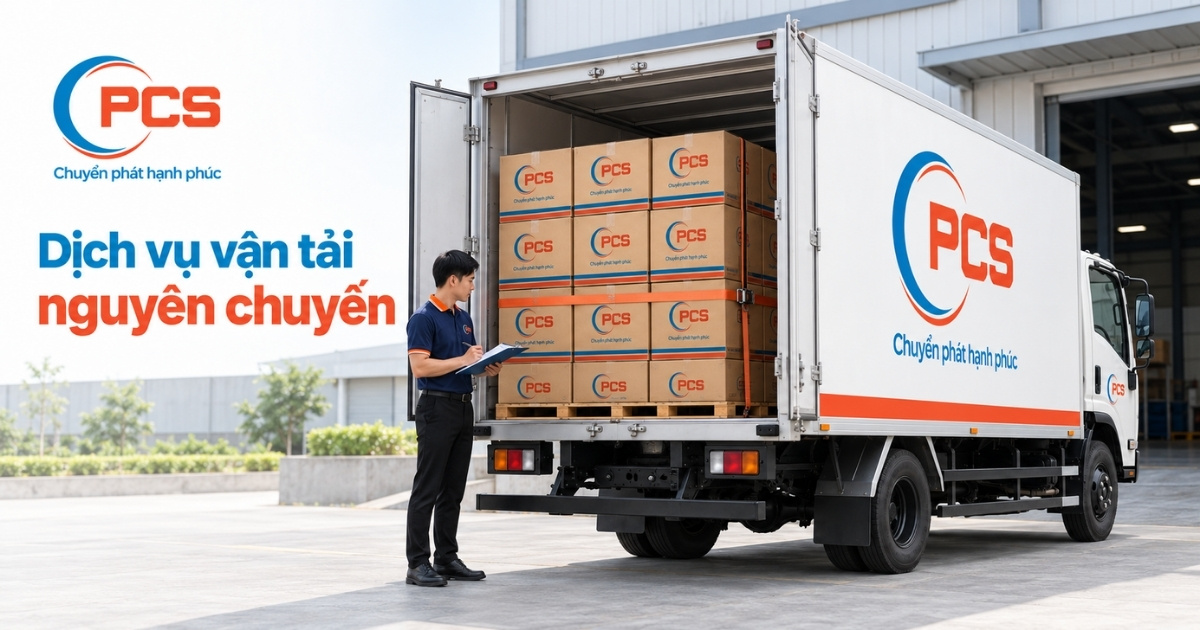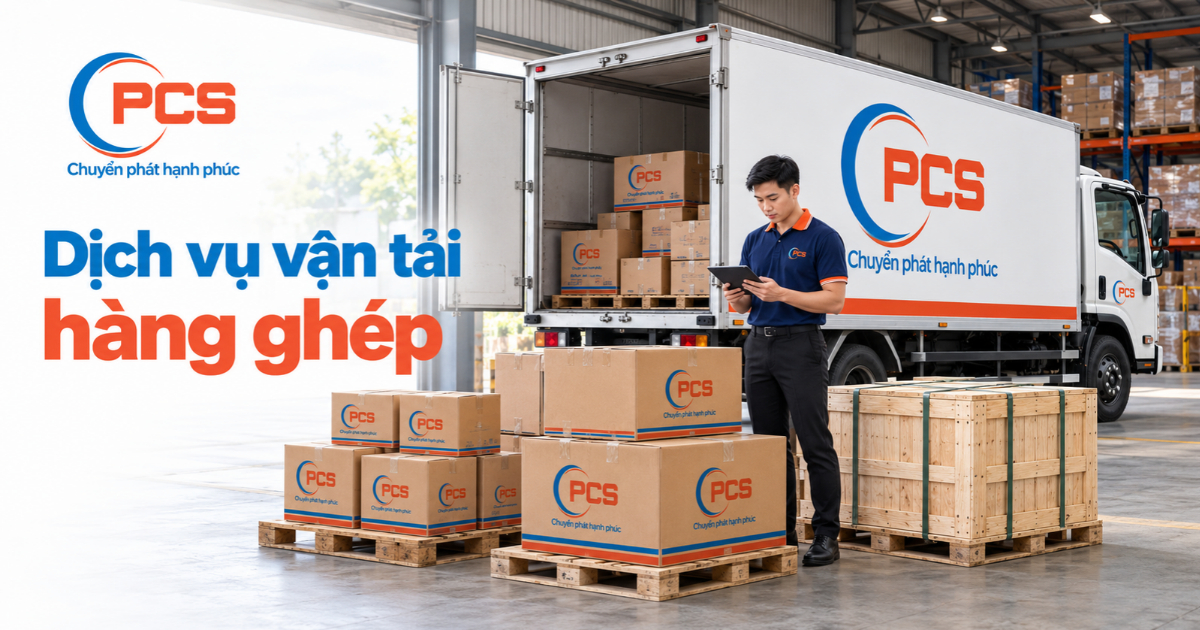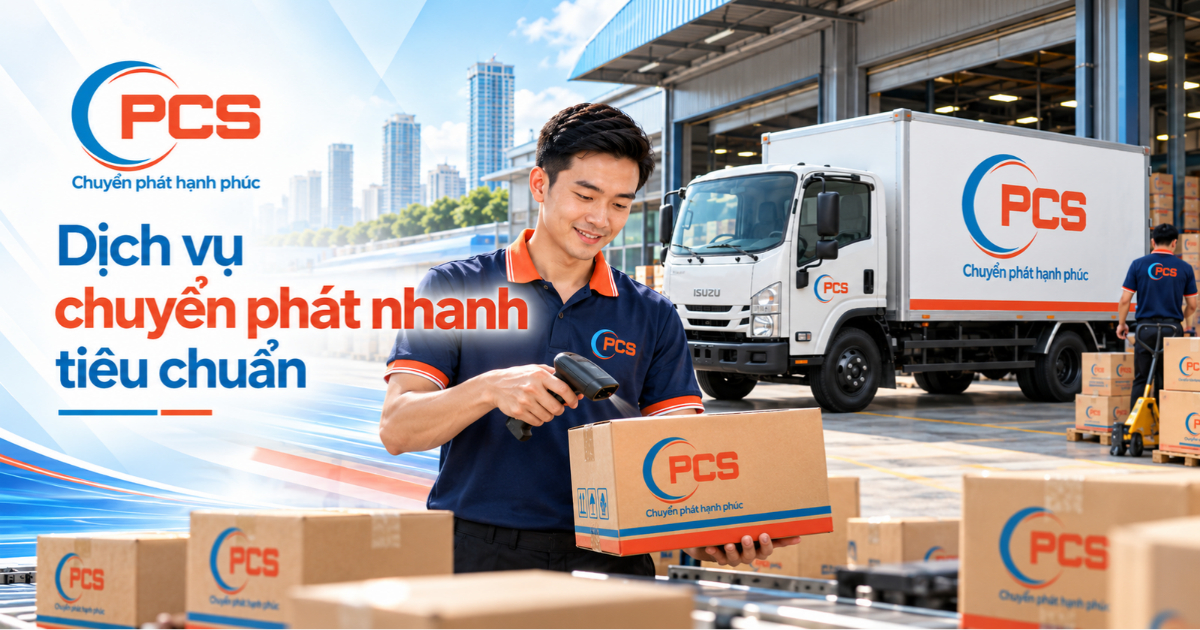

When businesses operate multiple suppliers, warehouses, factories, and receiving locations, a delay at just one point can disrupt the entire production and delivery schedule. PCS Logistics provides industrial supply chain logistics services in Vietnam to coordinate transportation flows, pickup and delivery schedules, and vehicle capacity under a unified plan. This helps manufacturers reduce fragmented transport coordination and respond more effectively to supply chain changes.
1. Overview of Industrial Supply Chain Coordination at PCS Logistics
The service is suitable for manufacturers, businesses working with multiple suppliers, companies operating several factories or warehouses, and those managing regular interprovincial or North–South shipments within Vietnam.
In practice, the following challenges often arise when production planning and transportation are not properly coordinated:
-
Misaligned material availability and production schedules: Suppliers may have goods ready earlier or later than planned, while factories require materials at specific times. This can result in excess inventory or material shortages.
-
Fragmented transport coordination across departments: When individual factories, warehouses, or departments arrange vehicles independently, businesses may experience overlapping trips, underutilized trucks, or vehicle shortages during peak periods.
-
Frequent changes in shipment volumes and production plans: Increasing orders, revised production schedules, or urgent requirements demand corresponding adjustments in transport capacity. Delayed responses at one point can disrupt subsequent operations.
-
Limited visibility across multiple freight flows: When goods move between several suppliers, warehouses, and factories, businesses may struggle to identify shipments in transit, those at risk of delay, or locations requiring immediate attention.
-
Scattered information, documents, and costs: Proof of delivery (POD), waiting times, operational exceptions, and transport costs may be spread across different carriers and contacts, making reconciliation and performance evaluation time-consuming.
PCS Logistics brings transportation requirements together under one coordination point, connecting shipment plans, available vehicle capacity, pickup and delivery schedules, and actual shipment status.
This approach helps businesses maintain better control over raw material and finished goods flows, identify potential delays earlier, and reduce the resources needed to monitor individual trips.
The PCS Logistics Industrial Supply Chain approach is designed around the practical coordination needs of manufacturers operating within the logistics and supply chain industry in Vietnam.
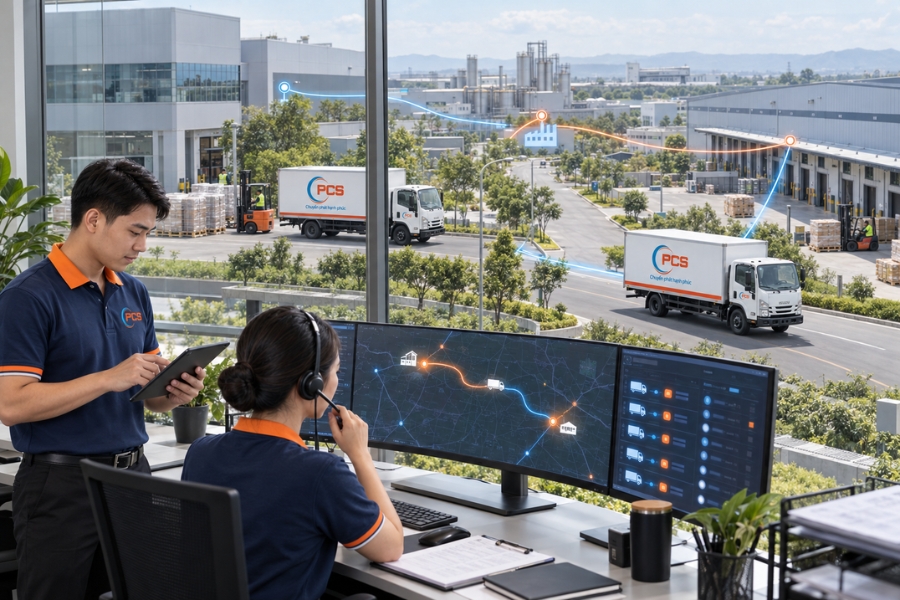
PCS Logistics coordinates goods movements between suppliers, factories, and receiving locations throughout Vietnam.
2. Industrial Supply Chain Coordination Solutions at PCS Logistics
PCS Logistics structures its industrial supply chain logistics services around the movement of goods from suppliers to factories, warehouses, and B2B customers. Transportation schedules are coordinated with production plans and receiving capacity at each location.
Depending on the supply chain structure, businesses can use individual solutions or combine them into an integrated transport coordination plan.
Inbound Logistics Coordination for Factories
PCS Logistics coordinates the transportation of raw materials, components, packaging, and production supplies from suppliers, ports, ICDs, or transit warehouses to factories according to production requirements.
Instead of having each supplier arrange transportation independently, PCS consolidates pickup locations, cargo availability, shipment volumes, and required material arrival times to develop suitable schedules.
The PCS Logistics Inbound Logistics approach focuses on:
-
Aligning pickup schedules with factory material requirements.
-
Consolidating shipments or assigning separate routes where appropriate.
-
Adjusting vehicle capacity based on actual shipment volumes.
-
Prioritizing shipments that directly affect production schedules.
This helps businesses reduce early material arrivals that increase inventory levels, as well as late deliveries that may interrupt production lines.
Effective inbound coordination is an important element of industrial logistics, particularly for factories working with multiple suppliers across Vietnam.
Coordination Between Warehouses, Factories, and Subcontractors
During manufacturing, goods move continuously between central warehouses, regional warehouses, factories, workshops, and subcontractors rather than following only inbound and outbound routes.
PCS Logistics coordinates these transfers under a unified plan, specifying pickup and delivery points, cargo types, deadlines, and vehicle requirements for each transport leg.
or
Factory A → Transit warehouse → Factory B
Centralizing transport coordination helps businesses reduce the need for each department to source vehicles independently, avoid overlapping transport trips, and track responsibilities at each stage more easily.
The PCS Logistics Industrial Logistics approach supports these interconnected freight movements, making industrial supply chain logistics more coordinated across production facilities.
Material Replenishment Coordination Based on Production Schedules
For recurring material flows, PCS can establish transportation schedules by day, week, production shift, or supply cycle instead of planning every trip separately.
Before each cycle, actual shipment volumes and material requirements are updated to adjust:
Pickup schedule → vehicle capacity → delivery frequency → shipment priority.
Routes can remain consistent while vehicle capacity is adjusted according to actual volumes.
This solution is suitable for businesses that need a steady supply of production materials despite frequent changes in manufacturing schedules.
The PCS Logistics Manufacturing Logistics approach helps align recurring material deliveries with the actual requirements of factory operations.
Outbound Logistics Coordination for Finished Goods
After production, PCS Logistics coordinates finished goods transportation from factories to central warehouses, regional warehouses, branches, distributors, or B2B customers.
PCS aligns dispatch plans with:
-
Shipment volumes for each dispatch cycle.
-
Required delivery deadlines.
-
Geographic areas and number of receiving locations.
-
Receiving capacity at each destination.
-
Actual vehicle availability and capacity.
Based on these factors, shipments are arranged by route, geographic area, or priority instead of being handled as separate, unconnected trips.
The key advantage of outbound coordination is that finished goods transportation remains connected to the overall production and distribution plan.
This approach allows industrial supply chain coordination to support the movement of finished goods without separating outbound transportation from factory operations.
It is particularly relevant to manufacturing logistics, where dispatch timing and product availability must remain aligned.
Coordination During Supply Chain Disruptions
Production plans may change due to material shortages, increased orders, late supplier deliveries, revised warehouse receiving schedules, or urgent requirements.
When these situations occur, PCS Logistics reviews:
Which shipment affects production → when the goods are needed → available transport capacity → which routes require adjustment.
High-priority shipments are identified and assigned suitable transport resources. Other routes are reviewed and adjusted where necessary to minimize disruption to subsequent operations.
This enables businesses to respond more quickly to changes without requiring each department to handle transport issues independently.
Supplier → Inbound → Factory → Internal transfer → Outbound → Warehouse/B2B customer
PCS Logistics acts as a central transport coordination point across these stages, helping businesses monitor progress, adjust vehicle capacity, and maintain goods flows in line with production requirements.
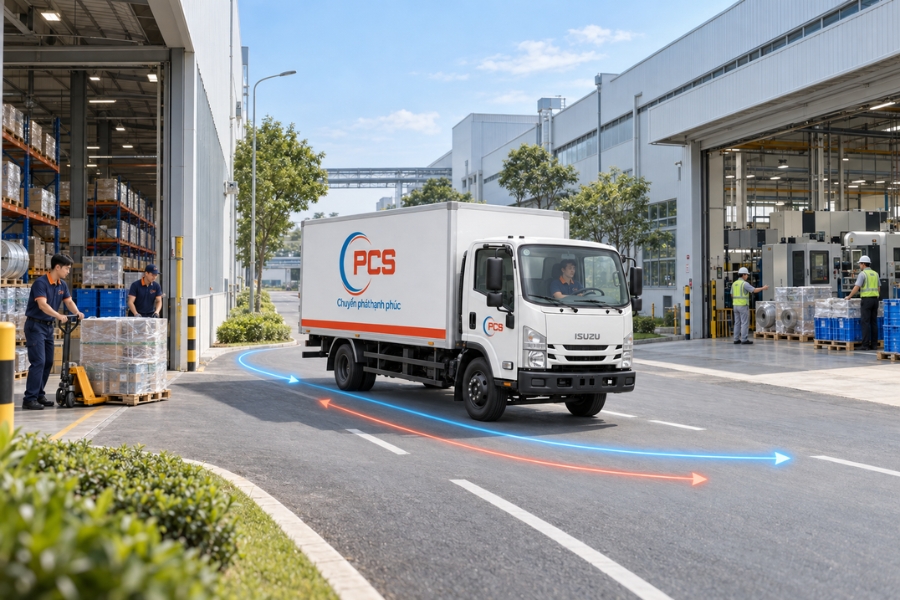
PCS Logistics flexibly coordinates goods transportation between suppliers, warehouses, and manufacturing facilities.
3. How Does PCS Logistics Control Supply Chain Coordination?
When supply chains involve multiple suppliers, warehouses, and factories, businesses need visibility over goods movements, shipment priorities, and potential disruptions to production.
Through its industrial supply chain logistics services, PCS Logistics coordinates transportation against agreed plans, shipment requirements, and operational milestones.
-
Transportation planning and demand verification: PCS checks cargo types, quantities, pickup and delivery locations, cargo availability, and required deadlines before assigning vehicles. This keeps transport arrangements aligned with actual demand rather than handling each trip independently.
-
Shipment priority management: Raw materials, components, and production supplies that may directly affect manufacturing schedules are identified and prioritized for appropriate transport resources and handling times.
-
Vehicle, route, and capacity management: PCS selects vehicle types, payload capacity, pickup and delivery sequences, and routes based on shipment volumes, site access conditions, and deadlines. This reduces underutilized or unsuitable vehicles and impractical schedules.
-
Monitoring key operational milestones: Shipment status is monitored at important stages, including cargo readiness, pickup, departure, arrival at the factory or warehouse, and completed handover. This helps identify potential schedule deviations before they affect subsequent operations.
-
Exception handling and coordination: When suppliers are late, receiving locations change schedules, vehicles encounter problems, or documents are incomplete, PCS records the cause and coordinates adjustments to routes, timing, or vehicle arrangements according to the actual impact.
-
Handover records and reconciliation data: Accepted quantities, discrepancies, POD, photographs, and related documents are linked to individual shipments. Progress updates, waiting times, and exception causes are also consolidated to support review and adjustments for subsequent cycles.
By monitoring individual goods flows and operational milestones, businesses can identify shipments progressing as planned, those at risk of delay, and locations requiring priority attention.
This reduces fragmented transport coordination and helps keep material and finished goods movements aligned with production schedules.
For manufacturers in Vietnam, these controls are particularly relevant to the industrial supply chain, where multiple facilities and external suppliers must operate according to closely connected schedules.
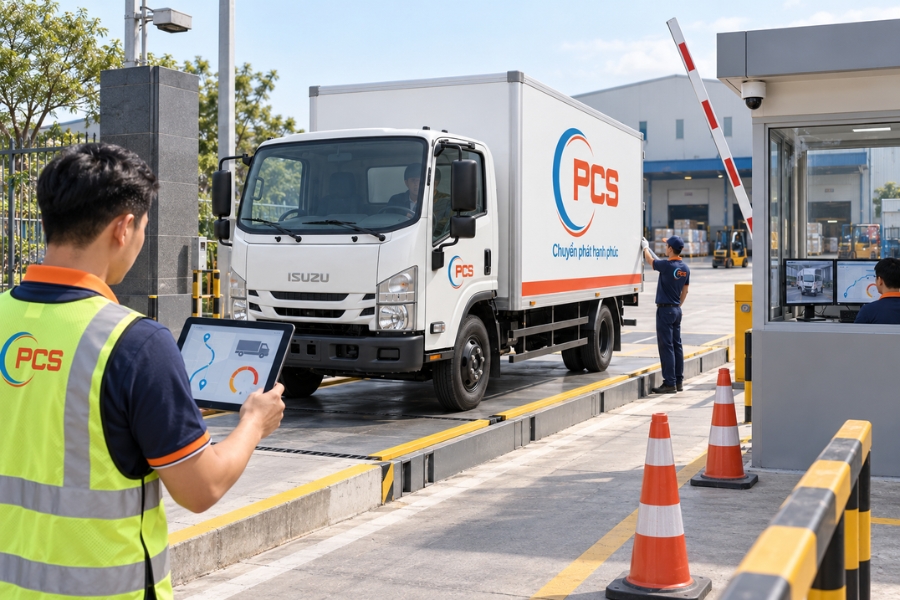
PCS Logistics monitors transportation plans, vehicle allocation, and key operational milestones throughout the supply chain.
4. When Should Businesses Use Industrial Supply Chain Coordination Services?
Businesses should consider industrial supply chain logistics services when managing multiple freight flows, pickup and delivery locations, or transportation schedules that must closely align with production plans.
PCS Logistics supports businesses facing the following operational requirements:
-
Multiple suppliers of raw materials and components: Goods are collected from different locations and must reach factories according to production schedules, making individual trip arrangements increasingly complex.
-
Several factories, warehouses, or subcontractors: Businesses regularly transfer raw materials, semi-finished products, and finished goods between facilities and need one coordination point to manage these movements.
-
Replenishment according to production cycles: Materials must arrive daily, weekly, or within specific receiving windows, requiring transport schedules to match actual factory demand.
-
Imported goods moving to factories: Shipments arriving through ports, ICDs, container freight stations (CFS), or bonded warehouses need onward transportation to factories according to receiving and production plans.
-
Frequently fluctuating shipment volumes: Vehicle requirements change with orders, seasonal demand, projects, or peak production periods, making fixed transport arrangements less efficient.
-
Centralized transportation coordination: Businesses want to reduce the number of departments independently sourcing vehicles while maintaining clear visibility over shipment progress, documents, exceptions, and delivery results.
PCS Logistics can develop solutions ranging from a single recurring transport route to coordinated movements connecting multiple suppliers, warehouses, factories, and B2B customers, depending on the business's actual supply chain structure.
This flexibility is a key consideration when selecting industrial logistics services for manufacturing and supply operations in Vietnam.
This creates better visibility over inbound movements, internal transfers, and outbound shipments, including delivery progress, priorities, exceptions, and handover documents, helping businesses reduce internal coordination workloads and limit supply chain disruptions.
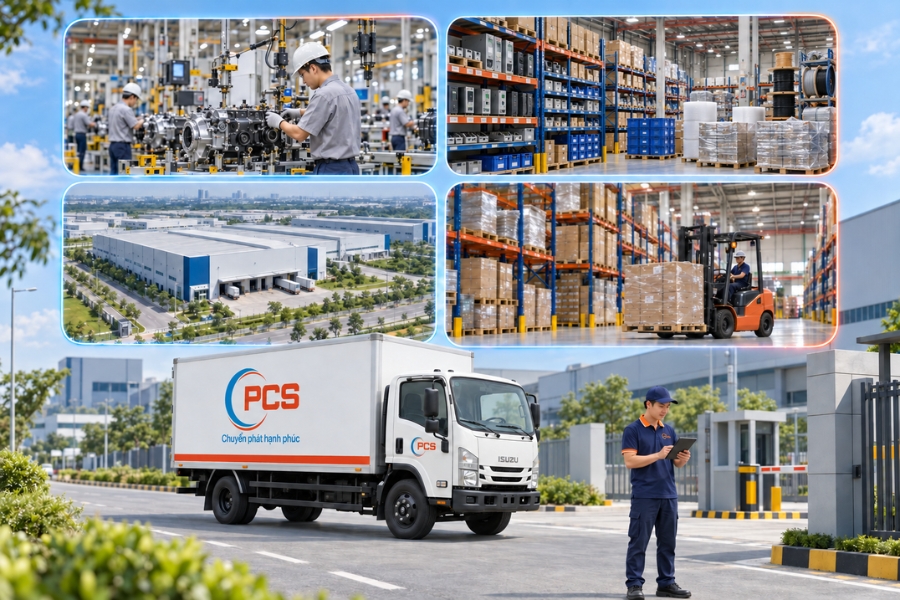
Suitable for businesses with multiple suppliers, warehouses, and manufacturing facilities requiring coordinated transportation.
5. Industrial Supply Chain Coordination Process at PCS Logistics
PCS Logistics follows a five-step process for its industrial supply chain logistics services, based on production plans, material requirements, cargo availability, and receiving capacity at each location.
Each step defines the relevant coordination points, deadlines, and shipment status so that inbound, internal transfer, and outbound flows can be managed under one plan.
-
Step 1 – Receive and standardize the plan: PCS consolidates supplier information, pickup and delivery locations, cargo types, shipment volumes, cargo availability, production schedules, and required deadlines. Missing or conflicting information is reviewed before transport arrangements are developed.
-
Step 2 – Classify shipments and priorities: Shipments are grouped by route, deadline, cargo characteristics, and potential impact on production. Critical raw materials or components are identified for appropriate prioritization.
-
Step 3 – Develop the coordination plan: PCS determines transport methods, vehicle types, payload capacity, pickup and delivery sequences, schedules, and contingency arrangements for each goods flow. The plan balances production deadlines, receiving capacity, and efficient vehicle utilization.
-
Step 4 – Confirm schedules and execute transportation: PCS coordinates with suppliers, warehouses, factories, and other relevant locations to confirm pickup and delivery times, site access requirements, and handover conditions. Progress is monitored at agreed milestones to address changes or issues promptly.
-
Step 5 – Complete handover, reconciliation, and plan updates: After each trip, PCS records accepted quantities, discrepancies, POD, documents, and operational exceptions. The information supports reconciliation and provides a basis for adjusting routes, schedules, or vehicles in subsequent cycles.
This process provides a common operating framework and is adapted to the specific requirements of each business.
Depending on the supply chain structure, number of suppliers, cargo characteristics, production frequency, and conditions at individual factories or industrial parks, steps may be simplified, expanded, or rearranged to suit actual operations.
The PCS Logistics Manufacturing Logistics Services approach applies this flexibility to transportation linked directly to production and material requirements.
6. Industrial Supply Chain Coordination Capabilities of PCS Logistics
For manufacturers, effective supply chain coordination requires more than vehicle availability. It depends on the ability to connect multiple goods flows, pickup and delivery locations, and operational deadlines within one production plan.
PCS Logistics develops its industrial supply chain logistics services around these requirements, combining transportation resources, regional network coverage, and centralized coordination.
-
Connecting inbound, internal, and outbound freight flows: PCS coordinates goods movements from suppliers to factories, warehouses, subcontractors, and B2B customers, helping businesses manage multiple stages through one point of contact rather than separate arrangements.
-
Coordinating multiple suppliers, warehouses, and factories: PCS consolidates cargo availability, material requirements, delivery deadlines, and receiving capacity at each location to develop appropriate pickup and delivery schedules. This is particularly valuable for businesses with supply networks spread across several provinces.
-
Flexible transport capacity for changing production demand: PCS combines consolidated freight, full-truckload transportation, and recurring routes while adjusting vehicle type, payload, and frequency as shipment volumes change. Businesses do not need to maintain a fixed fleet size solely for peak demand periods.
-
North–Central–South network connectivity: PCS operating sites in Hanoi, Da Nang, Ho Chi Minh City, and Binh Duong support cargo receipt, transfers, and interprovincial transportation. This suits manufacturers whose suppliers, factories, and warehouses operate in different regions of Vietnam.
-
One coordination point for monitoring progress and handling exceptions: PCS follows shipment progress from cargo readiness and vehicle allocation through final handover. When suppliers are late, factories reschedule receiving appointments, or urgent needs arise, transport arrangements are reviewed according to their impact on production.
-
Shipment-level documentation and reconciliation: Accepted quantities, discrepancies, POD, documents, and completion status are recorded by trip or shipment. This helps businesses identify movements progressing as planned, outstanding issues, and supply chain stages requiring immediate attention.
PCS Logistics has experience serving manufacturing businesses including VinFast, MG Motor, An Phát Xanh, and Hòa Phát. These projects have provided practical experience in handling B2B freight flows involving large shipment volumes, multiple receiving locations, and varied operating requirements.
The PCS Logistics Industrial Logistics Services approach emphasizes coordination across routes, vehicles, and receiving locations, while manufacturing logistics services support the recurring movements needed by production facilities.
This helps businesses reduce internal coordination workloads, respond more effectively to changes, and maintain a more consistent flow of raw materials and finished goods throughout their supply chains.
PCS Logistics helps manufacturers connect inbound, internal transfer, and outbound movements under one coordinated plan, reducing fragmented operations and improving responsiveness to changes in shipment volumes, production schedules, and transport requirements.
If your business needs to coordinate goods movements between suppliers, warehouses, and factories in Vietnam, provide PCS Logistics with pickup and delivery locations, shipment volumes, and operating cycles to receive an appropriate transportation plan.
For more information about industrial supply chain logistics services in Vietnam and a tailored quotation, contact PCS Logistics at 1900.545.428.