
Shipping goods on pallets helps businesses organize cargo by shipment, streamline loading and unloading, and keep track of quantities as goods move between locations. From production materials and components to finished products, each pallet load needs a transportation plan suited to its weight, packaging, and receiving conditions. PCS Logistics provides Pallet Shipping Services through less-than-truckload (LTL), full-truckload (FTL), and planned distribution arrangements, connecting factories, industrial parks, warehouses, and distribution networks across Vietnam.
1. What types of shipments are suitable for pallet transportation?
Palletized cargo is generally transported by suitable trucks and handled using equipment such as forklifts or pallet jacks. This reduces manual handling and helps limit damage during loading, unloading, and transit.
Common types of palletized shipments include:
- Manufacturing materials: Packaging, supplies, semi-finished products, and packaged raw materials.
- Components and spare parts: Electronics, mechanical parts, equipment, and production-line supplies.
- Consumer goods: Cartons of dry food, household goods, and other packaged products.
- Finished goods: Products moving from factories to central warehouses, dealers, distributors, and stores.
- Industrial equipment: Machinery, equipment, and cargo requiring dedicated securing or lifting methods.
This service suits manufacturers, trading companies, and distributors moving goods between business locations. It also works for shipments made up of many smaller cartons consolidated onto pallets, making counting and handover easier.
For wooden or plastic pallets, non-stackable loads, and unusually sized cargo, PCS Logistics reviews the shipment details before confirming acceptance. Pallet type, load capacity, dimensions, and lifting requirements must be compatible with the vehicle and facilities at both ends.
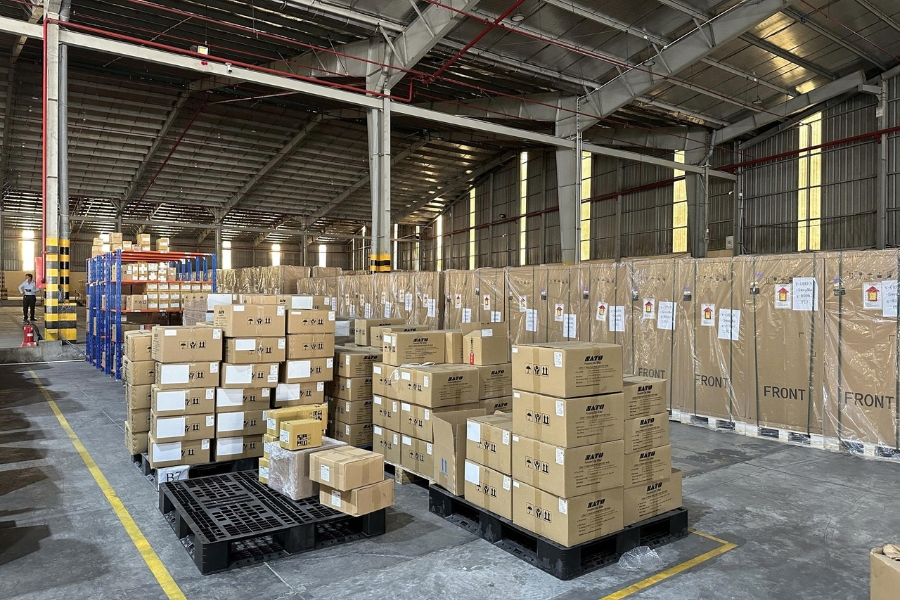
Palletized cargo transportation makes loading, unloading, warehousing, and delivery easier for businesses.
2. Pallet transportation options at PCS Logistics
PCS Logistics arranges Pallet Shipping Services according to pallet count, load specifications, warehouse dispatch schedules, and receiving requirements. Businesses can choose consolidated LTL transport, a dedicated FTL truck, or a planned pallet distribution arrangement.
2.1. Less-than-truckload (LTL) pallet shipping
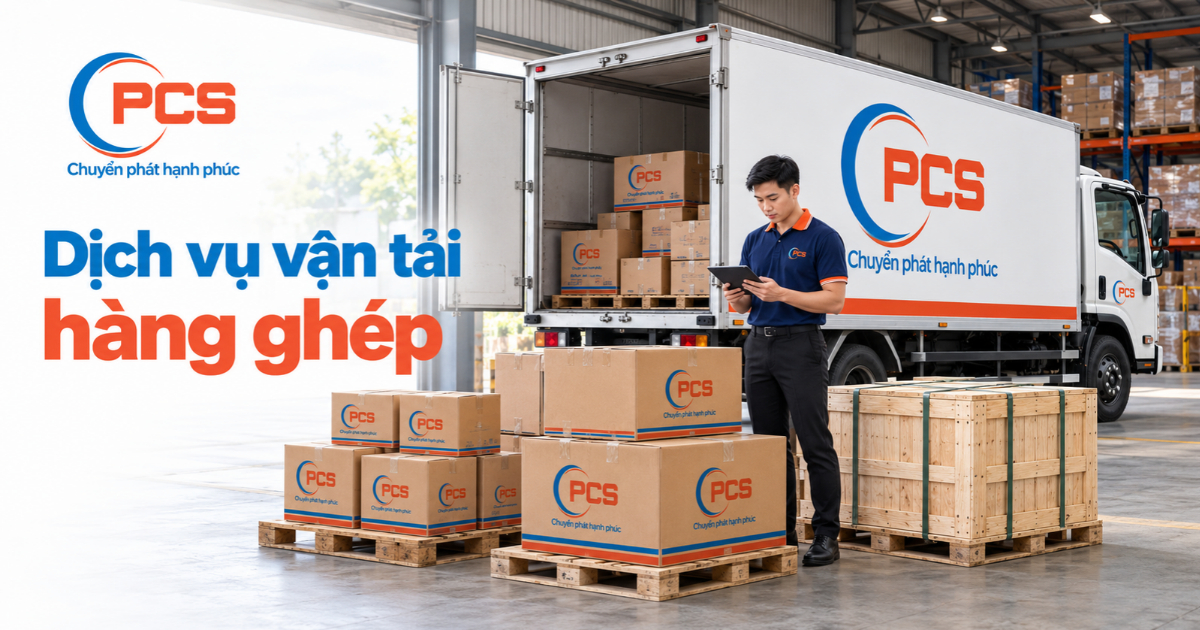
LTL transport suits shipments that do not require an entire truck. PCS evaluates whether compatible shipments can share the same route, considering handling, storage, and delivery requirements. This approach is often suitable for businesses shipping a few pallets at a time.
Its main benefits include:
- Shared transportation costs: Businesses use truck capacity alongside other compatible shipments on the route.
- Support for smaller loads: Suitable for individual orders and inventory replenishment batches.
- Flexible shipping volume: Businesses send the pallets they need without booking a dedicated vehicle.
For businesses considering PCS Logistics Pallet Shipping, LTL transit time depends on consolidation schedules, collection points, and any transfers along the route. For damage-sensitive, non-stackable, or time-critical cargo, PCS checks consolidation feasibility before confirming the arrangement.
2.2. Full-truckload (FTL) pallet transportation
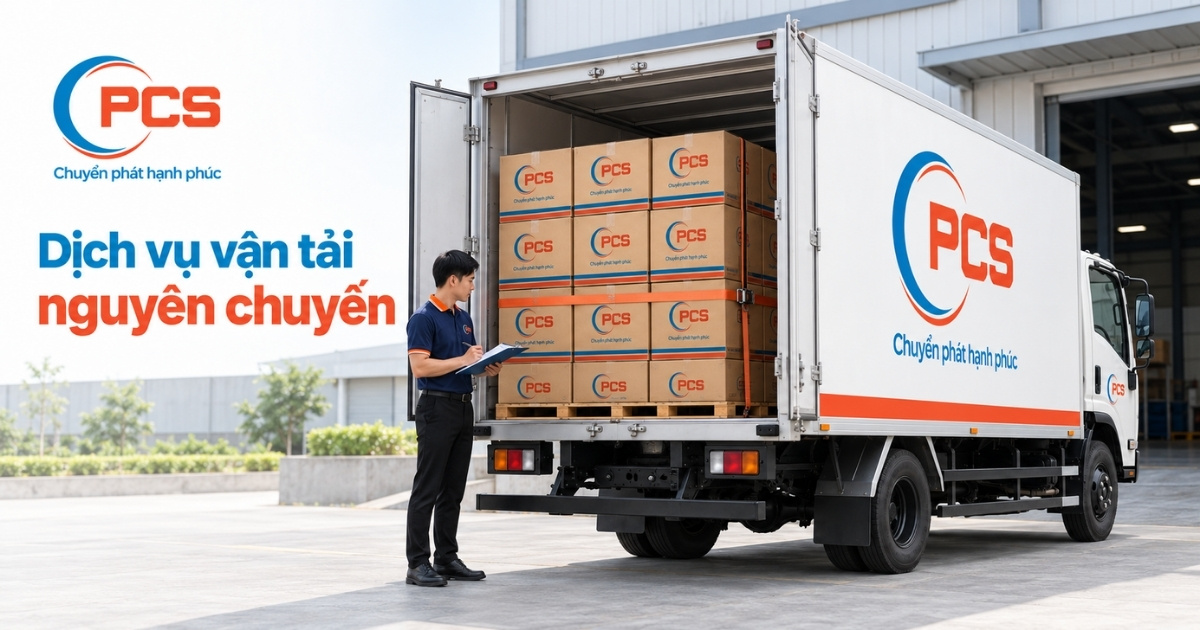
FTL means assigning a vehicle exclusively to one customer's shipment or agreed transport plan.
It is suitable for multiple pallets, loads requiring a separate truck, special handling conditions, or more control over pickup and delivery times. Advantages include:
- Control over dispatch schedules: Pickup times can be coordinated with production and warehouse operations.
- Planned vehicle loading: Pallets can be positioned according to their weight, dimensions, and stacking limits.
- Fewer transfers: Direct transportation can be prioritized where operating conditions allow.
- Scheduled delivery: Useful for warehouse replenishment, factory supply, and project shipments.
FTL may also be appropriate when a load does not fill the truck but needs a dedicated vehicle because of its characteristics or delivery requirements.
2.3. Pallet transportation under a distribution plan
For businesses moving goods regularly, PCS Logistics can integrate pallet transportation with distribution plans from factories or central warehouses to dealers, showrooms, and distribution centers.
Arrangements may include:
- Recurring schedules: Daily, weekly, or other agreed supply cycles.
- Shipment batches: Planned inbound deliveries, replenishment periods, and seasonal volume peaks.
- Multi-stop distribution: Delivering pallets to several addresses along a suitable route.
- Return coordination: Collecting empty pallets or returned goods where agreed.
Under PCS Logistics Pallet Transportation arrangements for B2B distribution, PCS can coordinate purchase order (PO) information, pallet counts, dispatch schedules, and warehouse receiving windows at each destination. This keeps transportation aligned with the supply plan rather than managing every trip separately.
Businesses can also explore multi-stop distribution services when one delivery plan involves several receiving locations.
LTL vs. FTL pallet transport
| Criteria | LTL consolidated transport | FTL dedicated transport |
|---|---|---|
| Shipment size | Does not require a dedicated truck | Requires or benefits from a dedicated truck |
| Transport schedule | Based on a suitable consolidation schedule | Based on the agreed trip plan |
| Pricing basis | Shipment specifications | Vehicle and trip requirements |
| Transfers | May involve collection and transloading | Greater control over the route |
| Pickup and delivery | Subject to operating schedules | More flexible within the agreed plan |
| Best suited to | Occasional shipments and small to medium pallet loads | Multiple pallets, dedicated receiving windows, or special cargo |
Note: Pallet count alone should not determine whether LTL or FTL is more suitable. Weight, dimensions, stackability, and delivery requirements are equally important.
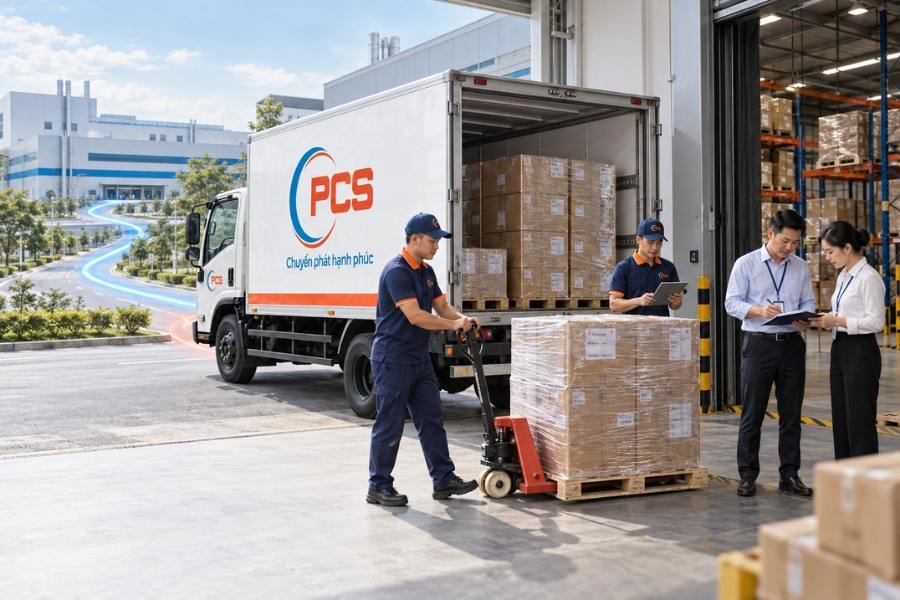
PCS Logistics organizes pallet shipments according to business distribution plans and agreed pickup and delivery schedules.
3. Pallet packing standards and delivery requirements
Proper pallet preparation keeps cargo stable during lifting, truck loading, and long-distance transportation. Before booking Pallet Shipping Services, businesses should inspect their packaged goods and confirm loading and unloading conditions at both pickup and delivery sites.
3.1. What to check before handing over a pallet
Businesses should verify the following:
- Pallet condition: The pallet is intact, can support the load, and is suitable for the available lifting equipment.
- Load arrangement: Weight is distributed evenly, the stack is stable, and goods do not extend unnecessarily beyond the pallet edges.
- Load securing: Stretch wrap, straps, edge protectors, or suitable cushioning are applied where needed.
- Shipment identification: Labels show the shipment reference, pallet count, destination, and any special handling instructions.
- Stackability: Whether pallets can be stacked and the permitted stacking height are clearly established.
- Protection requirements: Any moisture, heat, impact, or orientation restrictions are identified.
When several cartons are placed on one pallet, they should form a stable load. Wrapping and strapping must hold the goods securely without damaging the packaging or contents.
If a pallet is broken, the load is leaning, or the securing materials are insufficient, both parties should agree on corrective measures before loading.
3.2. Lifting equipment and warehouse receiving conditions
Palletized shipments often depend on access to forklifts, pallet jacks, or other loading equipment at each location.
Before assigning a vehicle, businesses should confirm the following with PCS Logistics:
- Lifting equipment: Whether forklifts are available at both ends or additional unloading arrangements are needed.
- Loading and unloading responsibilities: Which party provides equipment, labor, and handling services.
- Site access: Warehouse approach roads, parking, loading bays, doors, and handling areas.
- Receiving hours: Working hours, warehouse appointments, and permitted delivery windows.
- Entry procedures: Vehicle and driver registration, and documents required at factories or industrial parks.
- Exception handling: How leaning pallets, torn wrapping, or damaged packaging should be recorded.
Where warehouses have loading docks or dedicated handling areas, the vehicle deck height, lifting equipment, and receiving facilities should be checked for compatibility.
For example, a pallet shipment may leave a factory equipped with forklifts but arrive at a dealer's warehouse that only has pallet jacks. PCS needs this information before selecting the vehicle and confirming unloading arrangements.
3.3. Shipments requiring additional assessment
Some pallet loads need a separate review before acceptance:
- Non-stackable goods: Sufficient truck floor space must be reserved.
- Oversized cargo: Overall dimensions and vehicle-loading feasibility must be checked.
- Unstable or fragile goods: Extra protection, securing, and vibration-related precautions may be required.
- Goods with special storage needs: Transport conditions and available capabilities must be confirmed.
- Incomplete pallet packing: Additional palletizing or reinforcement must be agreed upon, subject to PCS's ability to provide it.
For these shipments, businesses should share photographs and final packed dimensions so PCS can assess the requirements before confirming service.
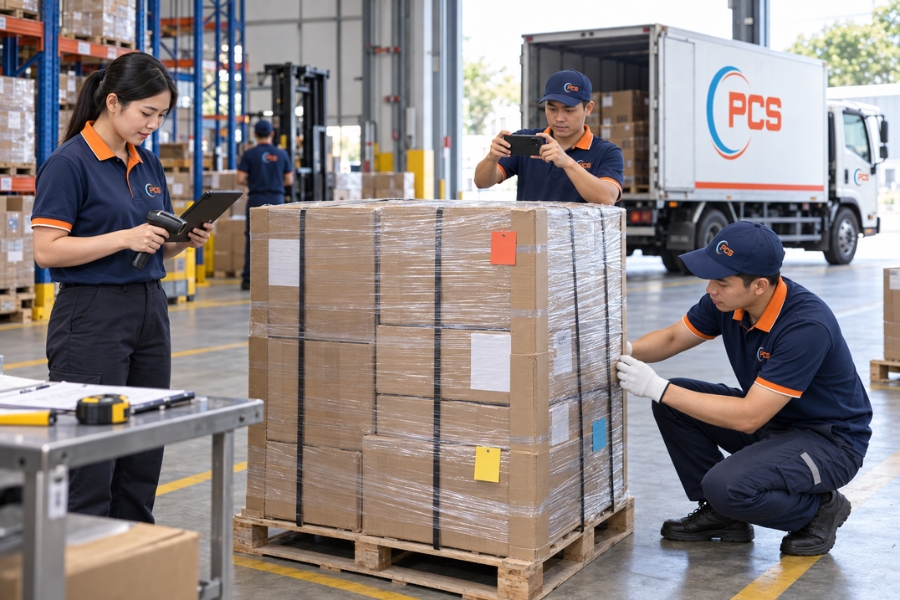
Checking pallet packaging and load securing helps reduce transportation risks.
4. Pallet shipping costs and transit times
The cost of Pallet Shipping Services depends on the cargo, route, transport arrangement, and work required at the origin and destination. PCS Logistics reviews the shipment details and recommends a suitable plan and quotation.
4.1. Factors affecting transportation charges
The following factors influence pallet transportation pricing:
| Factor | Details affecting the quotation |
|---|---|
| Cargo specifications | Goods type, pallet count, weight, and overall dimensions |
| Loading configuration | Whether pallets are stackable or need separate floor space |
| Route | Pickup and delivery points, distance, and road access |
| Transport arrangement | LTL, FTL, or recurring scheduled transportation |
| Loading and securing | Handling equipment, palletizing, padding, and additional reinforcement |
| Pickup and delivery requirements | Receiving windows, waiting time, and multiple delivery locations |
| Documentation | Detailed counting, delivery confirmation, or special paperwork |
For LTL shipments, PCS Logistics Pallet Freight planning considers cargo weight, dimensions, occupied space, and compatibility with other loads.
For FTL shipments, quotations generally reflect the vehicle type, route, number of pickup and delivery points, and operating schedule. Work beyond the main transportation scope should be identified separately.
4.2. Transit times and information needed for a quotation
Transit time depends on distance, route, operating schedules, whether LTL or FTL is used, and the receiving conditions at the destination.
LTL shipments may require collection, consolidation, and transfers. For FTL transportation, the schedule is based on collection time, the planned journey, and the agreed delivery window.
Businesses should confirm three key milestones:
- Pickup time: When goods are ready, meet handover requirements, and can be loaded onto the vehicle.
- Estimated transit time: Including transport operations and any necessary transfers.
- Delivery completion: When the vehicle arrives and goods are handed over under the recipient's receiving procedure.
If delivery requires an advance warehouse appointment, vehicle arrival must align with the receiving schedule. Share the required delivery deadline early so PCS can check feasibility.
For a pallet freight quotation, contact PCS Logistics at 1900.545.428 or support@pcs-logistics.com and provide the shipment's specifications and route.




5. Shipment handling and pallet delivery process at PCS Logistics
PCS Logistics Pallet Freight Services are organized around the cargo specifications, pickup and receiving conditions, and agreed transportation arrangement.
- Submit a shipment request: Provide the goods type, pallet count, weight, dimensions, route, delivery schedule, and lifting conditions at both facilities.
- Review transportation options: Assess the shipment and recommend LTL or FTL, a suitable vehicle, and the loading and unloading method.
- Confirm the quotation and schedule: Agree on charges, included services, pickup and delivery times, and transportation conditions.
- Inspect and accept the pallets: Check pallet counts, labels, packaging condition, and any irregularities at collection.
- Transport and monitor the shipment: Execute the transport plan, update shipment status, and coordinate any changes or issues.
- Complete delivery and document reconciliation: Confirm pallet and package counts, record the goods' condition, and complete delivery documents as agreed.
Counting scope: Counting pallets is different from counting every carton, SKU, or product inside them. For wrapped or sealed pallets, the business should specify whether an item-by-item inspection is required or whether only the pallet count and external condition will be checked.
If reusable pallets are involved, the arrangement should also define who collects empty pallets, quantities issued and returned, pallet condition, and handover records at each location. These details help prevent losses and disputes.
For multi-stop deliveries, PCS can coordinate delivery records by address. Businesses can also refer to PCS's distribution services for dealers, distributors, and showrooms to understand requirements for managing a B2B delivery network.
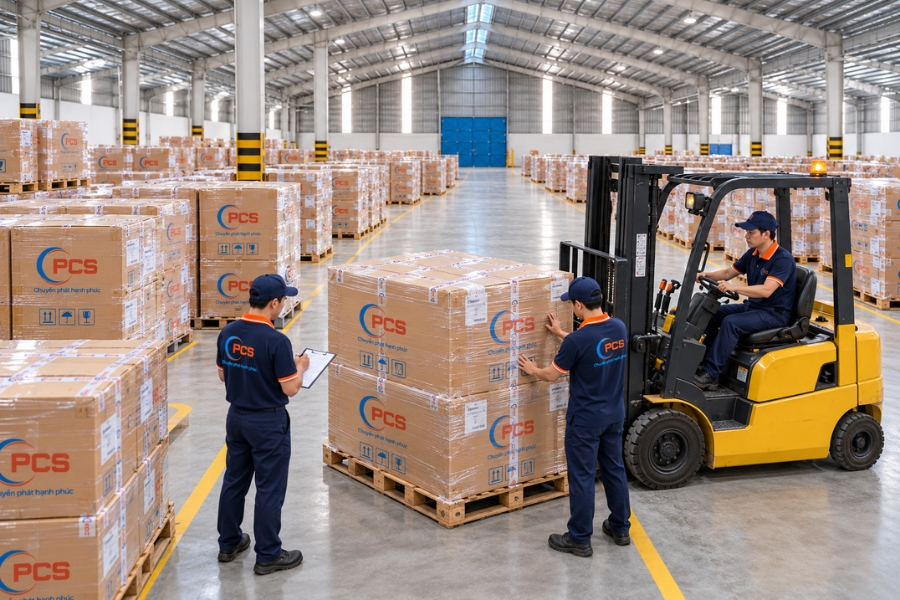
PCS Logistics combines warehousing capabilities and lifting equipment to receive and handle palletized goods.
6. PCS Logistics' pallet transportation capabilities
With more than 15 years of experience in delivery and logistics, PCS Logistics serves business customers through an integrated combination of road transportation, warehousing, and distribution. Its Pallet Shipping Services are organized around each shipment, from moving raw materials between factories to distributing finished products to dealer networks.
6.1. Logistics network connecting Northern, Central, and Southern Vietnam
PCS Logistics operates 8 warehouses with approximately 20,000 m² of total space in key locations. The network supports:
- Cargo receipt and transfers: Connecting shipments across regions and transport routes.
- Warehousing: Storing palletized goods according to facility conditions and business needs.
- Distribution connections: Moving goods from warehouses to factories, dealers, and points of sale.
- Transportation coordination: Aligning outbound plans with vehicle availability and receiving schedules.
6.2. Flexible road transportation arrangements
PCS Logistics combines different road transportation options based on business requirements. Rather than using one setup for every pallet load, PCS assesses cargo volume, delivery route, and destination conditions before selecting a vehicle.
- LTL transport: For compatible consolidated shipments on suitable routes and schedules.
- FTL transport: For shipments requiring a dedicated vehicle.
- Route-based transportation: To coordinate goods movements between regions, factories, and warehouses.
- Recurring distribution: For businesses with regular inventory replenishment schedules.
Having several options helps businesses adjust their transport plans as shipment volumes change.
6.3. Transportation connected with integrated logistics services
Business logistics often extend from warehouse receipt through final distribution. PCS Logistics can coordinate transportation with storage, order processing, and scheduled delivery. Options include:
- Warehousing: Receiving, storing, and dispatching goods.
- B2B fulfillment: Preparing orders by purchase order, SKU, carton, package, or pallet.
- Distribution logistics: Moving goods from factories or central warehouses to business partners.
- Value-added services: Packing, labeling, sorting, or warehouse handling within the agreed scope.
Coordinating these activities through a shared operating plan can reduce the number of separate contacts businesses need to manage.
Learn more about PCS Logistics' B2B fulfillment services for warehouse operations, order preparation, and pallet or parcel handover.
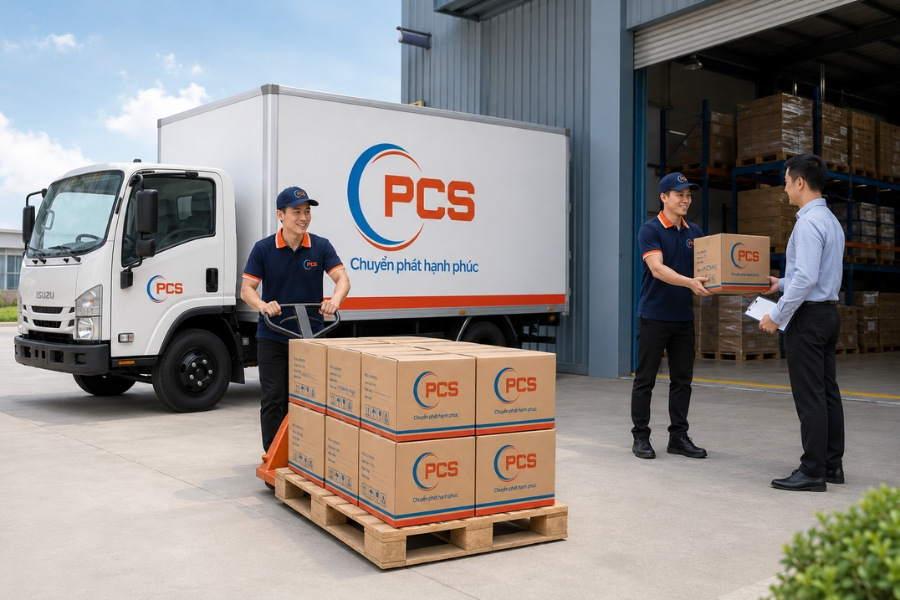
PCS Logistics coordinates pallet counts, cargo condition, and delivery documentation throughout the handover process.
6.4. Experience supporting manufacturers and distributors
PCS Logistics has handled logistics activities for manufacturing, trading, and distribution businesses, including VinFast, Hòa Phát, MG Motor, and An Phát Xanh.
For Hòa Phát's home appliance and refrigeration distribution operations, delivery coordination involves dispatch plans, destinations, product models, and supporting records across a retail network. This experience is relevant to managing B2B goods flows and deliveries to multiple sites.
For projects involving PCS Logistics Pallet Shipping Services, such experience informs the planning of warehouse receiving conditions, delivery appointments, and handover procedures.
6.5. Coordinating delivery controls and documentation
Businesses need visibility into transit progress, actual quantities delivered, and cargo condition at each destination. PCS Logistics coordinates these areas through:
- A designated contact: An agreed person or team for requests and exceptions.
- Transport progress updates: Shipment status reports based on service conditions.
- Handover records: Pallet and package counts and observable cargo condition.
- Delivery documents: Delivery notes, receipt confirmation, and proof of delivery (POD) as agreed.
- Exception handling: Coordination when schedules change, quantities differ, or goods appear damaged.
Agreeing on data and handover requirements upfront helps logistics, warehouse, and accounting teams reconcile shipments after each trip or reporting period.
7. Contact PCS Logistics for a pallet shipping quotation
PCS Logistics prepares transport plans based on the cargo, number of pallets, vehicle requirements, and pickup and delivery conditions. Whether using LTL, FTL, or scheduled distribution, businesses can discuss an arrangement that fits their operating plan and budget.
To request a quote for Pallet Shipping Services, provide the goods type, pallet count, weight, dimensions, origin, destination, and expected pickup and delivery schedule. PCS can advise on pallet freight services, pallet transportation, palletized freight, and pallet transport services according to the actual shipment requirements. Businesses comparing pallet shipping with dedicated-truck options should also provide any stacking, lifting, or receiving restrictions.
PCS Logistics hotline: 1900.545.428