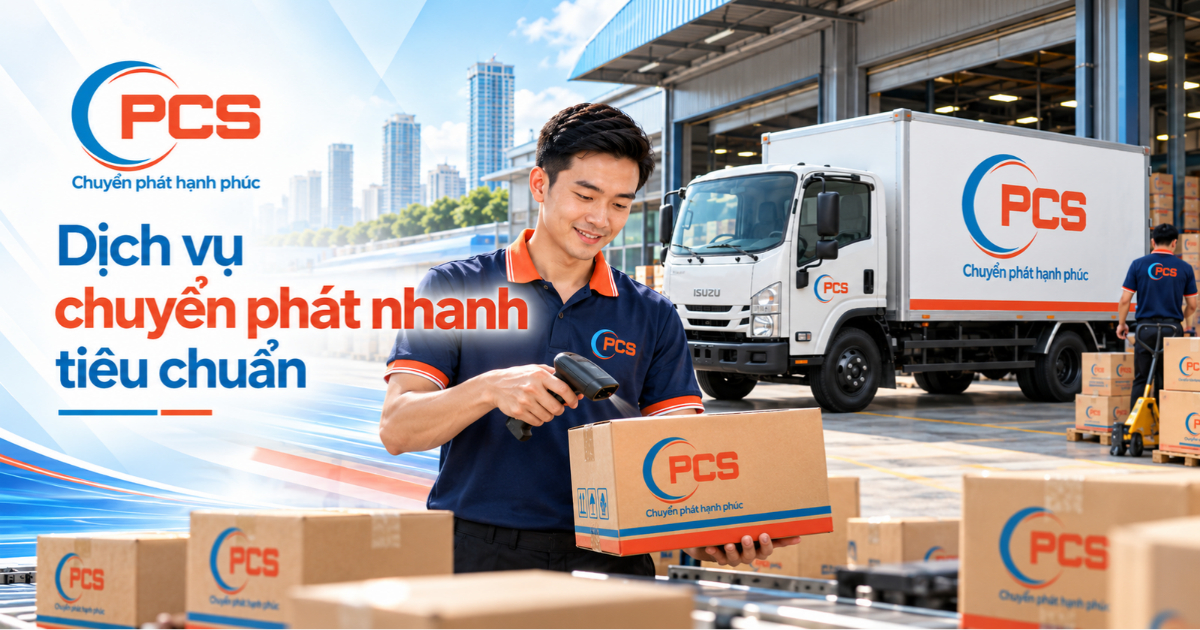

Retail Distribution Services for Supermarkets and Retail Stores
Delivering goods to supermarket chains and retail stores involves more than transporting products from a warehouse to a sales outlet. Each shipment must match the purchase order (PO), stock keeping units (SKUs), delivery appointment, quantities, and receiving requirements of the retail chain. PCS Logistics provides retail distribution services from factories, central warehouses, and regional warehouses to distribution centers (DCs), supermarket warehouses, and individual stores across multiple regions. The solution helps businesses maintain a consistent supply of products, reduce the workload of coordinating numerous small orders, and improve control over delivery progress, handovers, and documentation throughout their retail networks.
1. Overview of Distribution Services for Supermarkets and Retail Stores
Based on its operational experience, PCS Logistics has identified several common challenges businesses face when managing deliveries to retail chains in-house:
-
Different receiving requirements: Each retail chain has its own rules for appointments, vehicle access, goods inspection, and documentation. Inaccurate information or late arrivals can result in waiting times or shipments not being accepted.
-
Small orders across multiple locations: Stores need frequent replenishment, but individual order volumes are often limited. Using a dedicated vehicle for each order increases costs, while waiting to consolidate stock can leave shelves understocked.
-
PO and document discrepancies: Delivery to the wrong store, incorrect product codes or quantities, or missing documents can delay joint inspections, require another delivery attempt, and complicate reconciliation.
-
Unsuccessful deliveries: Receiving points may be overloaded, reschedule appointments, accept only part of an order, or reject a shipment. This can lead to waiting, temporary storage, redelivery, or returns.
-
Fluctuating shipment volumes: Demand may rise sharply during store openings, product launches, promotional campaigns, or peak seasons, making it difficult for an in-house fleet to respond quickly.
During distribution, PCS coordinates shipment updates, records handover results, consolidates documents, and handles rescheduled appointments, deliveries that cannot be completed, and returns. Its retail distribution services help businesses reduce the burden of transport coordination, maintain visibility over product flows, and replenish individual stores more consistently.

Supermarket deliveries may experience delays due to specific booking schedules and receiving procedures.
2. PCS Logistics Retail Distribution Services for Supermarkets and Stores
Each plan takes into account POs, SKUs, shipment volumes, delivery locations, booked time slots, receiving conditions, and actual supply requirements. These retail distribution services aim to deliver the right order to the right location at the agreed time, with clear visibility of shipment status and documents after each trip. PCS Logistics Retail Distribution is tailored to these varied retail receiving models.
Distribution to Retail Distribution Centers and Supermarket Central Warehouses
This option serves businesses that supply goods through a retail chain's DC or central warehouse before the products are allocated to individual stores. Receiving requirements are typically strict, particularly for delivery bookings, POs, SKUs, quantities, packing specifications, and documentation. Even a single discrepancy can lead to vehicle delays, partial acceptance, or rejection of a shipment.
PCS Logistics focuses on the following controls:
-
Pre-dispatch order checks: Verify POs, SKUs, quantities, delivery locations, and handover requirements.
-
DC and warehouse appointments: Coordinate receiving time slots and assign vehicles appropriate to shipment volumes.
-
Handover status: Record quantities accepted, goods not received, and any issues arising at the warehouse.
-
Post-delivery documentation: Consolidate handover records for verification and reconciliation.
Key benefit: This approach reduces the risk of non-compliant deliveries, limits vehicle waiting time, and supports a consistent flow of goods from factories and warehouses into retail networks.
Direct Distribution to Supermarkets and Individual Stores
For businesses that replenish individual outlets directly, PCS Logistics supports pickup from one or several origins and delivery to multiple destinations. This retail store distribution model suits supermarket chains, retail stores, and sales outlets spread across different areas.
Rather than assigning a separate vehicle to each small order, PCS groups shipments by delivery area, route, receiving window, and volume to develop efficient distribution routes. Its store distribution services support consistent deliveries across a dispersed store network.
Key operational priorities include:
-
Sorting goods by store, PO, or SKU.
-
Setting the delivery sequence according to receiving appointments.
-
Selecting vehicle capacity based on shipment volumes and access conditions.
-
Tracking handover outcomes at each location.
-
Consolidating proof of delivery (POD) and documents by retail chain.
With PCS Logistics Store Distribution managed through a single point of contact, businesses can reduce the effort required to coordinate many small orders while tracking which shipments have been delivered, which locations are still being served, and where issues have arisen.
Distribution for Sales Campaigns and Phased Rollouts
Store openings, product launches, display changes, promotions, and network expansion often create a sharp increase in shipment volumes over a short period. Goods must reach multiple locations in line with the same rollout schedule.
PCS Logistics can develop a dedicated plan for each campaign:
Stores with earlier opening dates or rollout deadlines are prioritized. As actual volumes rise or additional delivery points are added, the fleet allocation and number of routes can be adjusted accordingly.
This solution suits businesses that need to stock multiple stores simultaneously without maintaining a permanently enlarged fleet solely for seasonal or campaign peaks.
Product Returns from Supermarkets and Retail Stores
Distribution does not end when the goods are delivered. Stores may need to return defective products, customer returns, rejected goods, leftover promotional stock, pallets, packaging, or display materials.
PCS Logistics receives the collection-point list, product types, quantities, and return destinations to prepare an appropriate recovery plan. Where route conditions and vehicle capacity allow, collections can be combined with the return journey of a delivery route.
Collected goods are returned to:
-
A central warehouse or distribution center.
-
A factory.
-
A regional warehouse.
-
Another processing location designated by the business.
Return details and handover documents are recorded by collection point, helping businesses manage reverse flows more effectively while reducing the need for multiple small, separate collection trips.
Benefit of combining delivery and collection: Better use of vehicle journeys in both directions, less returned stock held at stores, and a more integrated approach to reverse logistics within the distribution plan.

PCS Logistics transports and distributes Thiên Long Group products to Cleverbox stores.
3. Transportation Options for Supermarkets and Retail Outlets
PCS Logistics selects transport arrangements based on shipment volumes, the number of delivery points, replenishment frequency, receiving appointments, and delivery deadlines. Depending on the PO and distribution plan, retail distribution services can use consolidated freight, dedicated vehicles, scheduled routes, or a combination of these methods within the same campaign.
Consolidated Freight by Shipment
This option suits smaller POs, variable shipment volumes, or frequent replenishment needs that do not require an entire vehicle.
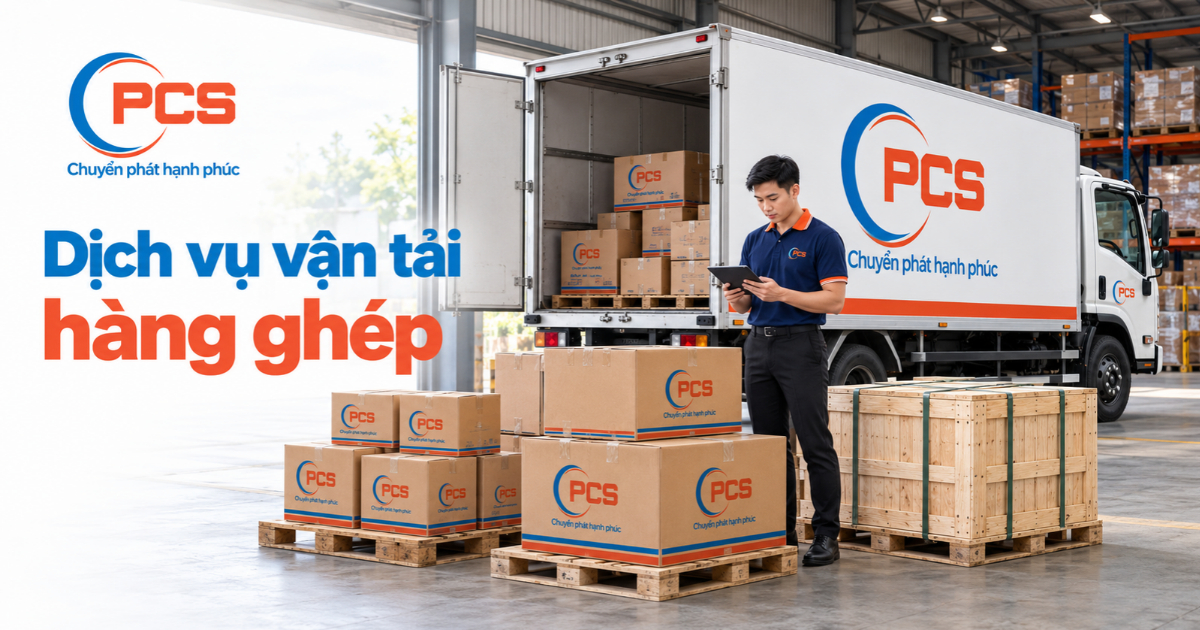
PCS Logistics combines compatible shipments traveling in the same direction and sorts them by PO, destination, and delivery schedule to reduce order mix-ups during handling.
-
Lower transportation costs for smaller shipments.
-
Flexible dispatches according to replenishment needs.
-
Suitable for supermarkets and stores with different order volumes.
Consolidated freight helps businesses keep stores supplied without waiting until they have enough stock to fill a larger dedicated shipment.
Full-Truckload Transportation
Dedicated vehicles are suitable for larger consignments, palletized goods, deliveries to DCs or central warehouses, and POs requiring close control of delivery windows. PCS selects vehicles based on payload, volume, packaging, and access conditions at the destination. Goods travel separately under an agreed schedule, reducing transfers and avoiding consolidation with unrelated orders.
Key advantages: Greater control over delivery schedules, better shipment oversight during transit, and effective support for large replenishment runs or deliveries that must arrive within a specific time window.
Scheduled Distribution Routes
For retail networks requiring continuous replenishment, PCS Logistics can establish daily, weekly, or recurring routes instead of rebuilding a transport plan for every journey.
Delivery points are grouped by geography and receiving windows. Before each trip, actual volumes are updated so that vehicle type, number of stops, and delivery sequence can be adjusted.
Scheduled routes enable businesses to:
-
Plan warehouse dispatches in advance.
-
Maintain a consistent replenishment cycle.
-
Reduce repetitive vehicle sourcing and coordination.
-
Adjust vehicle capacity as order volumes change.
Combined Delivery and Returns Collection
Within the same retail network, businesses often need to deliver new stock while collecting returned or rejected goods, pallets, display items, or documents. When routes, vehicle capacity, and cargo characteristics permit, PCS Logistics schedules collections on the return leg of a distribution route.
This two-way approach uses vehicle journeys more efficiently, reduces separate collection trips, and helps businesses manage outbound deliveries and returned goods together. PCS Logistics Store Distribution Services can therefore support both replenishment and compatible return flows.

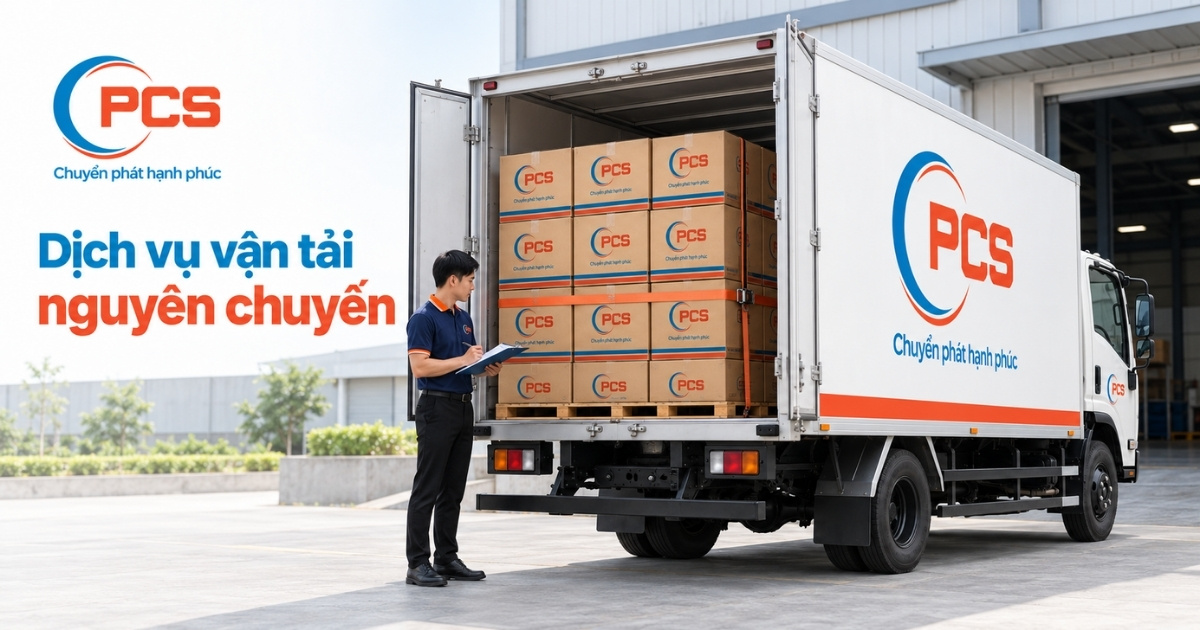
PCS Logistics arranges full-truckload transportation to minimize cargo transfers and maintain control over delivery schedules.
4. PCS Logistics' Retail Distribution Coverage and Network
PCS Logistics serves businesses through operating sites in Hanoi, Da Nang, Ho Chi Minh City, and Binh Duong, supporting local, interprovincial, and nationwide distribution across Northern, Central, and Southern Vietnam. Its retail distribution services bring these regional operations together for coordinated store replenishment.
-
Operations across Vietnam's three regions: Regional sites receive, consolidate, and transfer goods from factories, central warehouses, or regional warehouses before distributing them to supermarkets and stores. This approach can shorten the final delivery leg and reduce the need to transport small orders individually over long distances.
-
Local distribution: PCS assigns vehicles according to shipment volume, delivery-point density, and receiving slots. Goods can be delivered to DCs, supermarket central warehouses, or directly to stores, supporting frequent replenishment and shorter response times.
-
Interprovincial distribution by store clusters: Supermarkets and stores are grouped by location, route, and receiving schedule. Clustering deliveries helps improve vehicle utilization, reduce isolated trips, and simplify coordination between provinces.
-
North–Central–South connectivity: Goods can be moved between PCS operating sites in Hanoi, Da Nang, Ho Chi Minh City, and Binh Duong before being distributed within each region. This model suits businesses with factories, central warehouses, and retail networks spanning multiple regions.
-
Flexible network configurations: Depending on stock origins, store density, and replenishment frequency, PCS can combine long-haul transportation, regional transfers, and final-leg distribution within a single plan.
Through its multi-region operations, PCS Logistics helps businesses expand retail coverage while retaining a single coordination point, making delivery progress and replenishment planning easier to manage across their networks. This regional coordination is an important part of its retail logistics solutions.

PCS Logistics connects freight transportation networks across Northern, Central, and Southern Vietnam.
5. How Does PCS Logistics Control Supermarket Distribution?
Deliveries to supermarkets and stores require coordinated checks on POs, SKUs, appointments, receiving conditions, product condition, and handover documents. PCS Logistics tracks these requirements from the initial plan through to delivery completion and reconciliation. This level of control is central to effective retail logistics and consistent store logistics.
-
PO, SKU, and delivery-point verification: Match order references, SKUs, quantities, package counts, and addresses against the customer's instructions. Goods are sorted by DC, supermarket, or store to reduce errors and deliveries to incorrect locations.
-
Booking and delivery-time control: Check pickup schedules, receiving windows, and bookings for each destination. Delivery sequences follow route requirements and receiving appointments to reduce missed slots, long vehicle waits, and redelivery.
-
Packaging and external-condition checks: Record shipment condition at pickup and load goods according to their size, weight, and packaging characteristics. Dents, torn packaging, or other irregularities are reported promptly so the business can respond before arrival at the retail location.
-
Actual quantities received and joint inspection: Record quantities handed over, partially accepted goods, shortages, and rejected items at each location. Accepted quantities are identified by PO and destination for easier verification.
-
POD and handover-document control: Consolidate delivery notes, inspection records, signatures, photographs, and PODs as required. Documents are linked to individual orders and delivery locations to support reconciliation and post-delivery discrepancy handling.
-
Handling shipments not accepted: If appointments change, documents are missing, quantities differ, or a receiver changes its plan, PCS records the issue and informs the designated contact. As instructed, goods may remain pending acceptance, be rescheduled, be held at an appropriate location, or be returned to a warehouse.
By checking each PO, destination, and handover status, PCS Logistics helps businesses reduce mistakes and resolve issues promptly. Clear delivery records and consolidated documents also support tracking, reconciliation, and more effective management of retail networks.

PCS Logistics inspects the external condition of goods and promptly reports any irregularities before delivery to retail stores.
6. PCS Logistics' Supermarket Distribution Process
PCS Logistics follows a clearly defined, five-step process to manage orders, receiving appointments, cargo condition, and handover outcomes at each DC, supermarket, or retail store. The process is adjusted to meet the requirements of each retail chain and forms part of its retail distribution services.
-
Step 1. Receive the distribution plan: Record pickup and delivery locations, POs, SKUs, quantities, bookings, receiving windows, and required documents. Check the submitted information to reduce missing or incorrect data before dispatch.
-
Step 2. Develop the transport plan: Select the transport method, vehicle, pickup schedule, and delivery sequence for each destination. The plan reflects shipment volumes, routes, and access conditions to support timely, efficient operations.
-
Step 3. Receive and sort goods: Record package counts and visible cargo condition, then sort goods by PO, SKU, and destination before loading. Load according to delivery sequence to reduce mix-ups and handling time at receiving points.
-
Step 4. Transport and hand over goods: Monitor route progress, coordinate joint inspections, and record quantities accepted, shortages, and rejected goods. Report delivery-site issues so the business can respond without unnecessary delay.
-
Step 5. Complete documents and reconciliation: Consolidate PODs, inspection records, signatures, photographs, and related post-delivery documents. PCS also updates orders requiring storage, redelivery, or return to support tracking and reconciliation.
The process enables businesses to track each PO from warehouse dispatch to final acceptance within the retail chain. Discrepancies and unsuccessful deliveries are documented clearly, supporting faster resolution and more consistent distribution data.
7. PCS Logistics' Capabilities in Retail Chain Distribution
Supplying retail chains requires more than arranging vehicles. Businesses need a logistics provider capable of handling multiple POs, numerous receiving points, different delivery windows, and fluctuating volumes while maintaining visibility over each delivery outcome. PCS Logistics has developed its retail distribution services around these operational needs, including retail logistics services for complex retail networks.
-
Coordinating multiple POs and delivery points under one plan: PCS receives order lists and groups them by DC, supermarket, store, geography, and receiving time to design appropriate routes. Businesses spend less time coordinating individual orders while retaining visibility at every sales outlet.
-
Following each chain's bookings and receiving rules: Appointments, delivery windows, vehicle access conditions, document requirements, and handover procedures are checked before dispatch. This is especially important for DCs and retail networks with strict receiving protocols.
-
Matching transport capacity to actual volumes: PCS can combine consolidated freight, full-truckload services, and scheduled routes according to PO size. During peak seasons, promotions, product launches, or new-store openings, vehicles and route capacity can be adjusted to demand.
-
One coordination point for the entire delivery network: PCS tracks pickup planning, vehicle allocation, transit progress, and handovers at each location. Rescheduled appointments, partial acceptance, rejected goods, and redelivery requests are recorded centrally, reducing the need for businesses to work separately with multiple carriers.
-
Tracking accepted quantities, PODs, and documents by location: Accepted quantities, discrepancies, rejected goods, signatures, photographs, and PODs are consolidated as required, helping businesses verify individual POs, reconcile records, and resolve incomplete deliveries.
PCS Logistics has applied these capabilities to distribution projects for Thiên Long Group, delivering goods to Clever Box stores, and for Hòa Phát, supplying products to electronics retail chains such as MediaMart. Experience from these projects helps PCS develop plans suited to each retailer's products, delivery-point lists, schedules, and handover requirements. This practical expertise also supports PCS Logistics Retail Logistics across different retail formats.
Every business has its own order volumes, store network, and delivery requirements. PCS Logistics looks forward to discussing a suitable supermarket and retail store distribution plan, from factories, central warehouses, or regional warehouses to DCs and individual outlets. Contact us at 1900.545.428 to discuss your operational needs.