
As distribution networks expand, goods do not only move from warehouses to the market. They also move back from dealers, stores, showrooms, factories, and business customers. Reverse logistics helps businesses coordinate the collection of defective products, returned goods, pallets, reusable packaging, and assets that need to be sent back. PCS Logistics provides reverse logistics services in Vietnam, consolidating goods from multiple locations, transporting them to designated receiving facilities, and keeping clear records of their condition and handover throughout the return flow.
1. Overview of Reverse Logistics at PCS Logistics
The service is suitable for manufacturers, brand owners, distributors, retail chains, and businesses managing warranty networks or reusable assets. In practice, return flows are often difficult to control because items are spread across different locations, volumes fluctuate, and goods arrive in varying conditions. Common challenges include:
-
Returns spread across multiple locations: Defective products, returned goods, pallets, or materials may remain at many dealers, stores, and branches. Without a centralized collection plan, they can accumulate and it becomes difficult to confirm which locations have been served.
-
Small, irregular collection volumes: Each location may have only a few packages or a small quantity to return. Sending a dedicated vehicle increases costs, while waiting too long to consolidate goods can delay warranty work, inventory updates, or further handling.
-
Inconsistent cargo condition: Goods may have missing packaging, damage, quantity discrepancies, or differences from the original collection list. Without clear records at pickup, it is difficult to establish what happened when discrepancies arise.
-
Different documentation and return destinations: Warranty items, defective products, and reusable assets may need to go to different warehouses, factories, warranty centers, or suppliers. Incorrect paperwork or destinations can require additional transfers.
-
Limited tracking and reconciliation data: When multiple departments arrange collections separately, businesses may struggle to identify which goods have been collected, where they are, whether they have reached their destinations, or which locations are still pending.
PCS Logistics coordinates return shipments based on collection lists, actual cargo condition, and final receiving locations. A centralized approach to reverse logistics helps businesses reduce goods left at sales outlets, avoid fragmented collection trips, and maintain better visibility over the entire return process.
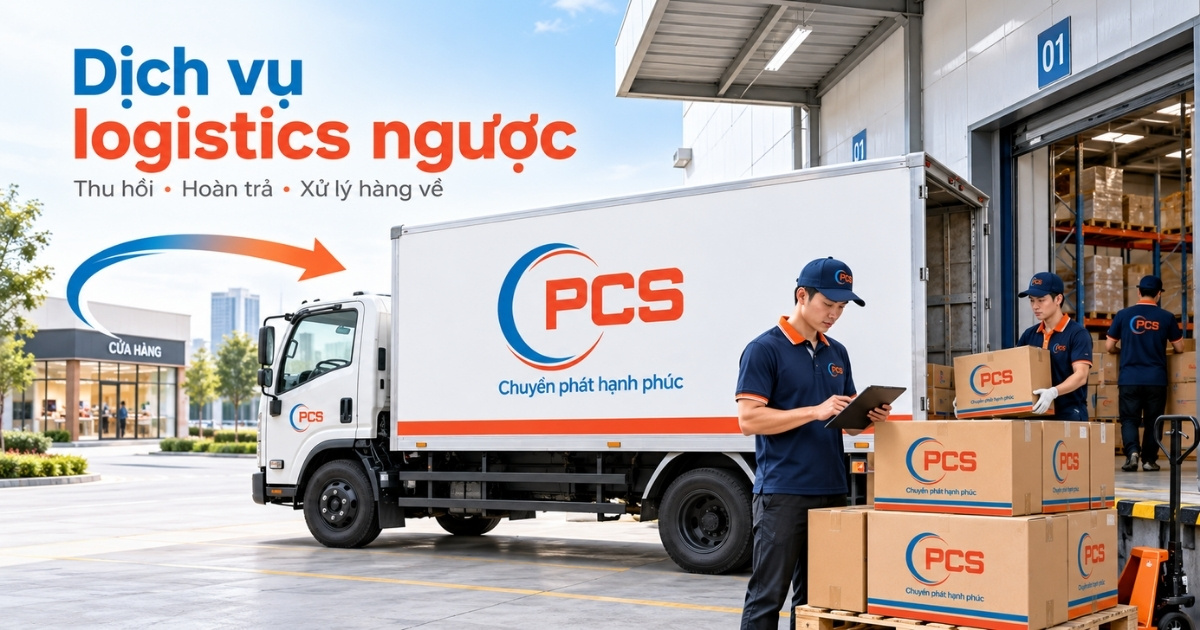
PCS Logistics' reverse logistics solution helps businesses reduce operational risks and goods-related costs.
2. Reverse Logistics Solutions at PCS Logistics
Return flows may originate from a few locations or across a nationwide network of dealers, stores, and factories. PCS Logistics tailors its reverse logistics services to the number of collection points, cargo types, volumes, collection frequency, and final receiving destinations instead of applying the same approach to every return request.
Collection from Multiple Locations to One Destination
This model suits businesses with defective products, returns, pallets, packaging, or reusable assets spread across dealers, stores, showrooms, branches, and partners that need to be brought back to one warehouse, factory, or processing center.
PCS Logistics follows a structured collection flow:
Pickup points are grouped by location, volume, cargo readiness, and site access conditions. Where operationally suitable, PCS collects goods from several locations on the same route rather than arranging an individual trip for every small collection.
Key benefit: Fewer fragmented collection trips, less returned stock held across the distribution network, and a centralized flow of goods for inspection, warranty handling, or further processing.
Collection from Multiple Locations to Different Processing Destinations
Returned goods do not always go to the same place. Under one collection plan, businesses may need to route different items as follows:
-
Warranty items → Technical service center.
-
Defective products → Factory.
-
Pallets and racks → Warehouse.
-
Components → Supplier.
-
Returned goods → Sorting center.
PCS Logistics checks cargo types, pickup points, and final receiving locations before arranging routes. This reduces the need to consolidate everything at one warehouse only to transfer it again.
This option is particularly relevant to businesses with different after-sales departments or return destinations. It enables several return logistics flows to be coordinated within one plan while keeping the destination of each product group clear.
Scheduled Collection for Recurring Returns
This option suits businesses that regularly generate returned products, warranty items, pallets, or reusable packaging at the same locations. PCS Logistics establishes daily, weekly, or other recurring collection schedules while adjusting routes and vehicles to the actual volume in each cycle.
-
Plan collection schedules across the network in advance.
-
Reduce returned goods accumulating at their points of origin.
-
Avoid repeatedly booking vehicles for individual small requests.
-
Adjust arrangements to the number of locations and actual volumes.
This approach supports predictable collections while allowing capacity to change as needed.
On-Demand Collection for Unplanned Returns
Not every return flow can be predicted. Goods rejected upon delivery, products requiring urgent warranty handling, or equipment with unexpected faults may need collection outside scheduled cycles.
When a request is received, PCS Logistics confirms the essential information:
PCS then selects a transport arrangement suited to the specific situation, allowing businesses to address individual requests without maintaining a dedicated collection vehicle in every area.
Key benefit: Greater flexibility for after-sales operations, warranties, and exception handling, particularly when volumes are too small or deadlines cannot wait for the next scheduled collection.
Combining Deliveries and Returns Collection on the Same Route
A receiving location may need two services at once: delivery of new products and collection of defective items, pallets, packaging, equipment, or documents.
When vehicle capacity, routes, and cargo characteristics are compatible, PCS Logistics can arrange:
Using the return leg of a delivery route makes better use of vehicle journeys and reduces the need for a separate collection trip. It also allows businesses to manage outgoing deliveries and incoming returns under the same transport plan.
This approach is particularly useful for businesses with regular distribution routes that also generate ongoing returns of pallets, reusable packaging, products, or assets.
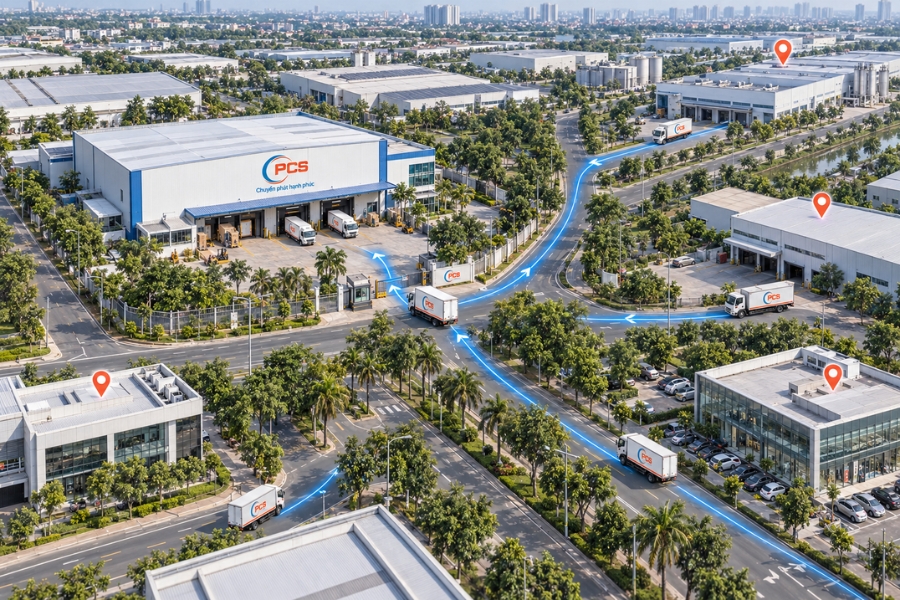
PCS Logistics connects collection points with warehouses, technical service centers, and suppliers.
These solutions do not have to operate separately. A business may keep a scheduled collection cycle for recurring returns, arrange individual collections for urgent cases, and collect pallets or products on the return leg of regular delivery routes. PCS Logistics bases each plan on actual goods flows, helping reduce fragmented trips, shorten the time returns remain at their points of origin, and improve oversight of the overall process.
3. Types of Goods PCS Logistics Can Collect
PCS Logistics develops collection plans according to the reason for return, cargo condition, and required processing destination. Its reverse logistics services support collection from a single location or across networks of dealers, stores, factories, and business partners in Vietnam.
-
Defective products and warranty items: Collect products, components, equipment, or spare parts from dealers, retail outlets, showrooms, or partners and transport them to factories, warranty centers, or technical departments for inspection and handling.
-
Returned or rejected goods: Collect shipments with incorrect product codes or quantities, nonconforming goods, missing documents, or items partially or fully rejected by receivers. PCS transports them to warehouses, factories, or designated handling locations.
-
Campaign-related returns: Support product model changes, display replacements, completed sales campaigns, excess channel inventory, or coordinated product withdrawals from multiple areas, following agreed collection lists and schedules.
-
Pallets, packaging, and reusable materials: Collect pallets, plastic containers, trays, cages, racks, specialized packaging, and other reusable assets after delivery. These items generally return to warehouses or factories for reuse in subsequent distribution cycles.
-
Used equipment and surplus project materials: Transport machinery, tools, equipment, excess materials, or unused goods after project completion, installation, or construction to a warehouse, factory, or the business's asset management location.
-
Components, raw materials, and rejected factory goods: Collect defective components, spare parts, or nonconforming materials from factories, subcontractors, or partners and transport them to inspection, repair, reprocessing, or supplier return locations.
-
Goods requiring separate processing destinations: Some items need to be routed to central warehouses, technical centers, suppliers, warranty departments, or specialized handling facilities rather than one common address. PCS assigns destinations based on collection lists and receiving instructions.
Businesses can therefore manage different categories of returned goods under one collection plan rather than arranging transport independently for every product group or point of origin. This is especially valuable for B2B reverse logistics involving multiple assets and return reasons.
4. How Does PCS Logistics Control the Return Flow?
A return collection is not fully complete until the business knows which goods were collected, from where, in what condition, and whether they reached the correct receiving location. PCS Logistics manages its reverse logistics services by item reference, pickup point, and final destination to reduce errors in transportation and reconciliation.
-
Collection requests and pickup details: Before vehicle allocation, PCS checks product codes, SKUs, serial numbers where applicable, quantities, addresses, handover contacts, and cargo readiness. Details are linked to each pickup point to reduce incorrect collections, wrong addresses, or repeated visits.
-
Actual quantities and cargo condition: At collection, PCS records package counts, quantities, packaging, and visible cargo condition. Differences from the original list are documented so the business has a basis for resolving discrepancies before onward transportation.
-
Sorting and destination control: Warranty goods, customer returns, pallets, equipment, and materials may have different destinations. PCS separates goods by category and final receiving point to reduce misdeliveries and the need for further transfers.
-
Progress and documentation: Collection status is updated for each location from initial request to final handover. Signatures, photographs, reports, and related documents are consolidated to support tracking, reconciliation, and completion confirmation.
-
Exception handling: If goods are missing, documents are incorrect, schedules change, handover is refused, or cargo condition differs from expectations, PCS records the cause and works with the designated business contact to agree on next steps before continuing.
By tracking each collection request, businesses can see which goods have been picked up, are in transit, or have reached their designated destinations. Clear records make warranty handling, inventory returns, and reconciliation more transparent while reducing disputes over discrepancies.
The PCS Logistics Returns Management approach focuses on physical collection, delivery status, and handover documentation, supporting the business's own returns management procedures.
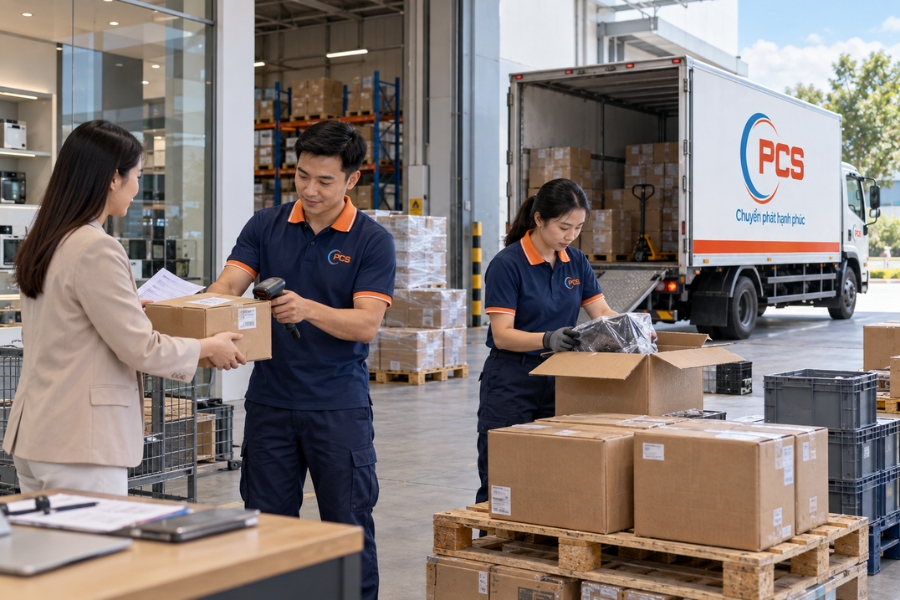
PCS Logistics monitors the return flow from dealers, distributors, showrooms, and stores.
5. Reverse Logistics Process at PCS Logistics
PCS Logistics carries out reverse logistics services through a process that starts with a collection list and ends when goods are handed over at the correct warehouse, factory, warranty center, or processing location. Each step emphasizes accurate item identification, condition records, destination control, and complete handover information.
-
Step 1 – Receive the collection request: The business provides pickup locations, cargo types, estimated quantities, required collection times, and final destinations. PCS also records specific requirements for serial numbers, documents, cargo condition, or handover procedures.
-
Step 2 – Review and develop the collection plan: PCS verifies information and groups pickup points by area, volume, and cargo type to choose suitable collection schedules and routes. Where multiple goods categories or destinations are involved, the plan distinguishes each handling flow.
-
Step 3 – Collect goods at pickup locations: PCS works with the handover contact to check quantities, visible cargo condition, and accompanying documents. Discrepancies against the original list are recorded before loading.
-
Step 4 – Sort, transport, and hand over: Goods are arranged according to their characteristics and final destinations, then transported to the designated central warehouse, factory, warranty center, supplier, or other handling facility. When suitable, PCS combines multiple collection points or uses the return leg of a delivery route.
-
Step 5 – Complete documentation and reconciliation: Following handover, PCS consolidates results for each collection point, accepted quantities, POD, photographs, reports, and outstanding issues. These records support inventory receipt, warranty work, asset reconciliation, and returned-goods tracking.
This process is a general operating framework and can be adjusted to each business's needs. Cargo characteristics, the number of collection points, frequency, documentation requirements, and final processing destinations determine the appropriate steps and arrangements.
This structured process supports returns management services by keeping collection details, handover records, and receiving destinations clear for the business and its processing partners.
6. PCS Logistics' Reverse Logistics Capabilities
PCS Logistics Reverse Logistics Services focus on coordinating goods returning from multiple locations, connecting different destinations, and tracking individual collection requests under a centralized operating plan. These capabilities are particularly relevant to businesses with dealers, stores, showrooms, factories, or partners spread across Vietnam.
-
Collections across multiple locations: PCS receives collection plans from dealers, distributors, supermarkets, stores, showrooms, branches, and factories. Pickup points are grouped by area, volume, and cargo readiness to build suitable routes rather than assigning separate trips to every small location.
-
North–Central–South return network: Operating sites in Hanoi, Da Nang, Ho Chi Minh City, and Binh Duong support the receipt, consolidation, and transfer of returned goods between regions. Businesses can move goods from different provinces back to central warehouses, factories, warranty centers, or handling locations without independently arranging every leg.
-
Flexible capacity for changing volumes and frequency: Return shipments are often small, irregular, and difficult to forecast. PCS can combine scheduled collections, on-demand requests, multi-point pickups, and return-leg collections so businesses do not need a permanently dedicated fleet solely for returned goods.
-
Clear records for every collection request: Each request is connected to a pickup point, cargo type, quantity, condition, and final receiving location. Collection results, discrepancies, documents, and handovers are recorded by point so businesses can track where goods were collected, their current status, and their destination.
-
One coordination point for different return flows: Warranty goods may go to technical centers, pallets to warehouses, defective components back to suppliers, and product returns to factories. PCS coordinates these flows under one plan, reducing the need for businesses to manage separate transport providers and handling contacts.
PCS Logistics also has experience supporting businesses such as VinFast, MG Motor, An Phát Xanh, and Hòa Phát, building operational familiarity with B2B transport requirements involving multiple locations, variable shipment volumes, and strict handover procedures.
The PCS Logistics Reverse Logistics approach helps companies consolidate collection requirements while the PCS Logistics Returns Management Services offering emphasizes tracking and documenting returned shipments. For businesses seeking 3PL reverse logistics, PCS coordinates the collection, transport, and handover of returned goods across different locations. PCS Logistics 3PL Reverse Logistics connects these return movements through centralized scheduling and clear records.
PCS Logistics helps businesses coordinate return flows from multiple collection points with clear, flexible arrangements, covering defective goods, returns, warranty items, pallets, and reusable materials. Businesses can provide cargo types, pickup locations, volumes, and final receiving destinations for PCS to recommend an appropriate collection plan. Contact 1900.545.428 for details.