
PCS Logistics provides shipping solutions from Japan to Vietnam for businesses importing electronic components, machinery, equipment, manufacturing materials and commercial goods. By coordinating cargo collection in Japan, import documentation and inland transportation in Vietnam, PCS connects the sender's location with the receiving warehouse, factory or business premises under the agreed service scope.
The Japan to Vietnam express shipping service is designed for eligible, time-sensitive shipments. PCS also arranges scheduled air freight and can advise on LCL and FCL ocean freight through partners. The transportation method, delivery terms and estimated timeline are confirmed for each shipment.
1. Overview of PCS Logistics' Japan–Vietnam shipping solutions
PCS Logistics serves manufacturers, trading companies, distributors and foreign-invested enterprises in Vietnam that import goods regularly or for individual orders and projects. Its international coordination and domestic delivery network support both planned imports and urgent supply needs.
1.1. Types of cargo PCS Logistics can assess for transportation
PCS Logistics reviews and advises on cargo used in manufacturing and commercial operations, including:
- Electronic and mechanical components: Circuit boards, assembly parts, replacement parts and mechanical components. Appropriate packaging is needed to reduce impact damage and protect sensitive parts.
- Machinery and technical equipment: Production equipment, measuring instruments and machinery used in manufacturing or maintenance. Businesses should provide specifications, weight, dimensions and loading requirements before transportation.
- Manufacturing materials: Raw materials, production supplies and semi-finished goods. The shipping arrangement must match cargo quantity, packing specifications and the supply schedule.
- Product samples and technical documents: Test samples, inspection samples, records and commercial documentation. When samples have delivery deadlines, the shipping schedule and required documents should be confirmed in advance.
- Commercial goods: Products, office equipment, supplies and merchandise for business and distribution. Import rules, labeling requirements and relevant documentation must be checked.
Cargo acceptance is subject to PCS Logistics' service policies, carrier requirements and the export/import rules applicable to each product. Businesses should submit product details for review before making a booking.
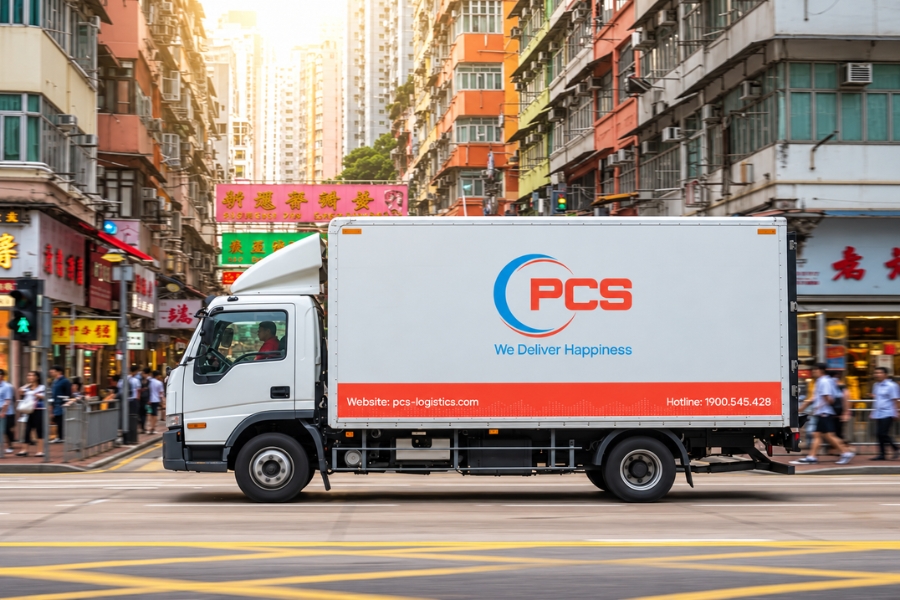
PCS Logistics coordinates cargo pickup in Japan and delivery to business customers in Vietnam.
1.2. Pickup in Japan and delivery coverage in Vietnam
Under the Japan to Vietnam express shipping service, PCS coordinates the stages covered by the customer's selected arrangement:
- Cargo collection in Japan: Work with local contacts or partners to receive goods at a warehouse, factory or sender's address as agreed.
- International transportation: Connect shipments with available flights or, when suitable, an ocean freight arrangement to an airport or seaport in Vietnam.
- Documentation and customs assistance: Explain document requirements, review shipment information and coordinate import procedures within the agreed service scope.
- Domestic delivery: After applicable customs formalities have been completed, transport goods to the customer's warehouse, factory, office or other designated location.
Businesses can request door-to-door service or select only the transportation stages they need. Japan to Vietnam Logistics Services may therefore include international transportation, customs coordination and last-mile delivery, depending on the quotation.
1.3. Checks to complete before shipping from Japan
Importers should review transportation and import requirements while preparing their cargo:
- Cargo characteristics: Identify general cargo, fragile items, battery-powered products, chemicals or goods needing special handling.
- Import eligibility: Check whether the product is prohibited, requires an import license or is subject to specialized inspection.
- Packaging: Use cartons, crates or pallets suited to the goods and transportation method.
- Commercial details: Confirm product descriptions, quantities, declared values, importer information and supporting documents.
Lithium-battery equipment, chemicals, temperature-sensitive products and used machinery may be subject to additional conditions. Businesses shipping in both directions can also review PCS Logistics' international express delivery options.
2. Transportation options from Japan to Vietnam
Businesses can choose air or ocean freight according to their shipment specifications, timing and import plans. PCS Logistics focuses on air transportation for this route and can coordinate advice and ocean freight connections through partners when appropriate.
2.1. Air freight from Japan to Vietnam
Air transportation is PCS Logistics' primary option for Japan–Vietnam imports, especially when manufacturers need parts or materials within a defined timeframe. The Japan to Vietnam express shipping service is assessed for eligible urgent shipments alongside scheduled air freight arrangements.
Air transportation is commonly considered for:
- Components and spare parts needed for production or maintenance.
- Product samples, measuring equipment and technical tools required by a particular date.
- Manufacturing materials with a defined receiving deadline.
- Higher-value goods whose packaging and handling requirements are compatible with air freight.
Air freight can shorten international transit times and help businesses align imports with flight schedules and production plans. However, goods must satisfy the applicable weight, dimension, packaging and air-transport safety conditions. Battery-powered items, liquids and restricted cargo require an acceptance review in advance.
For urgent business shipments, the PCS Logistics Japan to Vietnam Express offering is evaluated against the cargo's acceptance conditions, the available schedule and the agreed delivery scope.
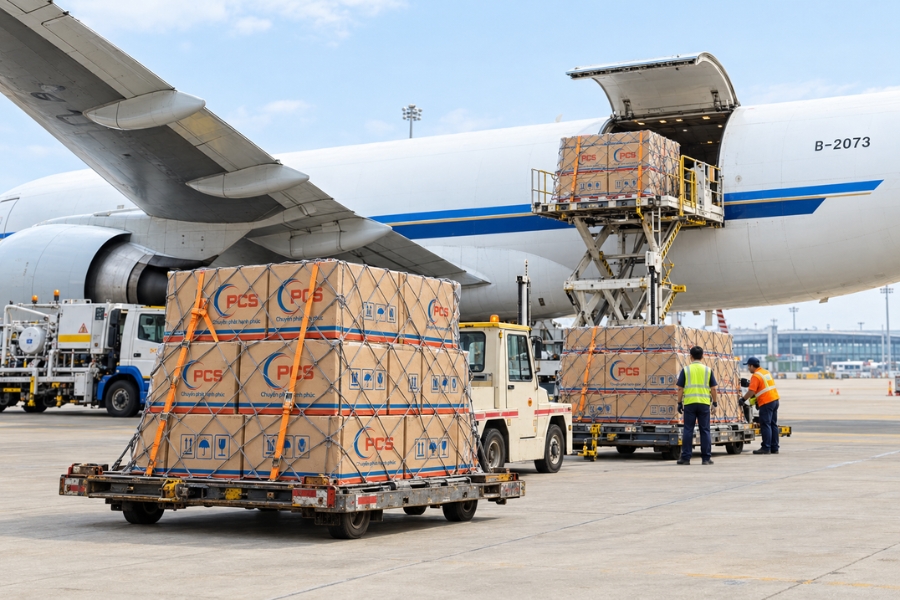
Air freight on the Japan–Vietnam route supports the timely import of components for manufacturing.
2.2. Ocean freight from Japan to Vietnam
Ocean freight is an alternative for larger, heavier or bulky consignments when a longer transportation schedule is acceptable. PCS Logistics advises on ocean transportation and coordinates connections through shipping partners, subject to shipment requirements.
Less than Container Load (LCL)
LCL allows shipments from different shippers to share container space. It suits cargo that does not require a full container and can accommodate consolidation and deconsolidation activities. Before booking, businesses should clarify volume-based pricing, LCL handling charges, pickup locations and the estimated schedule.
Full Container Load (FCL)
FCL is suitable when a business needs a dedicated container, commonly for machinery, materials or substantial volumes of commercial cargo. The shipping plan should specify container type, cargo weight, loading arrangements, container collection and return responsibilities.
PCS Logistics supports consultation and partner coordination for both LCL and FCL. Availability, service responsibilities and final arrangements are confirmed shipment by shipment. These options are distinct from the air-focused PCS Logistics Japan to Vietnam Express Shipping offering.
2.3. Air freight vs. ocean freight
| Criteria | Air freight | Ocean freight |
|---|---|---|
| Best suited for | Urgent cargo, samples, parts and spare components | Larger shipments, bulk goods and planned imports |
| Main priority | Shorter transportation time | Cost management for suitable cargo volumes |
| Pricing basis | Chargeable weight | CBM, container or quoted service terms |
| Cargo requiring extra checks | Batteries, restricted goods and oversized packages | Goods needing reinforcement, container loading or special handling |
| Main schedule factors | Flight operations and customs clearance | Vessel schedules, transshipment and port operations |
| Inland delivery | Airport to the receiving location | Port or LCL warehouse to the receiving location |
Businesses importing parts for a production deadline should first check available air arrangements. Large shipments with flexible receiving dates may benefit from an ocean freight comparison. Japan to Vietnam Freight planning should consider the full cost and handover requirements, not only the international transport leg.
3. Shipping times and costs from Japan to Vietnam
Transit times and prices depend on transportation mode, cargo characteristics and pickup/delivery locations. PCS Logistics reviews the import plan and confirms the estimated schedule and applicable charges before shipment acceptance.
3.1. How long does shipping from Japan to Vietnam take?
For the Japan–Vietnam air route, PCS Logistics identifies two indicative options:
| Transportation option | Indicative time | Suitable needs |
|---|---|---|
| Scheduled air freight | 4–6 business days | Planned imports of components, spare parts, equipment and production materials |
| Air express delivery | 72–96 hours (approximately 3–4 days) | Urgent samples, components or spare parts; only for eligible shipments |
The Japan to Vietnam express shipping service does not carry a single guaranteed transit time for all cargo. PCS confirms the applicable option, the start and end points of the estimated timeframe and the shipment's acceptance conditions before proceeding.
For ocean freight, timing depends on origin and destination ports, vessel schedules, and whether cargo moves as LCL or FCL. PCS advises on a proposed schedule through its partners for the specific shipment.
Importers should confirm three timing details:
- When the clock starts and stops: Clarify the agreed pickup and delivery milestones for the selected service.
- What may affect the schedule: Flights or sailings, document readiness, cargo inspections and the actual receiving location.
- What door-to-door delivery includes: Pickup, export-side handling, international transportation, import clearance and local delivery as applicable. Arrival at an airport or port is not the same as completed delivery.
3.2. What costs are included in Japan–Vietnam shipping?
Shipping quotations reflect the transportation method, weight, size, cargo type and the requested pickup/delivery scope. The main cost categories are:
| Cost category | What should be clarified |
|---|---|
| International freight | Transport mode, chargeable weight and cargo specifications |
| Pickup in Japan | Collection address, cargo acceptance arrangement and service scope |
| Origin handling | Export-side handling, documentation and other applicable services |
| Customs clearance | Declaration services, document processing and agreed procedures |
| Duties and taxes | Import duty, VAT and other applicable statutory charges |
| Storage and terminal charges | Charges arising from storage periods, terminal conditions or documentation delays |
| Domestic delivery | Transport from the airport, port or cargo facility to the final receiving address |
Businesses should also check whether cargo insurance, extra packing, specialized inspection or other charges are included.
For example, an airport-to-airport freight quotation and a door-to-factory quotation cover different activities. Import handling, customs clearance and domestic delivery must be compared before evaluating the total cost.
Businesses requesting the Japan to Vietnam express shipping service can contact PCS Logistics at 1900.545.428 for a shipment-specific assessment and quotation.




4. Import documents and customs procedures for goods from Japan
Importers need documentation aligned with the customs regime and the goods being brought into Vietnam. PCS Logistics supports document review, preparation guidance and customs-related coordination within the agreed scope. Japan to Vietnam Freight Forwarding may involve several parties and procedures, so responsibilities should be confirmed before dispatch.
4.1. Documents commonly needed for imports from Japan
| Document | Purpose |
|---|---|
| Commercial Invoice | Records commercial transaction details, product descriptions, quantities, unit prices and values |
| Packing List | Specifies package counts, packing methods, weights and cargo details |
| Air Waybill / Bill of Lading | Transportation document for air or ocean shipments |
| Import customs declaration | Declares goods under the applicable import customs procedure |
| Proof or certificate of origin | Supports origin verification and potential preferential duty treatment when conditions are met |
| Licenses and specialized inspection results | Required for goods subject to relevant sector-specific controls |
Documents used for transportation, commercial reconciliation and customs compliance are not necessarily identical. Which documents must be submitted, presented or retained depends on the import procedure, the cargo and the rules applicable at clearance.
Businesses can also consult PCS Logistics' guidance on completing import customs declarations.

Checking import documents helps reduce discrepancies during customs clearance of goods arriving from Japan.
4.2. HS codes and import eligibility
Before goods leave Japan, importers should assess the applicable import requirements:
- Identify the HS code: Review product composition, intended use, structure and technical documents to determine relevant classification and tax treatment.
- Check product restrictions: Establish whether imports are prohibited, conditional or subject to permits.
- Determine specialized inspections: Confirm whether quality, safety or other regulatory checks apply.
- Review product condition: Used machinery, battery-powered equipment and other specific goods may require additional assessments.
- Cross-check documents: Ensure product names, quantities, specifications, values and related details match the actual goods.
The importer remains responsible for the accuracy of cargo information, supporting documents and its legal obligations. PCS may assist with customs work within the agreed terms and appropriate authorizations.
Reviewing product eligibility before shipping helps manufacturers plan any additional permits, technical documents or processing time needed at import.
4.3. Origin, preferential tariffs and Incoterms
Japan and Vietnam participate in several trade agreements, including:
- VJEPA: Vietnam–Japan Economic Partnership Agreement.
- AJCEP: ASEAN–Japan Comprehensive Economic Partnership Agreement.
- RCEP: Regional Comprehensive Economic Partnership.
- CPTPP: Comprehensive and Progressive Agreement for Trans-Pacific Partnership.
Importers can review preferential tariff treatment under the agreement relevant to their goods and documentation. Goods shipped from Japan do not automatically qualify as Japanese-origin goods or for preferential import duties. Eligibility depends on the rules of origin, origin evidence, HS code, tariff schedule and specific agreement conditions.
Businesses should also identify the Incoterms rule in the sales contract. It allocates delivery responsibilities, costs and risks between the buyer and seller at the agreed transfer points.
5. PCS Logistics' shipping process from Japan to Vietnam
The process has six stages, from initial inquiry through delivery and documentation reconciliation. Each activity follows the scope agreed with the importing business.
- Receive the request and advise on the shipment: Collect the product description, package count, weight, dimensions, pickup/delivery locations and required schedule; assess air or ocean freight options.
- Confirm the quote and shipping plan: Agree on charges, included services, pickup arrangements, estimated transit time and any requirements involving documents, packing or insurance.
- Collect cargo in Japan: Coordinate with the local contact to receive goods and check package count, external condition and documentation before dispatch.
- Arrange international transportation to Vietnam: Book against the confirmed flight or vessel schedule, coordinate shipment tracking and update the business on transport progress.
- Coordinate import clearance and inland delivery: Assist with the agreed import documentation and customs procedures, then arrange delivery after the relevant clearance conditions are met.
- Deliver and reconcile: Hand goods over at the agreed warehouse, factory or other location; confirm quantity and external condition and complete the agreed documents and reconciliation records.
Throughout transportation, PCS Logistics coordinates shipment status updates and communicates exceptions in line with the selected service. For businesses requiring the Japan to Vietnam express shipping service, the receiving deadline and eligibility conditions should be checked during the first two stages.
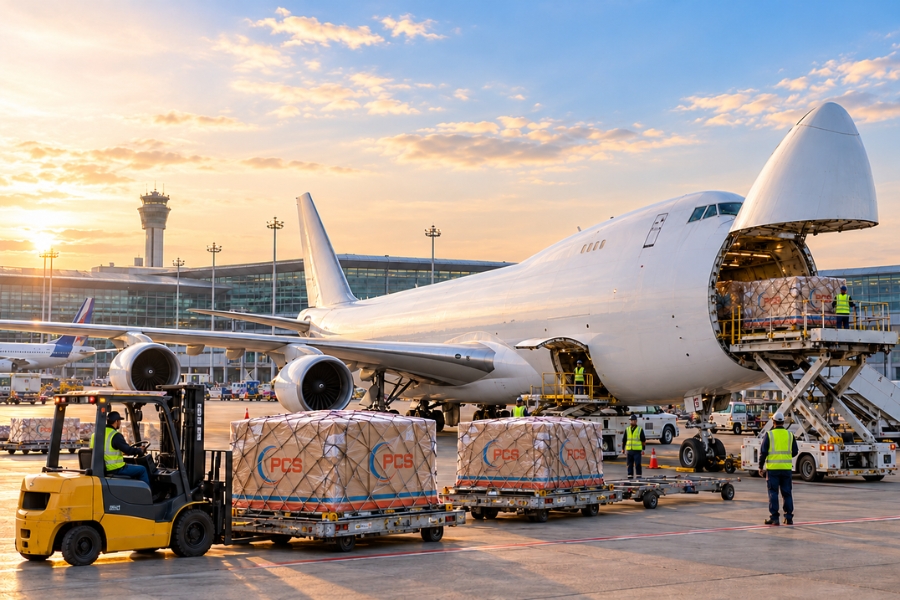
The Japan–Vietnam shipping process covers pickup, international transportation, customs clearance, delivery and final reconciliation.
6. PCS Logistics' Japan–Vietnam shipping capabilities
With more than 15 years of logistics experience, PCS Logistics supports Japan–Vietnam cargo movements from origin collection and document coordination through international transportation and inland delivery.
- Coordination across Japan and Vietnam: Through operations and partner networks in Japan, PCS coordinates cargo collection in Tokyo, Osaka and Nagoya and transport connections to Hanoi and Ho Chi Minh City. Contacts at both ends communicate with suppliers about handover schedules, shipment details and documents.
- Scheduled air freight: PCS reports an indicative frequency of three flights per week on the Japan–Vietnam import route, with an estimated timeline of 4–6 business days for scheduled air transportation. Express delivery in 72–96 hours is evaluated separately for eligible consignments. Actual schedules, milestones and service scope are confirmed for each shipment.
- Experience with industrial cargo: The company handles electronic components, mechanical spare parts, technical equipment, production materials and samples for manufacturers. Oversized or high-value shipments require additional checks on weight, dimensions, packing and carrier acceptance.
- Documentation and pre-arrival coordination: PCS supports document reconciliation and pre-alerts containing tracking numbers, flight details, estimated arrival times and related paperwork, helping importers prepare for clearance and factory receiving.
- Flexible clearance and domestic delivery: Businesses may handle customs clearance and collect their own cargo, arrange clearance while PCS handles inland delivery, or request customs declaration support and door-to-door delivery under an agreed service scope.
- Experience serving Japanese businesses: PCS reports working with Itochu, Fujikura Composites, Toyo Ink Compounds and Nichias Vietnam. These relationships reflect experience coordinating production-related deadlines, documents and receiving requirements, rather than a guarantee of identical results for every shipment.
In practice, Japan to Vietnam Logistics can encompass origin coordination, cross-border transport, customs-related procedures and inland delivery. The agreed scope determines which activities PCS Logistics undertakes directly or coordinates with partners.
PCS Logistics helps businesses manage shipments from Japan to Vietnam by linking cargo collection, documentation assistance, international transportation and delivery to warehouses or factories. The Japan to Vietnam express shipping service can be assessed for eligible urgent shipments, while scheduled air freight and partner-coordinated LCL/FCL ocean freight provide alternatives for other cargo needs.
To request a quotation, send PCS Logistics your product details, shipment weight and dimensions, pickup/delivery addresses, planned date and required receiving deadline. PCS will review the cargo and confirm the proposed transportation arrangement and applicable charges.
Hotline: 1900.545.428