
In today’s import-export operations, customs declaration submission is an important step that determines whether shipments can be accepted and processed on schedule during customs clearance. Whether businesses handle export or import activities, all declaration information must be accurately submitted to the customs system so authorities can conduct cargo classification, inspections, and tax assessment in accordance with regulations.
1. What is customs declaration submission?
A customs declaration contains important information such as cargo origin, shipment value, quantity, and detailed cargo descriptions. Based on these details, customs authorities can conduct inspections and apply government management measures, including taxes, fees, cargo quality inspections, safety controls, and environmental compliance procedures.

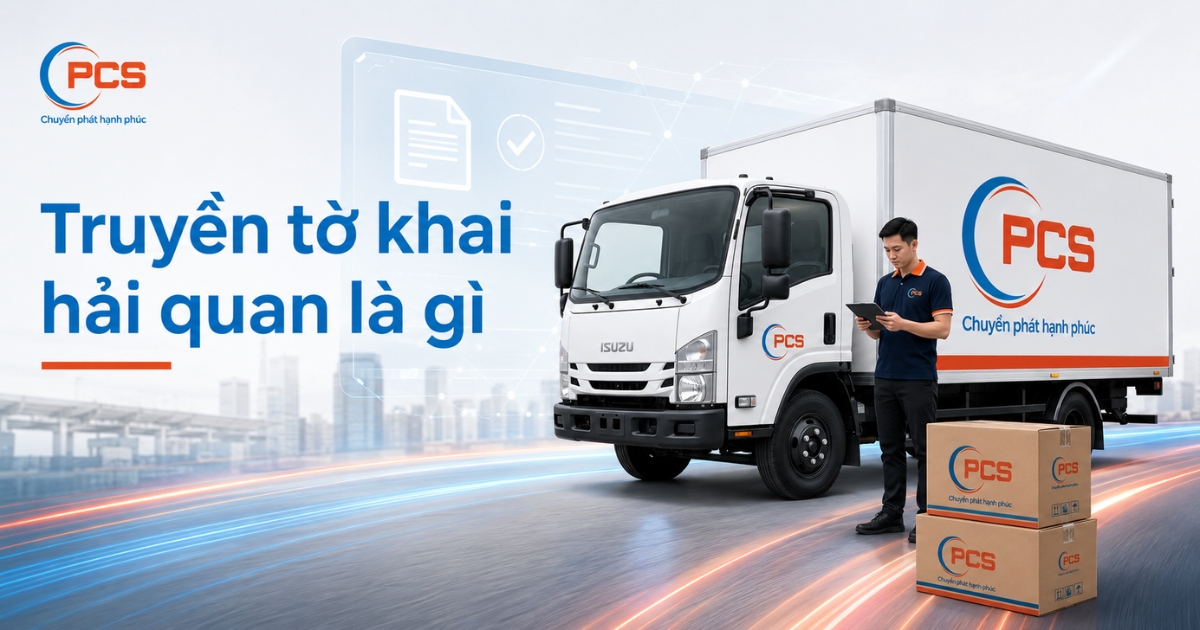
Learn what customs declaration submission is and how to improve declaration accuracy
2. Why is customs declaration submission important?
Customs declaration submission plays an important role for both government authorities and businesses involved in international trade operations.
For businesses and customs clearance procedures
-
Supporting smooth customs clearance: The customs declaration is one of the most important documents used to provide shipment information to customs authorities. Accurate and complete customs declaration submissions help customs clearance procedures move more efficiently, reducing unnecessary shipment delays and operational issues.
-
Reducing risks and supporting customs compliance: Understanding the customs declaration process and submitting declarations correctly helps businesses comply with customs regulations and reduce potential risks during import export procedures.
For customs authorities
-
Providing essential cargo management sata: Information submitted through customs declarations provides customs authorities with important data needed for shipment inspections and cargo management activities.
-
Supporting government management measures: Based on submitted customs information, authorities can apply tax collection policies, conduct cargo inspections, implement safety controls, and implement environmental management measures more accurately.
For urgent shipments, especially international express cargo, business documents, or industrial components, businesses should also ensure customs declaration submission is completed at the correct time to avoid customs clearance delays. Readers can learn more about the priority international express to Japan service by PCS Logistics to better understand how urgent shipments are handled between Vietnam and Japan.
3. The right timing for customs declaration submission
The legal submission timeline for customs declaration submission depends on whether the shipment is for export or import procedures.
-
For Export Shipments: The customs declaration must be submitted after cargo has been gathered at the registered location and no later than 4 hours before the means of transport departs. For express shipping services, the deadline is shortened to no later than 2 hours before departure.
-
For Import Shipments: Businesses may submit customs declarations before cargo arrives at the border gate or within 30 days after cargo arrival.
Businesses should also note that customs declarations remain valid for customs procedures within 15 days after successful registration. Choosing the correct submission timing, along with accurate declaration information, is important for smooth customs clearance.
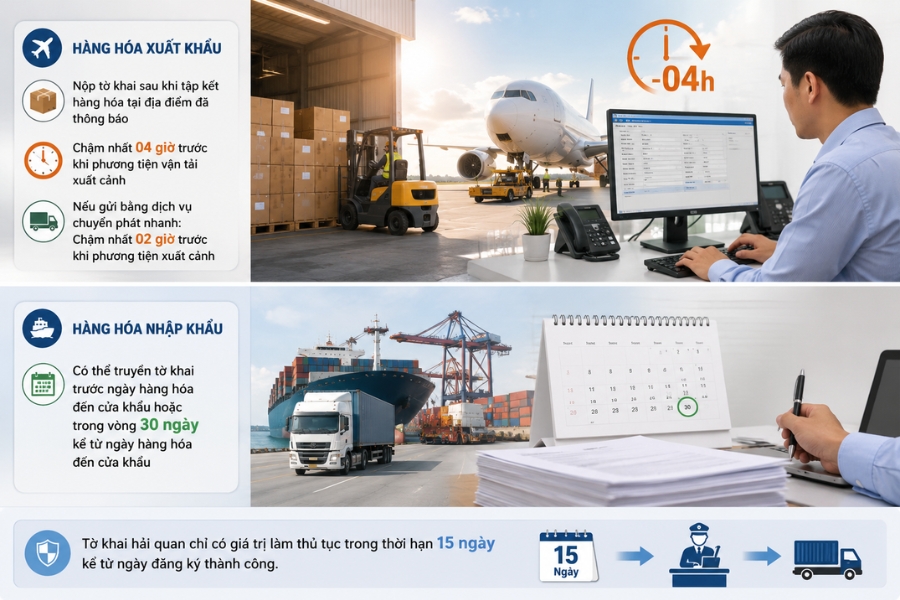
Customs declaration submission timeline for export and import shipments
4. What should businesses prepare before submitting a customs declaration?
Before submitting customs declarations, especially for import shipments, businesses should carefully prepare several important elements to support efficient customs clearance operations and reduce compliance risks.
Identify HS Codes and tariff codes
This is one of the most important preparation steps.
-
HS Code: The HS code usually consists of 10 digits and is used to classify and describe goods according to Vietnam’s import export commodity classification system. Applying the correct HS code helps businesses reduce customs compliance risks.
-
Tariff Code: The tariff code generally includes 8 digits, with the first 6 digits matching the HS code. This code directly determines the applicable tax rate for imported or exported goods.
Prepare required customs documentation
Preparing complete customs documentation helps customs declarations proceed more efficiently.
-
Basic Documents: Typical customs documents include Sales contract, bill of Lading or Air Waybill, Commercial Invoice, Certificate of Origin, Quality inspection certificates, or import permits if required
-
Additional Documents: Depending on cargo characteristics, businesses may also need food safety certificates, plant or animal quarantine certificates, and medical certificates
After gathering all required documents, businesses should carefully verify consistency between documents, signatures, company seals, and document validity periods.
Select a declaration method
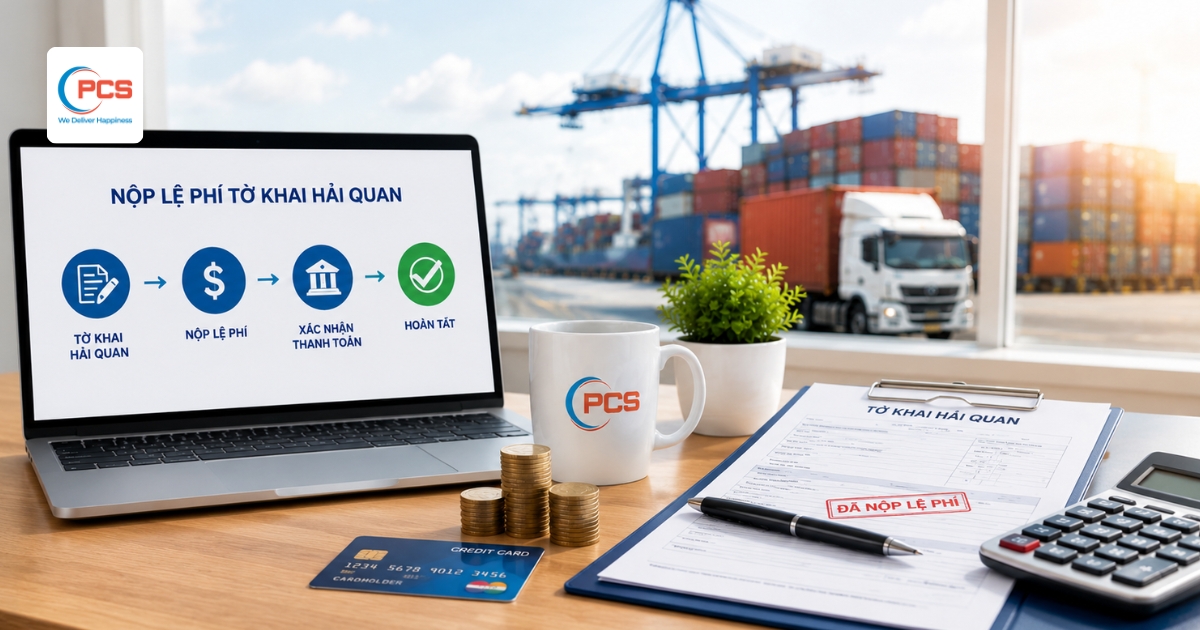
Businesses may choose to submit paper-based customs declarations or use electronic customs declaration systems. Today, electronic customs declaration systems are widely preferred because they help optimize operational efficiency while saving processing time.
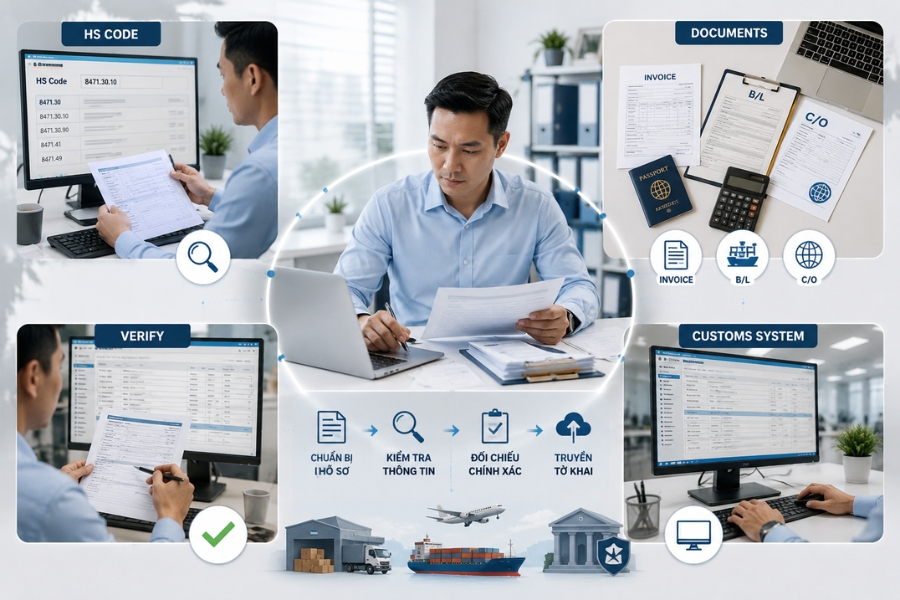
Standard process for preparing customs declaration submission documents
Prepare detailed shipment information and verify accuracy
Customs declarations require a high level of accuracy. Businesses should prepare important shipment information including:
-
Importer information
-
Cargo quantity and weight
-
Shipment value
-
HS codes
-
Import export locations
-
Applicable tax categories
All information should be carefully cross-checked against shipping documents and invoices to minimize declaration errors during customs clearance.
5. Conclusion
Customs declaration submission is more than simply sending data to an electronic customs system. It is also an important legal basis throughout customs clearance procedures. As international trade activities continue to require greater accuracy and faster processing speeds, many businesses are prioritizing integrated logistics solutions that support customs compliance and international transportation more efficiently.
Readers can learn more about PCS Logistics' international express shipping services to explore transportation solutions, customs support, and international cargo handling options suitable for business operations.
If your business is looking for support with customs procedures, customs declaration submission, or international shipping solutions, PCS Logistics is ready to assist with experienced logistics and international transportation personnel.