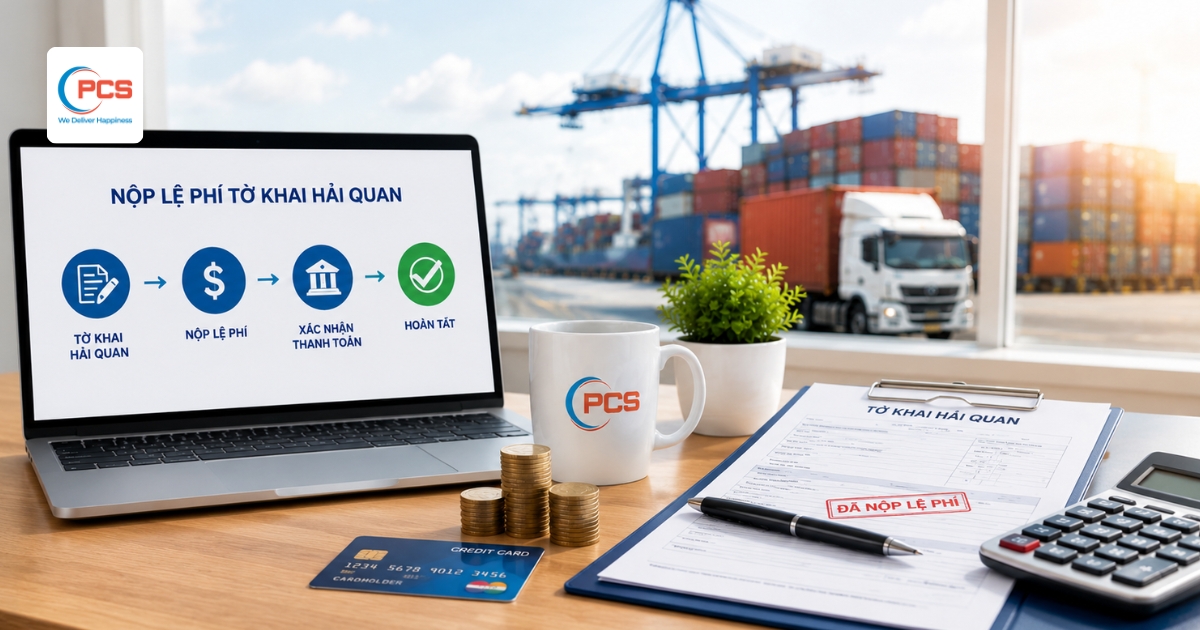

During import-export procedures, each customs declaration may involve administrative fees required by customs authorities. For businesses handling a large volume of declarations each month, understanding how to pay customs declaration fees properly is not only important for customs compliance but also helps optimize operational workflows and reduce administrative risks throughout import export activities.
What are customs declaration fees?
Customs declaration fees are mandatory administrative charges paid by organizations and individuals when customs authorities process customs related procedures for import export cargo, transit goods, or transportation vehicles entering and leaving the country. These fees are collected to support government administration and customs management activities.
One important point businesses should understand is that customs declaration fees are different from taxes. The key differences between customs fees and taxes such as import duty, export duty, or VAT include:
-
Taxes are calculated based on cargo value or shipment quantity
-
Customs declaration fees are charged at fixed rates depending on the customs procedure involved
As a result, regardless of whether a shipment has high or low cargo value, businesses are still required to pay fixed customs fees whenever related customs procedures arise, except for exempted cases under current regulations.

Understanding customs declaration fees to avoid compliance issues
How much are customs declaration fees currently?
Under Circular 86/2025/TT BTC, customs declaration fees are currently applied based on fixed rates for each customs procedure. Common fee levels include:
-
VND 20,000 per declaration for import export cargo and transportation vehicles entering or leaving the country
-
VND 200,000 per declaration for transit cargo
-
VND 200,000 per vehicle for road transit transportation vehicles
-
VND 500,000 per vehicle for waterway transit transportation vehicles
-
VND 200,000 per application for customs inspection, supervision, or temporary suspension procedures related to intellectual property violations
Understanding applicable fee rates helps businesses better manage operating budgets and avoid unnecessary issues during customs clearance procedures.
Shipments eligible for customs fee exemptions
Under Circular 86/2025/TT BTC, several categories of cargo and transportation vehicles may qualify for customs declaration fee exemptions:
-
Humanitarian aid, gifts, and diplomatic goods: This category includes humanitarian aid shipments, non refundable aid, gifts for government agencies or social organizations, charity related donations, diplomatic goods, and personal luggage covered under diplomatic exemption regulations.
-
Border resident cargo: Goods traded or exchanged by border residents within tax exemption limits may be exempt from customs declaration fees.
-
Border resident transportation vehicles: Transportation vehicles managed without customs declarations under border resident regulations may also qualify for customs fee exemptions.
-
Exemptions under international agreements: Transit cargo, import/export goods, and transportation vehicles covered by international treaties or agreements signed by Vietnam may be exempt from customs fees under applicable commitments.
Understanding these exemption categories can help businesses avoid unnecessary expenses and improve cost management throughout customs clearance procedures.
How to pay customs declaration fees
To support businesses during customs procedures, customs authorities currently allow multiple payment methods for customs declaration fees.
Direct payment
Businesses may pay customs declaration fees directly in cash at:
-
Customs offices
-
State Treasury offices
-
Authorized customs collection units
Online payment
Businesses may also complete non cash payments through:
-
Banking systems
-
The National Public Service Portal
-
Bank transfers to customs authority accounts opened at the State Treasury
As electronic customs procedures continue expanding, online payment methods are becoming increasingly popular due to their convenience, faster processing time, and improved transparency during financial reconciliation.

Common methods for how to pay customs declaration fees
Payment timeline options for customs declaration fees
Currently, customs authorities allow businesses to choose between two payment timeline options depending on their operational model and customs processing needs.
Payment for each declaration
Under this method, businesses pay customs declaration fees immediately when registering or opening customs declarations. This is considered the safest and most common approach because it helps customs clearance procedures move faster while reducing risks related to unpaid financial obligations.
For businesses learning how to pay customs declaration fees efficiently, this method is often suitable for companies handling a smaller number of declarations or shipments requiring urgent customs clearance.
Monthly consolidated payment
This option is more suitable for businesses that process a large number of customs declarations every month. To apply this payment method, businesses must:
-
Submit an official request for monthly customs fee payment.
-
Send the request to the supervising customs authority.
After receiving the customs fee notification from customs authorities, businesses must complete payment no later than the 10th day of the following month.
Regardless of the selected payment option, businesses should ensure customs declaration fees are paid on time to avoid administrative penalties, additional charges, or customs compliance issues during import export operations.
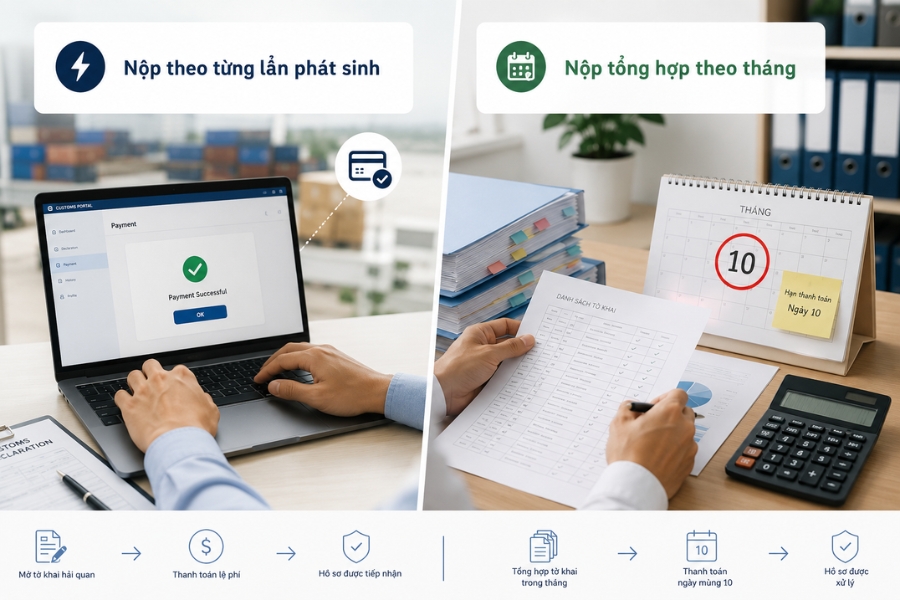
How to pay customs declaration fees under different payment timelines
Penalties for late customs declaration fee payments
Under Article 17 of Decree 02/2026/ND CP, late payment of customs declaration fees may result in administrative penalties and corrective measures.
Warning penalties
Warnings may apply to cases involving delayed payment without causing a shortage in payable fee amounts.
Financial penalties
If delayed payment results in insufficient fee payment, financial penalties may apply depending on the severity of the violation. In serious cases, penalties may reach:
-
Up to VND 50,000,000 for individuals
-
Up to VND 100,000,000 for businesses
In addition to administrative penalties, businesses may also be required to:
-
Pay the outstanding customs declaration fees
-
Pay additional late payment charges under tax administration regulations
Businesses should also regularly monitor updated customs fee regulations and customs compliance policies to reduce operational risks during import export activities.
You can also refer to the article about the latest customs fee payment regulations under Decree 02/2026/ND CP to better understand important updates and compliance requirements businesses should pay attention to during import export procedures.
Conclusion
Although customs declaration fees may seem relatively small compared to overall logistics costs, understanding how to pay customs declaration fees correctly still plays an important role throughout the customs clearance process. Proactively monitoring payment deadlines, maintaining complete customs records, and selecting suitable payment methods can help businesses reduce unnecessary issues during import export operations.
If your business needs support with customs procedures or international transportation solutions aligned with your operational model, contact PCS Logistics for professional consultation and agile logistics support through the following channels:
-
Hotline: 1900.545.428
-
Email: support@pcs-logistics.com