
Door to Airport shipping services from Vietnam are gaining strong attention among exporting enterprises that require a clear air freight solution, fast transit time, and better control at the destination. In many markets, particularly Japan, importers are increasingly opting to receive cargo directly at the airport to streamline import procedures more effectively. This trend confirms the suitability of the Door to Airport model for supply chains that demand high accuracy and operational discipline.
This article by PCS Logistics helps enterprises better understand door to airport shipping and the door to airport shipping process at PCS. Based on this information, businesses can accurately evaluate whether this transportation model aligns with their international shipping needs and operational requirements.
1. Overview of Door to Airport shipping
As international cargo demand continues to increase, door to airport shipping services from Vietnam attract strong interest from enterprises due to their ability to streamline delivery stages and allow direct handling at the destination airport. To clearly understand the nature, application scope, and practical operation of this service, it is important to first clarify what door to airport shipping is.
1.1 What is door to airport shipping?
Door to airport shipping is an international air freight service that begins with cargo pickup at the shipper location and ends when the shipment is delivered at the destination airport. The consignee then proceeds with import procedures and inbound handling in accordance with local regulations.
In 2025, IATA reports indicate that air cargo activity in the Asia Pacific region continues to grow steadily, especially for high-value cargo and time sensitive shipments. As a result, door to airport shipping becomes a practical choice for enterprises that need to control production timelines or optimize final stage logistics costs while maintaining operational accuracy.
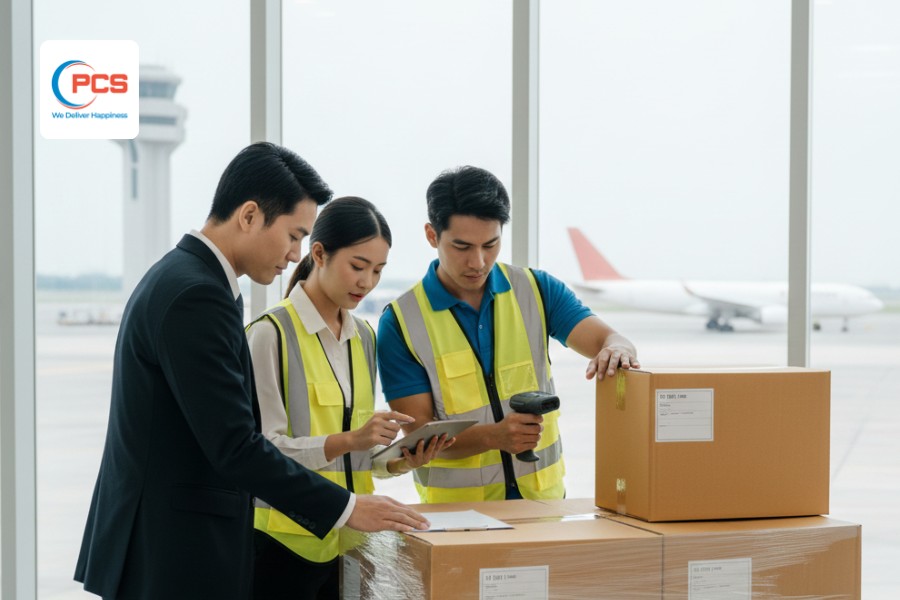
Door to Airport collects cargo at the origin and delivers it to the destination airport.
1.2 Difference between door to door and door to airport
In international air freight, door to airport shipping services from Vietnam and door to door shipping are two common models that enterprises often confuse. Understanding the difference between door to door and door to airport helps businesses select the right solution based on delivery time, cost structure, and the handling capability of the importing partner.
|
|
Door to Door |
Door to Airport |
|
Delivery scope |
Cargo is collected at the shipper location and delivered directly to the consignee address in the importing country. |
Cargo is collected at the shipper location and delivered to the destination airport in the importing country as part of door to airport shipping services from Vietnam. |
|
Responsibility for import procedures |
The logistics provider manages final delivery and inbound receiving steps. |
The importing partner completes customs clearance and collects cargo at the destination airport. |
|
Suitability of the importing partner |
Suitable when the importer does not have a dedicated logistics function or lacks experience in airport handling. |
Suitable when the importer understands documentation requirements and can actively manage cargo pickup at the airport. |
|
Cost structure |
Includes cargo pickup, air freight charges, export customs procedures in Vietnam, import customs handling at destination, and final delivery costs. |
Includes cargo pickup, air freight charges, and export customs procedures in Vietnam. Import handling costs are managed by the consignee under door to airport shipping services from Vietnam. |
|
Cargo receiving time |
Depends on the final delivery provider in the importing country. |
Faster when the importer collects cargo directly at the airport after clearance. |
Which shipping model should enterprises choose? Both door to door shipping and door to airport shipping services from Vietnam offer specific advantages. The key factor is the enterprise’s understanding of the importing partner’s handling capability and the objective of each shipment. When these factors are clearly assessed, businesses can select the most suitable solution for their international shipping needs.
1.3 Advantages of door to airport shipping in import export operations
Door to airport shipping services from Vietnam are suitable for enterprises that require speed, aim to shorten the time required to move cargo into production, and prefer direct control over import procedures at the destination. This model has been widely adopted during 2024 and 2025, especially in markets with strong aviation infrastructure and strict import regulations such as Japan.
-
Shorter cargo receiving time: Cargo is delivered directly at the destination airport, allowing the importing enterprise to receive the shipment and begin clearance procedures immediately upon arrival. In markets such as Japan, when documentation is complete, clearance can often be completed within 24 hours. This makes door to airport shipping suitable for urgent shipments, production components, technical cargo, and samples that require fast inspection.
-
Lower domestic delivery costs at destination: Door to airport shipping helps enterprises avoid domestic delivery costs in the importing country, which often represent a significant portion of total logistics expenses. Importers can actively plan cargo pickup at the airport using internal logistics personnel or existing partners, resulting in a noticeable reduction in actual costs compared to door to door shipping.
-
Direct control over import procedures: Once cargo arrives at the airport, enterprises can directly review cargo descriptions, HS codes, and technical documentation, and coordinate with local customs authorities. In markets with high technical standards such as Japan, this approach supports stable, compliant, and well controlled import processes.
-
Reduced operational risks during transportation: The door to airport route is more streamlined due to the removal of local delivery stages. This helps reduce risks such as delivery delays, unexpected storage fees, misdelivery, or errors caused by multiple intermediaries. Enterprises gain stronger control over final stage progress and cargo handling quality.
2. Door to Airport shipping time from Vietnam
The shipping time under door to airport shipping services from Vietnam depends on multiple factors including flight schedules, cargo capacity, documentation requirements, and inspection regulations in both Vietnam and the destination airport.
2.1. Handling time in Vietnam
The period from cargo preparation to handover at the airline warehouse typically takes one to two working days, depending on the following factors:
-
Completeness and accuracy of shipping documents
-
Whether the cargo is subject to specialized inspection requirements
-
Customs declaration processing time and response from authorities
-
Airline cargo acceptance capacity at the time of shipment
Simple shipments may be processed more quickly, while technical cargo or shipments requiring special permits may take additional time to complete.
2.2. Handling time at the destination airport
Upon arrival at the destination airport, the importing enterprise proceeds with customs clearance in accordance with local regulations. Processing time depends on several factors:
-
Completeness of the documentation set
-
Import procedures and regulatory framework of the destination country
-
Whether the cargo is subject to technical or specialized inspection
-
Working schedule and readiness of the importer handling function
In practice, many markets can complete clearance within one to two working days when documentation is clear and consistent. Shipments subject to in depth inspection may require additional processing time.
Based on market experience and actual export handling operations, typical door to airport transit time is as follows:
-
Approximately 3-4 working days for nearby routes such as Japan, Korea, Singapore, Malaysia, or Taiwan
-
Approximately 5-8 working days for longer routes such as Europe or the United States
These timelines are provided for reference only. Actual transit time may vary by airline, week, and cargo category. Enterprises are advised to contact PCS Logistics for shipment specific consultation and more accurate scheduling.

Clear timelines support proactive delivery and production planning.
2.3. Flight time by route
Flight time depends primarily on the operating route, available cargo capacity, and scheduling plans of each airline. Routes with high flight frequency tend to be more stable and easier to forecast, while long haul routes or routes requiring transshipment may vary according to airline schedules.
Because airline operations change by season, week, and carrier, PCS Logistics recommends that enterprises contact them directly for shipment specific flight time consultation. Evaluating factors such as cargo weight, cargo type, and shipping period allows more accurate transit time estimates.
Do you need estimated flight time for routes to Japan, Taiwan, Korea, or European destinations? PCS Logistics offers route consultation tailored to cargo characteristics and specific delivery timelines.




3. Cargo types accepted for door to airport shipping at PCS Logistics
In the air freight under the door to airport model, the most important requirement is that the cargo complies with aviation safety regulations and can be handled efficiently at airport cargo terminals. Based on operational experience across international routes and common enterprise demand, PCS Logistics accepts door to airport shipping for the following cargo categories:
-
Samples and test cargo for production and research purposes
-
Electronic components, mechanical parts, and small spare parts
-
Medium size industrial machinery and equipment
-
Light consumer goods and international ecommerce shipments
-
Business documents and urgent paperwork
-
Garments and household goods packed in cartons
-
Dry food and sealed packaged goods not subject to specialized control
-
Regular export shipments with fixed shipping schedules
PCS Logistics supports a wide range of cargo categories under door to airport shipping services from Vietnam, helping enterprises plan stable and efficient international shipments.
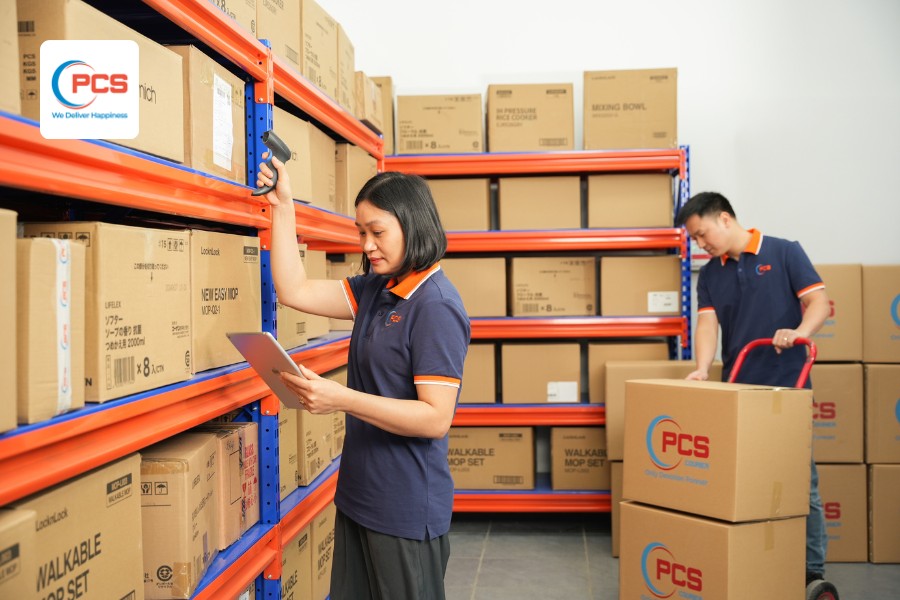
PCS Logistics handles a wide range of cargo types under Door to Airport services.
4. Door to Airport shipping process at PCS Logistics
The Door to Airport shipping process at PCS Logistics is designed to support enterprises using door to airport shipping services from Vietnam through close coordination and early documentation standardization.
Step 1: Information intake and routing consultation
Each shipment begins with a clear review of technical details. Enterprises provide information regarding cargo type, expected HS code, weight, and dimensions. Based on this information, PCS Logistics advises suitable flight routes in terms of cost and transit time, while also highlighting destination specific regulatory requirements that may affect import procedures.
Step 2: Documentation review and standardization
This is a critical stage in the door to airport shipping process. PCS Logistics supports enterprises in reviewing invoices, packing lists, and any required specialized permits. Standardizing documentation from the beginning helps the importing partner complete procedures at the destination airport more smoothly and minimizes the risk of additional inspection requests from local customs authorities.
Step 3: Cargo pickup and physical verification
PCS operational personnel collect cargo according to the agreed schedule. At this stage, the cargo is cross checked against documentation in terms of package quantity, labeling, and packaging specifications. This verification ensures compliance with aviation safety requirements and confirms that declared information is accurate.
Step 4: Export customs procedure for door to airport
Cargo is transferred to the PCS Operations Center to complete export customs clearance in Vietnam. Once clearance is completed, the shipment is handed over to the airline for final weighing and flight allocation based on the confirmed schedule.
Step 5: Transit monitoring and progress updates
Throughout the flight stage, PCS Logistics provides continuous updates on key milestones, including departure time, transit points if applicable, and estimated arrival time. This information allows enterprises to proactively inform their importing partners and prepare cargo receiving plans at the destination airport.
Step 6: Delivery at the destination airport and importer support
Upon arrival, the airline issues an arrival notice to the consignee. At this point, PCS completes its transportation responsibility. The importing enterprise uses the standardized documentation set to proceed with customs clearance and cargo pickup. If additional verification or documentation support is required, PCS remains available to assist the importing partner in completing the process smoothly.
Although each shipment may have specific requirements, the Door to Airport shipping process generally focuses on three key elements: thorough documentation preparation, close coordination with PCS Logistics, and continuous progress monitoring. When enterprises understand how each step connects, implementing the Door to Airport model becomes more efficient and predictable, especially as many markets increasingly prefer airport level cargo receiving to optimize time and operational cost.

Clear and simple Door to Airport shipping process at PCS Logistics.
5. Door to Airport shipping cost from Vietnam
When using door to airport shipping services from Vietnam, enterprises often focus first on understanding the basic cost components involved in the transportation process.
Common cost items in Door to Airport air freight
-
Cargo pickup cost: Cost for collecting cargo at the shipper location.
-
Air freight charges: Cost of air transportation, depending on flight route, available cargo capacity, and chargeable weight.
-
Export customs clearance cost in Vietnam: Includes customs declaration, document processing, and related procedures required for export.
Each enterprise has different characteristics in terms of cargo type, weight, shipping frequency, and required delivery time. For this reason, PCS Logistics applies a flexible pricing approach based on:
-
Characteristics of each cargo category
-
Shipment volume and chargeable weight
-
Flight route and estimated transit time
-
Weekly or monthly shipping demand
This pricing method helps enterprises control logistics costs effectively and select transportation plans that best fit operational needs. Enterprises are encouraged to contact PCS Logistics for shipment specific consultation and a detailed quotation for door to airport shipping cost from Vietnam.
6. Benefits of Door to Airport service at PCS Logistics
The benefits of door to airport shipping services from Vietnam go beyond cost and transit time optimization, supporting enterprises with clear processes, transparency, and operational stability.
6.1. Clear and practical operating process
From the initial stage, PCS Logistics works closely with enterprises to clarify cargo type, delivery objectives, priority level, cargo characteristics, and the receiving requirements of the importing partner. A clear process structure significantly reduces internal coordination workload.
Each stage is assigned a specific responsibility, has an estimated timeline, and provides clear guidance. When enterprises understand the full operational flow from start to finish, production planning, documentation preparation, and coordination become smoother, with fewer unexpected disruptions.
6.2. Strong market understanding to reduce documentation risks
Japan is a market with high requirements for cargo description, technical standards, and documentation consistency. Through years of experience handling export shipments to Japan, PCS Logistics has gained insight into common issues that can cause serious delays, including unclear cargo function descriptions, incorrect HS codes, missing technical specifications, or incomplete specialized documents.
This market understanding allows PCS to review documentation carefully and reduce risks at the destination airport. As a result, enterprises save time, avoid unexpected costs, and reduce the risk of production delays for their importing partners.
6.3. Documentation standardization support to reduce internal workload
Many enterprises find that export documentation preparation is the most time consuming stage of the shipping process. A single incorrect or missing description may affect the entire shipment. PCS Logistics supports enterprises in standardizing documentation in a clear, compliant, and internationally aligned manner.
With a consistent documentation set, cargo handover at the destination airport becomes more efficient. The importer handling function can rely on standardized documents to complete clearance smoothly, creating trust from both the exporting enterprise and the importing partner.
6.4. Transparent tracking system with step by step visibility
Digital transformation is a core strategy of PCS Logistics. OneShip is the platform developed to deliver direct operational value for Door to Airport shipments. The system allows enterprises to track shipment status in realtime through a clear interface, covering cargo pickup, documentation completion, airport handover, flight departure, and arrival at the destination airport.
6.5. Dedicated personnel with agile handling for each shipment
PCS Logistics personnel have experience handling a diverse range of cargo categories, particularly technical cargo, components, and precision mechanical parts. Upon receiving shipment information, PCS reviews each detail carefully to understand specific requirements and coordinate appropriate handling methods.
When airlines or inspection authorities request additional information, PCS responds quickly and guides enterprises through the required steps to maintain shipment schedules. This agile handling approach helps enterprises remain confident, knowing that each shipment is closely monitored from start to finish.
6.6. Transparent cost structure from the beginning
PCS Logistics constructs pricing structures that clearly outline cost items, including cargo pickup, documentation handling, airport transportation, airline charges, and related fees. Each item is explained clearly so enterprises understand exactly what they are paying for, without ambiguity.
With transparent costs, enterprises can plan budgets more accurately and maintain spending control. This is particularly valuable for businesses with frequent shipments or fixed weekly or monthly schedules, as it helps maintain stability across the supply chain.

PCS Logistics has extensive experience in Japan–Vietnam air freight.
7. Important considerations for Door to Airport service at PCS Logistics
When applying door to airport shipping services from Vietnam, enterprises should clearly understand certain operational limitations to prepare appropriate handling plans.
7.1. Doanh nghiệp nhập khẩu phải tự làm thủ tục tại nước sở tại
At the destination airport, the consignee is responsible for completing import customs procedures. This can be challenging if the importing partner is not familiar with local regulations. Enterprises should:
-
Review the import requirements of the destination country
-
Prepare complete and accurate documentation
-
Clearly align responsibilities with the importing partner before shipment
Under ICAO practices and customs regulations in many countries, the importing enterprise bears final responsibility for the accuracy of declared information. Proper preparation at this stage is therefore essential.
7.2. Potential costs at the destination airport
Many international airports apply storage charges on a daily or even hourly basis. If the importing partner does not collect cargo on time, additional costs may arise. PCS Logistics provides realtime status updates through the OneShip system, allowing enterprises to inform their importing partners in advance. Accurate arrival time information helps arrange personnel and transportation promptly, reducing the risk of unexpected storage fees.
7.3. Risk of document inspection due to inaccurate cargo description
Certain technical cargo categories require detailed descriptions, including material composition, function, and technical specifications. Incomplete or unclear descriptions may trigger additional inspection at the destination airport, leading to delays.
PCS Logistics supports enterprises by reviewing cargo descriptions and documentation before shipment. Key information, such as HS codes, materials, technical parameters, and specialized permits, is identified early so enterprises can supplement documentation in advance. Clear and accurate documents help ensure faster processing upon arrival.
7.4. Flight schedule changes due to seasonality or cargo capacity
International flight schedules often fluctuate during peak seasons. Changes in cargo capacity may result in flight rescheduling, which can impact planned delivery timelines. PCS Logistics closely monitors airline schedules and promptly informs enterprises of any changes.
Early notification enables enterprises to adjust production plans, delivery schedules, and communication with importing partners, thereby maintaining reliability and business credibility.
8. Conclusion
Door to airport shipping services from Vietnam are becoming an increasingly practical choice for exporting enterprises due to their ability to shorten market entry time, reduce domestic delivery costs at the destination, and provide greater control for importing partners at the airport.
When enterprises prepare documentation carefully, understand the operational flow, and coordinate closely with a reliable logistics partner, the Door to Airport model delivers clear efficiency for production related shipments and time sensitive cargo.
PCS Logistics supports enterprises at every critical stage, including documentation review, transportation coordination, and progress updates. With experience handling diverse cargo categories and a strong understanding of multiple international markets, PCS helps enterprises take a more proactive approach to international shipping planning.