In a market environment where origin control, product quality, and regulatory compliance are becoming increasingly important, shipping from China to Vietnam requires a transparent legal foundation, predictable lead times and strong risk management capabilities.
PCS Logistics develops its China–Vietnam express shipping service based on two core transport modes widely used by businesses:
-
Road freight for high volume, diverse cargo types, and direct access to major production zones.
-
Air freight for high-value goods and shipments that require a predictable and fast transit time.
This combination creates an agile set of shipping solutions that meet different business needs while ensuring stability and compliance throughout the process.
1. China’s diverse and stable supply for Vietnam
The shipping from China to Vietnam route plays a central role in the import operations of many Vietnamese enterprises. As one of the busiest regional trade corridors, it offers a wide supply base and strong transport connectivity, supporting sourcing needs for manufacturing and commercial activities.
This makes import goods from China to Vietnam a frequent requirement for businesses in industrial production, trading, and R&D.
The most common product groups imported into Vietnam include:
-
Electronic components and mobile parts
-
Machinery and technical equipment
-
Industrial spare parts
-
Materials and consumables for production lines
-
Samples and test items for product development
Key characteristics of these cargo groups include:
-
Direct impact on manufacturing progress
-
Strict requirements for stable lead time and transparent handling
-
High demand for risk-controlled transport and customs clearance
A single delayed shipment or a consignment held at the border can interrupt production, increase costs, or extend delivery schedules. For this reason, a stable and reliable China-Vietnam freight service is one of the most critical elements in supply chain planning.
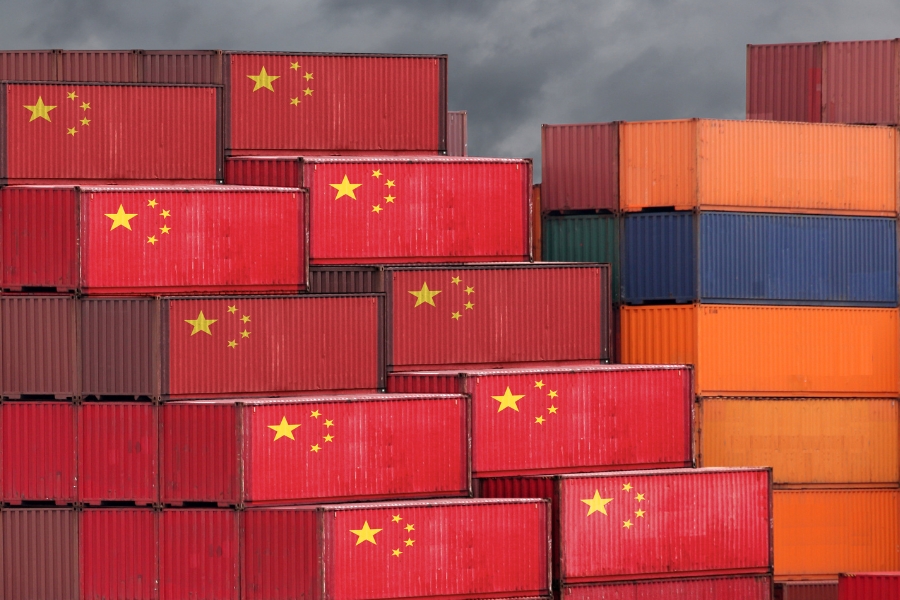
China’s robust supply market continues to support the consistent import demands of Vietnamese enterprises.
2. Strong logistics connectivity and multiple shipping options from China to Vietnam
Alongside China’s diverse supply base, the logistics infrastructure between China and Vietnam has expanded rapidly. This creates a solid foundation for businesses to choose suitable shipping methods for different types of cargo. Today, shipping from China to Vietnam is mainly handled through three key modes: road freight, air freight, and sea freight.
2.1. Cross-border road freight agile and cost efficient
Road freight is the most common solution for companies importing goods from China to Vietnam thanks to its stability and wide cargo compatibility.
Businesses prefer China Vietnam cross border trucking because it offers:
-
Consistent transit time for regular production needs
-
Direct pickup from major manufacturing zones in China
-
Suitable for bulky items machinery and industrial parts
-
Better cost efficiency compared with air freight
-
Direct routes through major border gates such as Huu Nghi, Tan Thanh and Mong Cai
These border gates act as high volume trade corridors handling large daily cargo flows. As a result, road freight has become a key mode of transportation for companies requiring agile handling and stable schedules.
PCS Logistics offers reliable road freight shipping from China to Vietnam, ensuring strict operational control and predictable timelines for manufacturing enterprises.
2.2. China to Vietnam air freight
Air freight is preferred for high priority shipments such as:
-
Electronic components
-
High value goods
-
Sample items and test units
-
Shipments requiring guaranteed delivery speed
According to data from regional airlines including China Southern Airlines, Shenzhen Airlines, SF Express and Vietnam Airlines Cargo, typical transit times for China to Vietnam air freight are:
-
2 to 5 business days for general cargo
-
4 to 7 business days for shipments requiring special security screening (items with batteries, liquids or sensitive technical equipment)
Transit time may vary depending on cargo type, consolidation schedule, airport security and seasonal demand. These figures represent practical benchmarks commonly observed across the market.
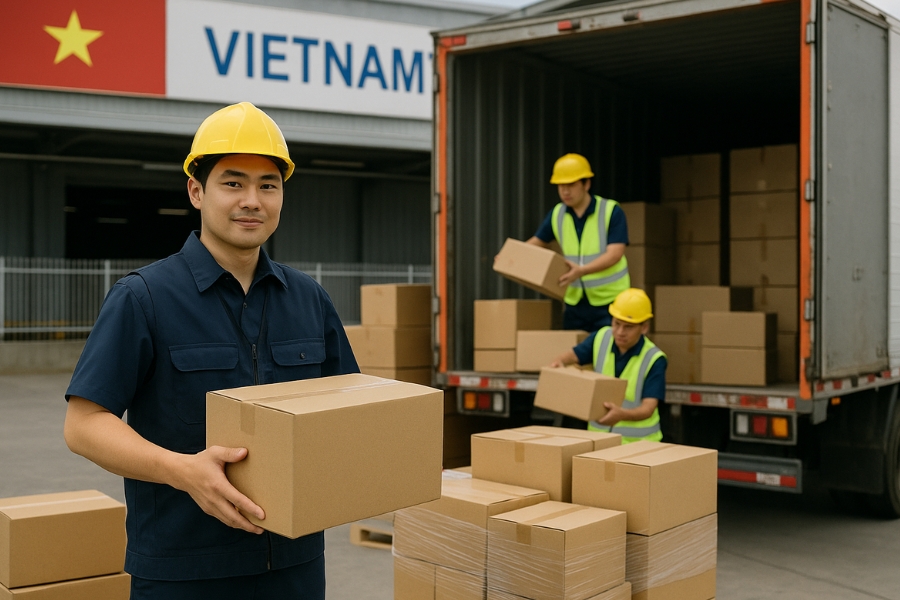
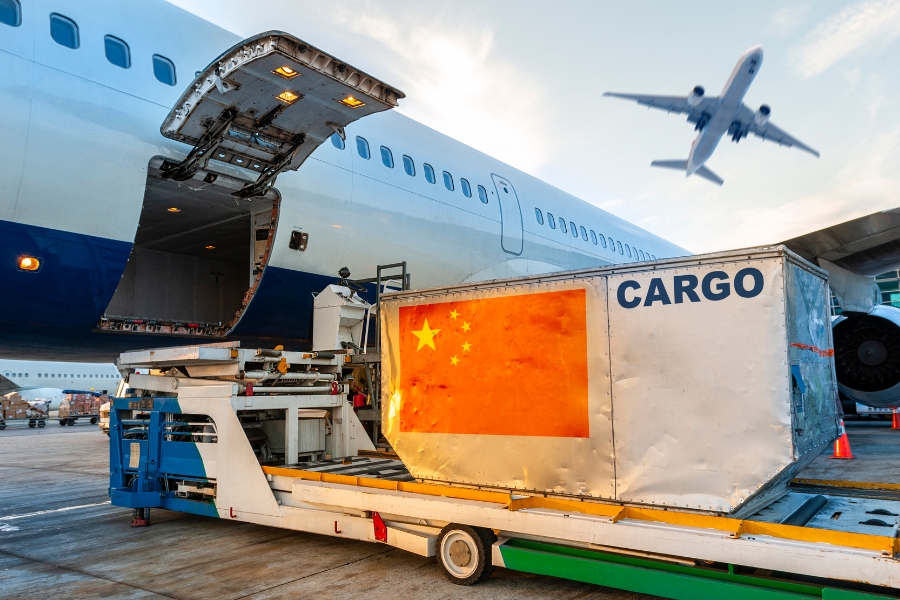
Cargo handling for air freight shipments from China to Vietnam.
2.3. China Vietnam sea freight solutions
Sea freight is a suitable solution for businesses importing:
-
Large industrial machinery
-
Materials and production supplies shipped by container
-
Heavy cargo or high volume shipments
-
Orders without urgent timelines
According to operational data from major ports such as Shenzhen, Guangzhou and Ningbo to Hai Phong and Cat Lai, the estimated transit time for China Vietnam sea freight is:
-
5 – 12 days for FCL or LCL depending on the route and vessel schedule
-
Longer during peak seasons or when additional customs inspection is required
The main advantage of shipping goods from China to Vietnam by sea freight lies in the cost efficiency and the capacity to handle high volume or oversized cargo. This solution is ideal for businesses with monthly or quarterly import plans that prioritise budget control over transit speed.
3. Key challenges when shipping from China to Vietnam
Cross border shipping between China and Vietnam generates high demand yet comes with several compliance and operational challenges that businesses must recognize clearly.
3.1. Evolving legal framework and customs requirements
Shipping from China to Vietnam is regulated by multiple laws and administrative requirements related to:
-
Product safety
-
Quality inspection and quarantine
-
Origin traceability
-
Registration of import and export enterprises
-
HS code classification and documentation
These requirements are being increasingly tightened to ensure transparent trade, prevent fraud, and maintain control over product quality. However, this also increases the complexity of preparing shipping documents for shipping from China to Vietnam, especially for businesses that import goods frequently.
Some types of cargo, such as electronic components, devices with batteries, used machinery, chemicals, or specialized industrial equipment, often require:
-
More stringent security screening
-
Verification of origin information
-
Additional industry-specific certificates
For companies needing to import goods from China to Vietnam, understanding the HS code, regulatory documents, and required inspection standards is essential. Partnering with a logistics provider experienced in China Vietnam freight service helps minimize the risks of delays, non compliant documentation, or extended customs checks.
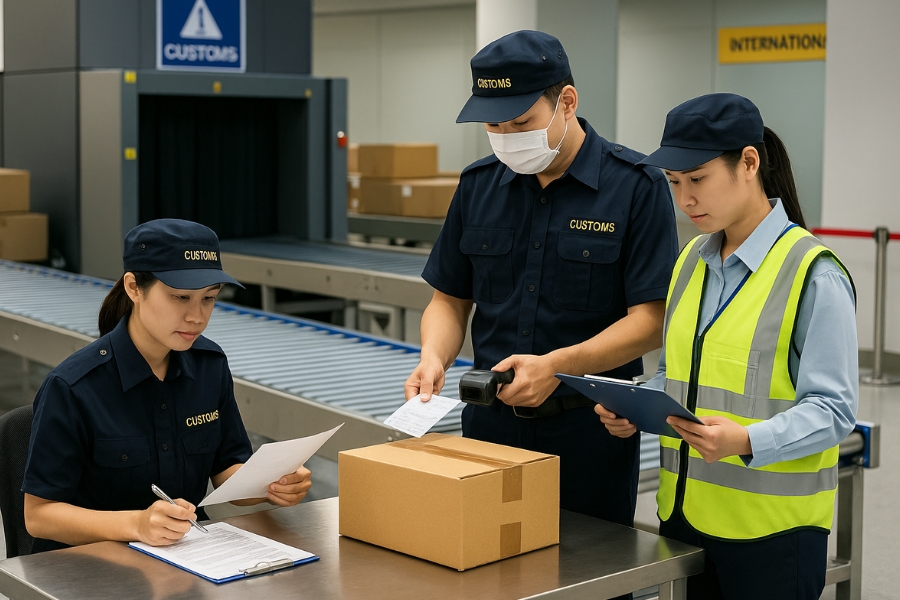
Document verification and cargo screening are mandatory steps in the China–Vietnam customs clearance process.
3.2. Risks of choosing unsuitable shipping solutions
The China Vietnam transport service market includes various types of providers, from small parcel forwarding for e commerce to formal freight service options dedicated to businesses. Without a clear understanding of the differences between these shipping solutions, companies may face several risks:
-
Extended delivery times caused by informal or unstable shipping solutions
-
Lack of proper documentation required for accounting and financial compliance
-
Difficulties explaining shipping cost or reconciling expenses during internal audits
These issues often arise when businesses choose low cost services that do not provide full visibility, proper shipping documents, or reliable coordination across the China to Vietnam supply chain.
4. Shipping from China to Vietnam service at PCS Logistics
PCS Logistics delivers China to Vietnam shipping solutions built specifically for business customers. Our operating standards are designed around the needs of three core customer groups:
-
Manufacturers and assembly plants importing components, materials and technical supplies
-
Trading companies importing machinery, equipment or industrial goods
-
R&D units that require product samples, test shipments or experimental components
PCS Logistics applies a unified operating principle to ensure that every business receives stable, transparent and compliant China-Vietnam freight service tailored to each shipment.
4.1. Focus on cargo that serves production and business operations
Our intake, inspection and shipping processes prioritize shipments with clear documentation, transparent usage purposes and compliance with Vietnam’s import regulations.
This approach helps businesses:
-
Avoid unnecessary customs risks
-
Ensure smooth internal justification
-
Maintain uninterrupted production timelines
4.2. Legal compliance and transparent documentation
For all official import shipments, PCS Logistics supports businesses by:
-
Preparing and verifying transport documents
-
Cross-checking data before customs submission
-
Monitoring shipment status to respond quickly to customs requests
Transparent documentation keeps businesses confident during accounting, auditing and internal reporting.
4.3. Cost optimization based on real shipment data
Shipping costs are calculated based on:
-
Cargo type
-
Weight, volume or CBM
-
Route selection
-
Risk level of each shipment
Instead of using a fixed rate table, PCS Logistics provides data-driven pricing, ensuring competitiveness and alignment with each business’s budget plan.
When choosing a China Vietnam shipping company, businesses often require:
-
Stable transit time to avoid production delays
-
Easy shipment tracking throughout the route
-
Clear transport documentation for accounting or audit needs
-
Accurate consultancy on the right shipping solution (road freight, air freight or sea freight) based on each cargo type
PCS Logistics’ operating system is designed to meet these expectations, from intake, route updates, documentation support to handling special requests when needed.
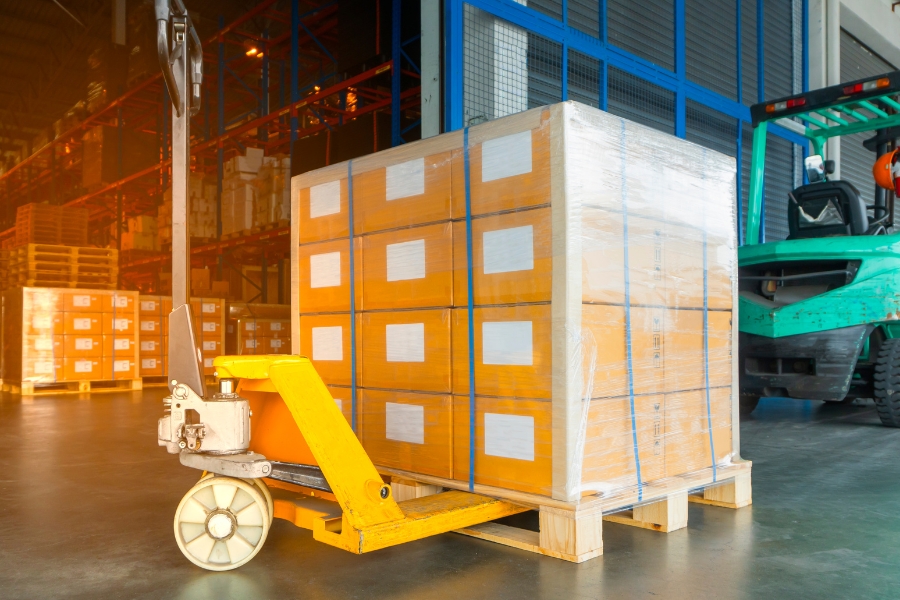
Coordinated inspection, sorting and handling of inbound shipments from China.
5. Shipping Process from China to Vietnam
The shipping from China to Vietnam process at PCS Logistics is built on enterprise-grade operating standards, ensuring transparency, traceability, and risk control throughout the entire shipment lifecycle.
The process includes 6 key steps:
5.1. Step 1 – Collect shipment information and propose the appropriate shipping solution
PCS Logistics gathers all essential shipment details, including:
-
Type and condition of goods
-
Weight – dimensions – number of packages
-
Required delivery timeline
-
Supporting documents
-
Pick-up point in China and delivery destination in Vietnam
Based on this information, PCS proposes the most suitable shipping solution from China to Vietnam, including road freight, air freight or sea freight. Evaluation criteria include estimated transit time, total cost, customs-related risks, and the characteristics of each cargo group.
5.2. Step 2 – Document preparation and information verification
For import shipments, proper and complete documentation significantly reduces customs risks. PCS Logistics supports businesses by:
-
Verifying HS codes and product descriptions
-
Checking all transport documents from the Chinese supplier
-
Guiding businesses to prepare documents according to the correct import category
-
Confirming special requirements such as MSDS, quality certificates, technical files,..
The goal of this step is to ensure full alignment between the actual cargo and the declared information for smooth customs clearance.
5.3. Step 3 – Receiving cargo at consolidation warehouses and processing at the loading point
In China, the cargo is received at the partner warehouse per the assigned tracking number. The operations team checks:
-
Packaging condition
-
Number of packages
-
Consignee information
-
Suitability of the selected transport solution
For special cargo groups, PCS provides additional services such as relabeling, repackaging, or reinforcing parcels to meet safe-transport requirements.

Cargo inspected and securely packed at the China consolidation warehouse for safe delivery to Vietnam.
5.4. Step 4 – International express and status tracking
Depending on the selected transportation solution:
-
Road freight: Cargo moves cross-border through major checkpoints. Transit updates follow actual clearance progress.
-
Air freight: Cargo is transferred to the departure airport, screened, loaded, and tracked throughout the flight route.
-
Sea freight: Cargo is loaded into FCL/LCL containers according to schedules and port loading conditions.
Throughout this stage, PCS provides real-time shipment updates, allowing businesses to easily monitor their progress.
5.5. Step 5 – Customs clearance in Vietnam and warehouse delivery
When the cargo arrives in Vietnam, PCS Logistics supports:
-
Cross-checking documents and physical cargo.
-
Assisting businesses in providing explanations when authorities require additional inspection.
-
Coordinating issue resolution if any incident arises.
-
Updating customs clearance status.
The objective is to ensure regulatory compliance and minimize waiting time at ports or bonded warehouses.
5.6. Step 6 – Final delivery and completion of shipping documents
After clearing customs:
-
Cargo is delivered to the business’s warehouse or specified address
-
PCS provides all transport documents, invoices, and required records
-
Shipment files are finalized to support accounting, auditing, or internal compliance
This structured process enables businesses to maintain full visibility, cost control, and compliance when importing goods from China to Vietnam.
6. China Vietnam Shipping Rates at PCS Logistics
The cost of shipping from China to Vietnam is calculated based on the specific characteristics of each shipment rather than a fixed rate table. Key pricing factors include the chosen transportation solution (road freight, air freight, sea freight), weight and dimensions, consolidation points in China, and the risk profile of each cargo type. This approach ensures that the shipping cost accurately reflects real operational conditions.
Shipping rate = (Net rate × Fuel surcharge × VAT) + Additional fees (if applicable)
PCS Logistics evaluates shipping costs based on actual weight, chargeable weight, or cubic meter (CBM), combined with transit time requirements and product characteristics. Cargo containing batteries, liquids, technical parts, or oversized machinery may incur additional screening, security, or handling fees.
Transparent cost calculation for China Vietnam shipments based on cargo weight and specifications.
This pricing structure allows PCS Logistics to provide businesses with cost-optimized shipping from China to Vietnam, ensuring alignment with budget planning and actual logistics conditions.
The quotation is always provided transparently before execution, helping businesses maintain full cost control and plan their import activities effectively. Companies with demand for China Vietnam shipping can contact PCS Logistics for tailored transportation solutions and the most suitable rates for each shipment.
7. Recommended and Restricted Cargo When Shipping from China to Vietnam
When shipping from China to Vietnam, businesses must clearly identify which cargo types are fully permitted, restricted, or prohibited under Vietnamese regulations. Correct classification helps minimize customs risks, shorten clearance time, and ensure full compliance.
7.1. Recommended cargo to ship from China to Vietnam
These cargo groups are commonly imported by Vietnamese manufacturers and traders and are fully compliant with current regulations:
-
Electronic components and phone parts
-
Machinery and technical equipment
-
Industrial spare parts
-
Production materials and consumables
-
Tools and equipment for mechanical, electrical, and automation sectors
-
Samples, test items, prototype components
-
Consumer goods with complete documentation (qualified for labeling and quality declaration)
-
Technical documents accompanying the shipment such as drawings, manuals, installation guides, catalogs, and specifications
These items are suitable for China Vietnam transport service and are handled efficiently through road freight, air freight, or sea freight solutions depending on the business requirement.
7.2. Restricted or prohibited cargo
Certain cargo types are restricted, heavily controlled, or completely banned from entering Vietnam. Businesses must check the regulatory list carefully before arranging shipping from China to Vietnam with any logistics provider.
Cargo prohibited under Decree 69/2018/NĐ-CP and related laws:
-
Weapons, ammunition, explosives (except industrial explosives with official permits)
-
Drugs and toxic chemicals under special control
-
Culturally inappropriate or politically sensitive materials
-
Illegal radio-frequency or spying devices
-
Counterfeit goods and items violating intellectual property regulations
Cargo allowed but requires special conditions:
-
Food products: quality declaration, safety testing
-
Cosmetics and beauty devices: labeling, ingredients verification, product declaration
-
Chemicals and liquids: MSDS and specific import permits
-
Used machinery: must comply with technical standards and year-of-manufacture limits
-
Items containing batteries or power sources: require security screening and technical documentation
-
Agricultural products or plants: phytosanitary certificates and traceability
Businesses should identify the cargo category in advance to avoid delays during clearance or additional inspections from specialized authorities.
8. Conclusion
The shipping from China to Vietnam services plays an essential role in the import operations of many Vietnamese businesses, especially those in manufacturing, trading, and product research. Choosing the right transportation solution, preparing compliant documentation, and partnering with an experienced logistics provider help minimize risks, shorten lead time, and maintain transparency throughout the entire supply chain.
PCS Logistics supports businesses with an operational system built on clarity, data-driven processes, and advisory capability tailored to each type of cargo. Any inquiries regarding transportation solutions, cost estimation, documentation, or customs requirements are handled in detail to help businesses stay proactive in their import planning.
Companies with a demand for shipping from China to Vietnam can contact PCS Logistics for a reliable and safe solution tailored to each shipment.